
Non-alcoholic beer? Researchers have developed one that tastes exactly like the regular!
Copenhagen [Denmark], February 14 (ANI): Anyone who has been an avid viewer of Harry Potter would know that the trio's favourite drink was the non-alcoholic beverage, 'Butterbeer'. Now, researchers have found a way to brew non-alcoholic beer that tastes just like regular beer. Even better, the method is far more sustainable than the existing brewing techniques.
ANI
Feb 14, 2022 15:56 IST

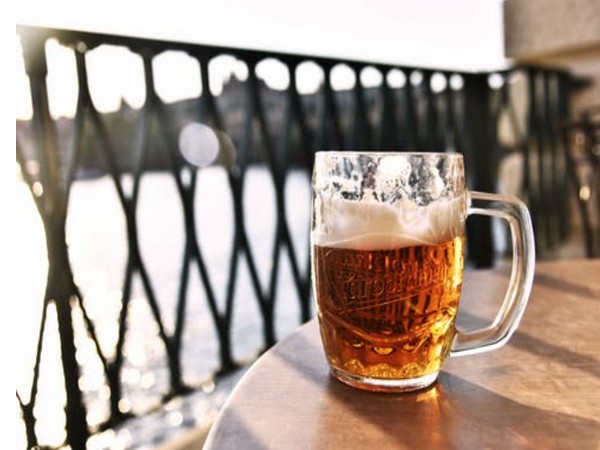
Copenhagen [Denmark], February 14 (ANI): Anyone who has been an avid viewer of Harry Potter would know that the trio's favourite drink was the non-alcoholic beverage, 'Butterbeer'. Now, researchers have found a way to brew non-alcoholic beer that tastes just like regular beer. Even better, the method is far more sustainable than the existing brewing techniques.
The study was published in 'Nature Biotechnology'.
Even though sales of non-alcoholic beer have risen substantially in Denmark and Europe in the last couple of years, there are still many people that won't follow the healthy trend because they find the taste not to be quite as good as that of regular beers.
Some people find the taste to be flat and watery and this has a natural explanation, according to Sotirios Kampranis, a Professor at the University of Copenhagen.
"What non-alcoholic beer lacks is the aroma from hops. When you remove the alcohol from the beer, for example by heating it up, you also kill the aroma that comes from hops. Other methods for making alcohol-free beer by minimizing fermentation also lead to poor aroma because alcohol is needed for hops to pass their unique flavour to the beer," he said.
But now, Kampranis and his colleague Simon Dusseaux - both founders of the biotech company EvodiaBio - have cracked the code of how to make non-alcoholic beer that is full of hop aroma.
"After years of research, we have found a way to produce a group of small molecules called monoterpenoids, which provide the hoppy-flavour, and then add them to the beer at the end of the brewing process to give it back its lost flavour. No one has been able to do this before, so it's a game changer for non-alcoholic beer," said Sotirios Kampranis.
Instead of adding expensive aroma hops in the brewing tank, just to "throw away" their flavour at the end of the process, the researchers turned baker's yeast cells into micro-factories that can be grown in fermenters and release the aroma of hops, they stated in the study.
"When the hop aroma molecules are released from yeast, we collect them and put them into the beer, giving back the taste of regular beer that so many of us know and love. It actually makes the use of aroma hops in brewing redundant, because we only need the molecules passing on the scent and flavour and not the actual hops," explained Sotirios Kampranis.
On top of improving the taste of non-alcoholic beer, the method is also far more sustainable than the existing techniques, according to the researchers.
First of all, aroma hops are mainly farmed on the west coast of the U.S., which caused the need for extensive transportation and cooling down the crops in refrigerators.
Secondly, hops demand lots of water - more accurately you need 2-7 tons of water to grow one kilogram of hops. This combined makes it a not very climate-friendly production.
"With our method, we skip aroma hops altogether and thereby also the water and the transportation. This means that one kilogram of hops aroma can be produced with more than 10.000 times less water and more than 100 times less CO2," said Sotirios Kampranis.
The researchers are pleased to be able to contribute to a much healthier lifestyle and hope that their new invention will help more people cut down on alcohol because now they will have equally delicious alternatives.
"Long term, we hope to change the brewing industry with our method - also the production of regular beer, where the use of aroma hops is also very wasteful," concluded Sotirios Kampranis. (ANI)
Get the App


