

ADD ANI AS A TRUSTED SOURCE
googleads
ANI Logo
Menu
Others

Research: There is no magic number for how long it takes to develop habits

Getting dressed and making your way to the gym can be a chore at first. You may gradually create the habit of getting to the gym and swiftly transitioning to your Zumba class or treadmill run. According to a new study by social scientists at Caltech, it takes an average of six months to acquire a gym habit.

ANI Apr 22, 2023 12:29 IST googleads

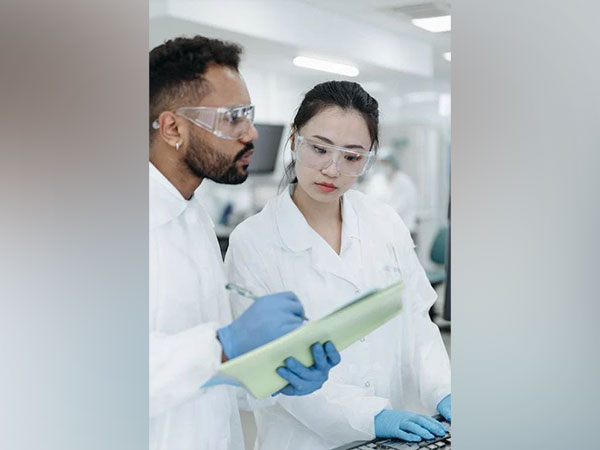
Representative Image.

Washington [US], April 22 (ANI): Getting dressed and making your way to the gym can be a chore at first. You may gradually create the habit of getting to the gym and swiftly transitioning to your Zumba class or treadmill run. According to a new study by social scientists at Caltech, it takes an average of six months to acquire a gym habit.
The same study looked at how long it takes healthcare professionals to develop the habit of washing their hands: an average of a few weeks.
"There is no magic number for habit formation," said Anastasia Buyalskaya, a marketing assistant professor at HEC Paris. Caltech's Colin Camerer, Robert Kirby Professor of Behavioural Economics and director and leadership chair of the T&C Chen Centre for Social and Decision Neuroscience, and researchers from the University of Chicago and the University of Pennsylvania are among the other authors of the study, which appears in the journal Proceedings of the National Academy of Sciences. Xiaomin Li, a former Caltech graduate student and postdoctoral scholar, is also an author.

"You may have heard that it takes about 21 days to form a habit, but that estimate was not based on any science," Camerer says. "Our works support the idea that the speed of habit formation differs according to the behaviour in question and a variety of other factors."

The study is the first to use machine learning tools to study habit formation. The researchers employed machine learning to analyze large data sets of tens of thousands of people who were either swiping their badges to enter their gym or washing their hands during hospital shifts. For the gym research, the researchers partnered with 24 Hour Fitness, and for the hand-washing research, they partnered with a company that used radio frequency identification (RFID) technology to monitor hand-washing in hospitals. The data set tracked more than 30,000 gymgoers over four years and more than 3,000 hospital workers over nearly 100
"With machine learning, we can observe hundreds of context variables that may be predictive of behavioural execution," explains Buyalskaya. "You don't necessarily have to start with a hypothesis about a specific variable, as machine learning does the work for us to find the relevant ones."
Machine learning also let the researchers study people over time in their natural environments; most previous studies were limited to participants filling out survey shifts.
The study found that certain variables had no effect on gym habit formation, such as time of day. Other factors, such as one's past behaviour, did come into play. For instance, for 76 per cent of gymgoers, the amount of time that had passed since a previous gym visit was an important predictor of whether the person would go again. In other words, the longer it had been since a gymgoer last went to the gym, the less likely they were to make a habit of it. Sixty-nine per cent of the gymgoers were more likely to go to the gym on the same days of the week, with Monday and Tuesday being the most well-attended.
For the hand-washing part of the study, the researchers looked at data from healthcare workers who were given new requirements to wear RFID badges that recorded their hand-washing activity. "It is possible that some health workers already had the habit prior to us observing them, however, we treat the introduction of the RFID technology as a 'shock' and assume that they may need to rebuild their habit from the moment they use the technology," Buyalskaya says.
"Overall, we are seeing that machine learning is a powerful tool to study human habits outside the lab," Buyalskayasays. (ANI)


Get the App

What to Read Next

Fitness

World Endodontic Day: Save your natural teeth from extractions

World Endodontic Day: Save your natural teeth from extractions

Dentists are celebrating October 16th as World Endodontic Day to spread general awareness among people about the need to preserve their natural teeth from root canal infection and extractions.

Read More
Fashion

"50 Balmain pieces stolen" just days before Paris Fashion Week

The Paris Fashion Week will be held between September 25 and October 3. Balmain's show is scheduled in the French capital on September 27.

Read More
Parenting

Kindergarten misbehaviour may cost society in the long run: Study

Kindergarten misbehaviour may cost society in the long run: Study

For the first time, a new economic analysis has linked kindergarten pupils' misbehaviour to significant societal costs in terms of criminality, associated medical expenses, and lost productivity as they grow up.

Read More
Quirky

Air pollution makes it difficult for bees to find flowers: Study

Air pollution makes it difficult for bees to find flowers: Study

According to a new study, air pollution prevents bees from finding flowers because it degrades the scent.

Read More
Quirky

Sense of order distinguishes humans from other animals: Study

Sense of order distinguishes humans from other animals: Study

Already earlier research at Stockholm University has suggested that only humans have the ability to recognize and remember so-called sequential information and that this ability is a fundamental building block underlying unique human cultural abilities.

Read More
Travel

Synchronizing with internal clocks help mitigate jet lag: Study

Synchronizing with internal clocks help mitigate jet lag: Study

Travelling to exotic locations is an excellent way to broaden one's horizons, but jet lag may be an unpleasant side effect. Adjusting to a new time zone is frequently accompanied by weariness, difficulties sleeping, and a slew of other issues that may turn an otherwise great vacation into an unpleasant one.

Read More
Quirky

Exciting the brain might be key to boosting maths learning: Study

Exciting the brain might be key to boosting maths learning: Study

According to a new study from the Universities of Surrey and Oxford, Loughborough University, and Radboud University in the Netherlands, activating a brain region with electrical noise stimulation may improve mathematical learning in those who struggle with the subject.

Read More
Quirky

Youth with poor learning skills most vulnerable to email scams

Youth with poor learning skills most vulnerable to email scams

According to an international study published in the peer-reviewed British Journal of Educational Studies, disadvantaged youth are more vulnerable to email scams and require more protection.

Read More
Food

Replacing saturated fat, salt...is tasty, healthy: Study

Replacing saturated fat, salt...is tasty, healthy: Study

A team of Penn State researchers has figured the how to reduce some saturated fat, sugar, and salt from popular American dishes while keeping them tasty.

Read More
Food

Sanitized ready-to-eat salad may contain disease-causing bacteria

Sanitized ready-to-eat salad may contain disease-causing bacteria

A review paper published in the journal Foods describes a study that provides an overview of studies on minimally processed vegetables (MPVs), with a particular focus on the Brazilian market.

Read More
Home About Us Our Products Advertise Contact Us Terms & Condition Privacy Policy

Copyright © aninews.in | All Rights Reserved.
