

ADD ANI AS A TRUSTED SOURCE
googleads
ANI Logo
Menu
Science

Study reveals stress thwarts our ability to plan ahead by disrupting how we use memory

Washington D.C. [USA], Apr 3 (ANI): Stress can hinder our ability to develop informed plans by preventing us from being able to make decisions based on memory, suggests recent research.

ANI Apr 03, 2020 21:30 IST googleads

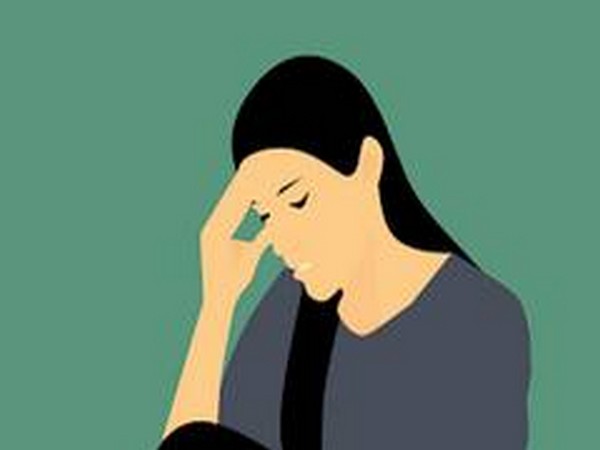
Representative Image

Washington D.C. [USA], April 3 (ANI): Stress can hinder our ability to develop informed plans by preventing us from being able to make decisions based on memory, suggests recent research.
According to Stanford psychologist Anthony Wagner, who is the senior author of the paper, "We draw on memory not just to project ourselves back into the past but to project ourselves forward, to plan."
"Stress can rob you of the ability to draw on cognitive systems underlying memory and goal-directed behaviour that enable you to solve problems more quickly, more efficiently and more effectively," he said.
The study led by Stanford University researchers was published in the journal of Current Biology.
Combined with previous work from Wagner's Memory Lab and others, these findings could have broad implications for understanding how different people plan for the future - and how lack of stress may afford some people a greater neurologically-based opportunity to think ahead.
"It's a form of neurocognitive privilege that people who are not stressed can draw on their memory systems to behave more optimally," said Wagner, who is the Lucie Stern Professor in the Social Sciences at Stanford's School of Humanities and Sciences.
"And we may fail to actually appreciate that some individuals might not be behaving as effectively or efficiently because they are dealing with something, like a health or economic stressor, that reduces that privilege."
The researchers conducted experiments where they monitored participants' behaviour and brain activity - via fMRI - as they navigated through virtual towns. After participants became very familiar winding routes in a dozen towns, they were dropped onto one of the memorized paths and told to navigate to a goal location.
To test the effects of stress, the researchers warned some participants that they could receive a mild electric shock, unrelated to their performance, during their virtual rambles.
Participants who didn't have to worry about being randomly shocked tended to envision and take novel shortcuts based on memories acquired from prior journeys, whereas the stressed participants tended to fall back on the meandering, habitual routes.
Prior to beginning their trek, the participants were virtually held in place at their starting position. Brain scans from this period showed that the stressed individuals were less likely than their counterparts to activate the hippocampus -- a brain structure that would have been active if they were mentally reviewing previous journeys.
They also had less activity in their frontal-parietal lobe networks, which allows us to bring neural processes in line with our current goals. Previous work by the researchers had found that stress hinders this neural machinery, making it harder for us to retrieve and use memories.
The researchers believe their new study is the first to show how hippocampal-frontal lobe network disruption takes memory replay offline during a planning session due to stress.
"Its kind of like our brain is pushed into a more low-level thought-process state, and that corresponds with this reduced planning behaviour," said Thackery Brown, who was a postdoctoral scholar in the Memory Lab during this research and is the lead author of the paper. (ANI)

Get the App

What to Read Next

Science

New device could allow you to taste cake in virtual reality

New device could allow you to taste cake in virtual reality

The 'e-Taste' interface employs sensors and wireless chemical dispensers to enable remote taste perception, often known as gestation. Field testing done by researchers at The Ohio State University confirmed the device's ability to digitally simulate a range of taste intensities, while still offering variety and safety for the user.

Read More
Science

Gut microbes play role in regulating stress responsiveness

Gut microbes play role in regulating stress responsiveness

A groundbreaking study has revealed the critical role of gut bacteria in regulating stress responses through interactions with the body's circadian rhythms.

Read More
Science

Study finds new ways to prevent, treat type 2 diabetes

Study finds new ways to prevent, treat type 2 diabetes

Pancreatic cells, like human cells, have a limit to how much stress they can handle before they start to break down. Through overstimulation of these cells, certain stresses like inflammation and hyperglycemia lead to the onset of type 2 diabetes.

Read More
Science

Fever promotes increased activity, mitochondrial damage

Fever promotes increased activity, mitochondrial damage

Researchers at Vanderbilt University Medical Centre showed that fever temperatures increase immune cell metabolism, proliferation, and activity, but they also promote mitochondrial stress, DNA damage, and cell death in a specific subgroup of T cells.

Read More
Science

Climate change may reduce butterflies' spots: Study

Climate change may reduce butterflies' spots: Study

According to new research, female Meadow Brown butterflies have less spots when they grow up in warmer environments, so climate change may reduce their spottiness.

Read More
Science

Stress has tendency to increase inflammation in body

Stress has tendency to increase inflammation in body

Lifestyle and genetics, as well as a range of other factors both within and outside of our control, have all been connected to the development of metabolic syndrome, a set of conditions that increase the risk of serious health problems.

Read More
Science

Butterflies might lose spots as climate warms: Research

Butterflies might lose spots as climate warms: Research

According to new research, female Meadow Brown butterflies have less spots when they grow up in warmer conditions, thus climate change may reduce their spottiness.

Read More
Science

Perceived time has tangible effect on process of physical healing

Perceived time has tangible effect on process of physical healing

New research discovered that perceived time has a significant influence on how long it takes to cure physical wounds.

Read More
Science

During drought, tomato plants use their roots to ration water

During drought, tomato plants use their roots to ration water

The purpose of exodermal suberin has long been unknown, but a new study published in Nature Plants by researchers at the University of California, Davis demonstrates that it fulfils the same function as endodermal suberin and that tomato plants are less able to cope with water stress without it. This knowledge could aid scientists in developing drought-resistant crops.

Read More
Science

Researchers find preconception stress affect women’s health

 Researchers find preconception stress affect women’s health

Stress during pregnancy is known to have an impact on health outcomes, but a recent study from Mass General Brigham shows that stress levels before to pregnancy should also be assessed. Researchers from Massachusetts General Hospital and Brigham and Women's Hospital examined the relationship between self-reported stress just before conception and blood glucose levels, a sign of heart health, in women seeking reproductive therapy. The researchers discovered that maternal stress during preconception was linked to increased blood glucose levels, particularly in women who used intrauterine insemination to conceive and in women of higher socioeconomic class.

Read More
Home About Us Our Products Advertise Contact Us Terms & Condition Privacy Policy

Copyright © aninews.in | All Rights Reserved.




