

ADD ANI AS A TRUSTED SOURCE
googleads
ANI Logo
Menu
Science

Harmless gut bacteria can evolve to cause life-threatening infection

Washington [US], February 12 (ANI): During recent research, an international team of scientists has determined how harmless E. coli gut bacteria in chickens can easily pick up the genes needed in order to evolve and cause a life-threatening infection.

ANI Feb 12, 2021 22:05 IST googleads

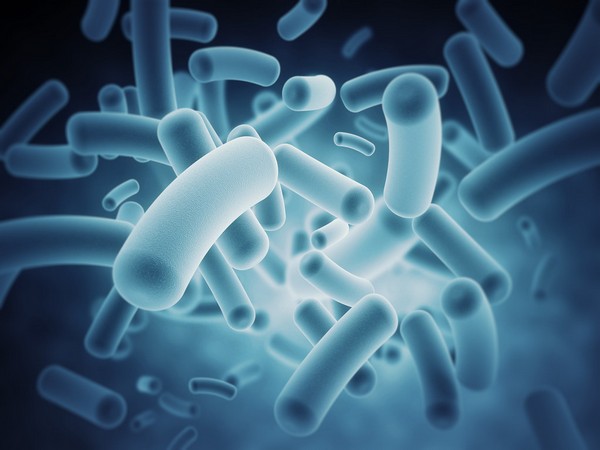
Representative Image

Washington [US], February 12 (ANI): During recent research, an international team of scientists has determined how harmless E. coli gut bacteria in chickens can easily pick up the genes needed in order to evolve and cause a life-threatening infection.
The study, published in Nature Communications, warns that such infections not only affect the poultry industry but could also potentially cross over to infect humans.
E. coli is a common bacterium that lives in the intestines of most animals, including humans. It is usually harmless when it stays in the gut, however, it can become very dangerous if it invades the bloodstream, causing a systemic infection that can even lead to death.
Avian pathogenic E. coli (APEC) is the most common infection in chickens reared for meat or eggs. It can lead to death in up to 20 per cent of cases and causes multi-million-pound losses in the poultry industry. The problem is made worse by increasing antibiotic resistance and infections also pose a risk of causing disease in humans.
The team of scientists, led by the Milner Centre for Evolution at the University of Bath, sequenced and analysed the whole genomes of E. coli bacteria found in healthy and infected chickens bred at commercial poultry farms to better understand why and how these normally innocuous bugs can turn deadly.
They found there was no single gene responsible for switching a harmless bacterium into a pathogenic one, but rather that it could be caused by several combinations of a diverse group of genes.
Their results indicate that all bacteria in chicken intestines have the potential to pick up the genes they need to turn into a dangerous infection, through a process called horizontal gene transfer.
Horizontal gene transfer enables bacteria to acquire new genetic material from other bacteria nearby. This can happen by scavenging DNA molecules from dead bacteria; by exchanging strands of DNA by having 'bacterial sex' or by getting infected by viruses that transfer DNA from one bacterium to another.
Professor Sam Sheppard, from the Milner Centre for Evolution at the University of Bath, led the study. He said: "Previously we thought that E. coli became pathogenic by acquiring specific genes from other bugs, often packaged in mobile elements called plasmids.
"But our study compared the genomes of disease-causing and harmless E. coli in chickens and found that they can 'turn bad' simply by picking up genes from their environment.
"Bacteria do this all the time inside the guts of chicken, but most of the time the scavenged genes are detrimental to the bacteria so it becomes an evolutionary dead end.
"However, there are 26 billion chickens worldwide, representing around 70 per cent of all bird biomass on earth.
"That increases the likelihood of bacteria picking up genes that could help the bacteria survive and turn infectious, or even jump species to infect humans."
The study authors stress the need to monitor strains that are most likely to become pathogenic so can treat them before they become dangerous.
Professor Sheppard said: "We were surprised to find that it's not just a single strain that causes APEC, but any strain can potentially acquire the 'monster combination' of genes needed to turn bad."
Strains with the potential to turn pathogenic could be identified using a similar method to that used to detect variant strains of Covid19. After whole-genome sequencing, rapid PCR tests can be used to probe for specific genes that could lead to an APEC infection.
Professor Sheppard said: "We identified around 20 genes that are common in pathogenic bugs and if we can look out for these key genes in a flock of birds, that would help farmers target those carriers before they cause a problem." (ANI)


Get the App

What to Read Next

Science

Amphibians bounce-back from Earth’s greatest mass extinction

Amphibians bounce-back from Earth’s greatest mass extinction

Researchers at the University of Bristol discovered that ancient frog ancestors survived the biggest mass extinction of species by eating on freshwater prey that evaded terrestrial predators.

Read More
Science

Scientists use AI to better understand nanoparticles: Study

Scientists use AI to better understand nanoparticles: Study

A group of scientists has created a way to illuminate the dynamic behavior of nanoparticles, which are essential components in the production of pharmaceuticals, electronics, and industrial and energy-conversion materials.

Read More
Science

New device could allow you to taste cake in virtual reality

New device could allow you to taste cake in virtual reality

The 'e-Taste' interface employs sensors and wireless chemical dispensers to enable remote taste perception, often known as gestation. Field testing done by researchers at The Ohio State University confirmed the device's ability to digitally simulate a range of taste intensities, while still offering variety and safety for the user.

Read More
Science

Strand Life Sciences launches portal for rare disease diagnosis

Strand Life Sciences launches portal for rare disease diagnosis

Marking Rare Disease Day, Strand Life Sciences, a subsidiary of Reliance Industries and a leading genomics research company, has launched the StrandOmics Portal, an innovative digital platform designed to assist doctors in diagnosing rare diseases more efficiently.

Read More
Science

New technology enhances gravitational-wave detection: Study

New technology enhances gravitational-wave detection: Study

A team of physicists led by Jonathan Richardson of the University of California, Riverside, demonstrated how new optical technology can extend the detection range of gravitational-wave observatories such as the Laser Interferometer Gravitational-Wave Observatory, or LIGO, and pave the way for future observatories.

Read More
Science

AI can reveals hidden hazards of chemical mixtures in rivers

AI can reveals hidden hazards of chemical mixtures in rivers

Artificial intelligence can provide important insights into how complex chemical mixes in rivers affect aquatic life, paving the path for more effective environmental protection.

Read More
Science

Astronomers find the smallest main-belt asteroids ever detected:

Astronomers find the smallest main-belt asteroids ever detected:

The majority of known asteroids orbit inside the main asteroid belt, which is positioned between Mars and Jupiter at an average distance of around 250 million km from Earth. Since the discovery of the first asteroid in 1801, about 750.000 asteroids have been identified, primarily in the last decade thanks to several optical surveys that examine the sky on clear nights.

Read More
Science

Study finds connection between quantum theory, information theory

Study finds connection between quantum theory, information theory

"Our results have no clear or direct application right now. It's basic research that lays the foundation for future technologies in quantum information and quantum computers. There's enormous potential for complete discoveries in many different research fields," said Guilherme B Xavier, a researcher in quantum communication at Linkoping University, Sweden.

Read More
Science

When devices can read human emotions without a camera: Study

When devices can read human emotions without a camera: Study

Tokyo Metropolitan University researchers employed long-term skin conductance measurements to distinguish between emotions. Volunteers were given videos representing frightening scenarios, family bonding, and humour, while their skin conductance was measured.

Read More
Science

'Nuroscience study results can be better predicted by AI'

'Nuroscience study results can be better predicted by AI'

Large language models, a type of AI that analyses text, can anticipate the results of proposed neuroscience studies more correctly than human experts, according to a new study led by UCL (University College London) researchers.

Read More
Home About Us Our Products Advertise Contact Us Terms & Condition Privacy Policy

Copyright © aninews.in | All Rights Reserved.


