

ADD ANI AS A TRUSTED SOURCE
googleads
ANI Logo
Menu
Science

CoronaCentral enables researchers to analyse vast coronavirus literature

Washington DC [US], May 21 (ANI): Researchers have created a resource named CoronaCentral that uses machine learning to process and categorise Covid-19 research for the benefit of the scientific community.

ANI May 21, 2021 04:15 IST googleads

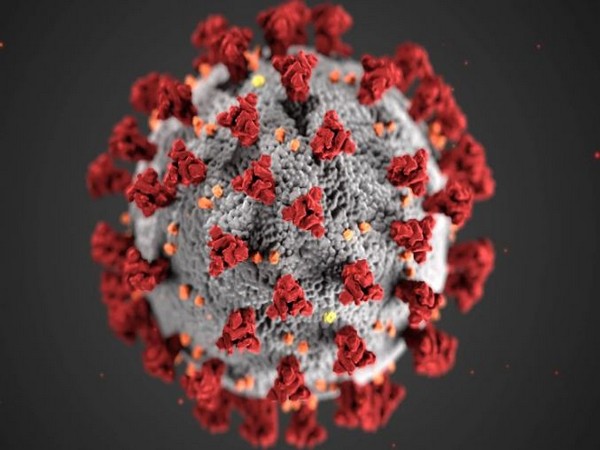
Representative image

Washington DC [US], May 21 (ANI): Researchers have created a resource named CoronaCentral that uses machine learning to process and categorise Covid-19 research for the benefit of the scientific community.
In an article titled "Analyzing the vast coronavirus literature with CoronaCentral," Jake Lever and Russ B. Altman argue that the SARS-CoV-2 pandemic has caused a surge in research exploring all aspects of the virus and its effects on human health.
The study published in Proceedings of the National Academy of Sciences of the United States of America (PNAS), shows the overwhelming publication rate means that researchers are unable to keep abreast of the literature.
According to the researchers, to ameliorate this, the authors have presented the CoronaCentral resource that uses machine learning to process the research literature on SARS-CoV-2 together with SARS-CoV and MERS-CoV.
"We categorize the literature into useful topics and article types and enable analysis of the contents, pace, and emphasis of research during the crisis with integration of Altmetric data. These topics include therapeutics, disease forecasting, as well as growing areas such as "long COVID" and studies of inequality. This resource, available at https://coronacentral.ai, is updated daily," the researchers said.
The COVID-19 pandemic has led to the greatest surge in biomedical research on a single topic in documented history. This research is valuable both to current and future researchers as they examine the long-term effects of the virus on different aspects of society.
Unfortunately, the vast scale of the literature makes it challenging to navigate. Machine-learning systems that can automatically identify topics and article types of papers would greatly benefit researchers who are searching for relevant coronavirus research.
"Our approach improves on the existing methods, including LitCovid, by covering a larger set of papers with the inclusion of PubMed and CORD-19 along with SARS/MERS papers, a larger and more specific set of topics, identification of article types (e.g., Reviews), integration of Altmetric esteem data, and indexing by a wide set of biomedical terms (e.g., drugs, viral lineages, and so forth). All data are available for download and the full codebase is available on GitHub," the authors of the article said.
To provide more detailed and higher-quality topics, the researchers pursue a supervised learning approach and have annotated over 3,200 articles with a set of 32 topics and 8 article types. Individual papers may be tagged with multiple topics and typically a single article type.
Several other topics and article types are identified using simple rule-based methods, including clinical trials and retractions.
As of March 3, 2021, CoronaCentral covers 128,921 papers. (ANI)


Get the App

What to Read Next

Science

Memory problems in old age may be linked to key enzyme: Study

Memory problems in old age may be linked to key enzyme: Study

Everyone experiences occasional episodes of forgetfulness, particularly as they age. It's not only that fresh material is hard for older folks to remember. Moreover, when new information becomes available, they find it more difficult to change those thoughts. Nevertheless, not much is understood about the processes that underlie memory updating and how they malfunction as we age.

Read More
Science

Researchers finds hidden threats with advanced x-ray imaging

 Researchers finds hidden threats with advanced x-ray imaging

To produce multi-contrast images that may be utilized in thousands of complex scenarios to identify potentially threatening materials like explosives, researchers have integrated multiple x-ray imaging methods. Security screening and applications in the biological and physical sciences may benefit from the new method, which also makes use of easily accessible machine learning processes for materials classification.

Read More
Science

Odors might prompt certain brain cells to make decisions: Study

Odors might prompt certain brain cells to make decisions: Study

Researchers at the University of Colorado Anschutz Medical Campus revealed that smells trigger certain brain cells, which may play a role in quick 'go, no-go' decision making.

Read More
Science

Machine learning method speeds up green energy material discovery

Machine learning method speeds up green energy material discovery

Researchers have created a framework that employs machine learning to accelerate the discovery of materials for green energy technologies.

Read More
Science

AI anticipates impact of microplastics on soil properties

AI anticipates impact of microplastics on soil properties

To address this gap in soil MP research, a group of scientists led by Prof. Yong Sik Ok employed machine learning (ML) algorithms to assess and forecast the influence of MPs on soil parameters.

Read More
Science

Training algorithm breaks barriers to deep neural networks

Training algorithm breaks barriers to deep neural networks

EPFL researchers created an algorithm that can train an analog neural network just as accurately as a digital one, allowing for the development of more efficient alternatives to power-hungry deep learning hardware

Read More
Science

Newborn babies can sense music beats: Research

Newborn babies can sense music beats: Research

The study showed that the ability to recognise a beat is not simply due to newborns' statistical learning ability, but that beat perception is a separate cognitive mechanism that is already active at birth.

Read More
Science

Research reveals how adults understand what kids are saying

Research reveals how adults understand what kids are saying

When babies first start talking, their vocabulary is extremely limited. One of the first sounds babies make is "da," which could mean dad, a dog, a dot, or nothing at all.

Read More
Science

Autism, ADHD genetic risks may increase screen time in children

Autism, ADHD genetic risks may increase screen time in children

A study led by Nagoya University Graduate School of Medicine in Japan evaluated screen time in children with autism spectrum disorder (ASD) and attention deficit hyperactivity disorder (ADHD). The amount of time spent on a screen device, such as a smartphone, computer, television, or video gaming system, is referred to as screen time. The researchers discovered that youngsters with a genetic propensity to ASD used screens for longer durations of time. Meanwhile, even if their initial screen time was limited, children with ADHD gradually increased their screen time as they grew older.

Read More
Science

Vaccine that offers protection against three coronavirus types

Vaccine that offers protection against three coronavirus types

A vaccine developed by Duke Human Vaccine Institute researchers that protects against three distinct fatal coronaviruses has shown success in animal studies, indicating the potential for pan-coronavirus immunisation.

Read More
Home About Us Our Products Advertise Contact Us Terms & Condition Privacy Policy

Copyright © aninews.in | All Rights Reserved.
