

ADD ANI AS A TRUSTED SOURCE
googleads
ANI Logo
Menu
Science

A revolutionary new way for bending metals found

Washington D.C. [USA], Aug 11 (ANI): A surprising discovery by researchers has upended previous notions about metal deformation, which could also help in creating a stronger, more durable material.

ANI Aug 11, 2019 19:02 IST googleads

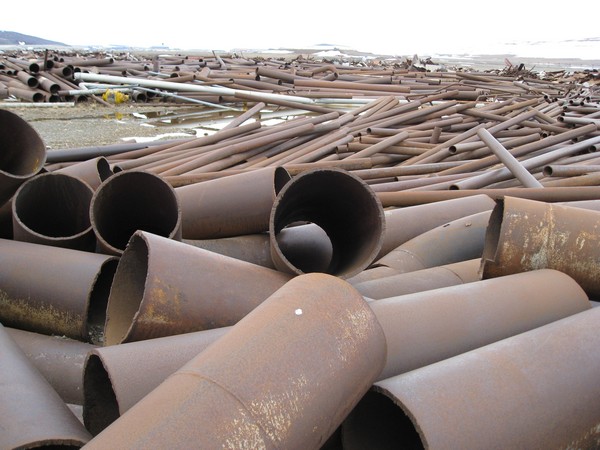
Representative image

Washington D.C. [USA], Aug 11 (ANI): A surprising discovery by researchers has upended previous notions about metal deformation, which could also help in creating a stronger, more durable material.
"This creates new opportunities for materials design. It adds another parameter we can control to enable strength and ductility," said Izabela Szlufarska, a professor of materials science and engineering at UW-Madison.
Ductility is the ability of a metal to bend. Most approaches to increase a metal's strength do so at the expense of flexibility and as metals become more resistant to bending, they're more likely to crack under pressure.
However, the researchers' new mechanism for bending might allow engineers to strengthen a material without running the risk of fractures, reported the study published in the journal of Nature Communications.
"Professor Szlufarska has opened up an entirely new area for exploration for structural materials processing and design. By making such a high-impact discovery, Professor Szlufarska has potentially laid the technical foundation for the development of a new generation of advanced structural materials that could eventually be employed in future Army equipment and vehicles," said Michael Bakas, synthesis and processing programme manager at Army Research Office in the U.S. Army Combat Capabilities Development Command Army Research Laboratory.
Engineers typically manipulate the strength of metal through techniques such as cold working or annealing, which exert their effects through small, yet important, structural irregularities called dislocations.
Normal metals bend because dislocations are able to move, allowing material to deform without ripping apart every single bond inside its crystal lattice at once.
Strengthening techniques typically restrict the motion of dislocations. So it was quite a shock when Szlufarska and colleagues discovered that the material samarium cobalt is known as an intermetallic bent easily, even though its dislocations were locked in place.
"It was believed that metallic materials would be intrinsically brittle if dislocation slip is rare. However, our recent study shows that an intermetallic can be deformed plastically by a significant amount even when the dislocation slip is absent," said Hubin Luo, a former staff scientist in Szlufarska's lab.
Instead, bending samarium cobalt caused narrow bands to form inside the crystal lattice, where molecules assumed a free-form "amorphous" configuration instead of the regular, grid-like structure in the rest of the metal.
Those amorphous bands allowed the metal to bend.
"It's almost like lubrication. We predicted this in simulations, and we also saw the amorphous shear bands in our deformation studies and transmission electron microscopy experiments," said Szlufarska. (ANI)

Get the App

What to Read Next

Science

Calcium pyrophosphate deposition arthritis doubles fracture risk

Calcium pyrophosphate deposition arthritis doubles fracture risk

Calcium pyrophosphate deposition (CPPD) disease is caused by the formation of calcium pyrophosphate (CPP) crystals near cartilage cells and can result in joint inflammation, discomfort, and swelling

Read More
Science

New study explains precious metals in the Earth's mantle

New study explains precious metals in the Earth's mantle

Scientists discovered that impact-driven mixing of mantle materials scenarios could prevent metals from totally sinking into the Earth's core based on simulations or models.

Read More
Science

'Brainless' robot can overcome difficult challenges: Study

'Brainless' robot can overcome difficult challenges: Study

Researchers who developed a soft robot that could navigate simple mazes without human or computer guidance have now expanded on their work to develop a 'brainless' soft robot capable of navigating more complicated and dynamic surroundings.

Read More
Science

New information on possibility of biological evolution on Mars

New information on possibility of biological evolution on Mars

The scientific community has definitely proven that Mars had habitable surface environments early in its existence. Water, energy sources, elements such as carbon, hydrogen, nitrogen, oxygen, phosphorus, and sulfur, as well as crucial catalytic transition metals linked to life as we know it were all produced by these conditions. It is unknown, though, if that possibility sparked continued development towards the independent emergence of life on Mars.

Read More
Science

How heavy metals are gathered by micro- and mesoplastics

How heavy metals are gathered by micro- and mesoplastics

Researchers from Tokyo Metropolitan University headed a group that investigated the environmental accumulation of heavy metals in microplastics. The harmful cargo of the microplastics spreads along with them. They collected debris along a river that flows through Ulaanbaatar, Mongolia, concentrating on polystyrene foam.

Read More
Science

Probiotic can help reduce mercury absorption in gut: Study

Probiotic can help reduce mercury absorption in gut: Study

According to a recent study, microorganisms in the human stomach may be used to prevent the body from absorbing harmful metals such as mercury while assisting it in absorbing beneficial metals such as iron.

Read More
Science

Study finds how probiotic help mitigate mercury absorption in gut

Study finds how probiotic help mitigate mercury absorption in gut

According to a recent study, the microorganisms in the human stomach may be used to prevent the body from absorbing harmful metals like mercury while assisting it in absorbing beneficial ones for nourishment, like iron.

Read More
Science

Research: How were galaxies much different in the early universe

Research: How were galaxies much different in the early universe

The most sensitive telescope now searching for radio signals from cosmic dawn, an era around 200 million years after the Big Bang when stars ignited, has doubled its sensitivity, a new paper reports. While not yet detecting this radiation, the redshifted 21-centimeter line they have put new limits on the elemental composition of galaxies during the Epoch of Reionization. Early galaxies seem to be low in metals, fitting the most popular theory of cosmic evolution.

Read More
Science

Study finds how electron crystals melt in phases

Study finds how electron crystals melt in phases

Electron crystals melt on an artificial grid, called a moire lattice, formed by placing two distinct atomically thin materials on top of each other.

Read More
Science

Study: New phase transition for developing hybrid material

Study: New phase transition for developing hybrid material

Researchers have discovered a novel phase transition that allows crystals to acquire amorphous features while keeping their crystalline ones.

Read More
Home About Us Our Products Advertise Contact Us Terms & Condition Privacy Policy

Copyright © aninews.in | All Rights Reserved.




