

ADD ANI AS A TRUSTED SOURCE
googleads
ANI Logo
Menu
Science

New information on possibility of early steps of biological evolution on Mars

The scientific community has definitely proven that Mars had habitable surface environments early in its existence. Water, energy sources, elements such as carbon, hydrogen, nitrogen, oxygen, phosphorus, and sulfur, as well as crucial catalytic transition metals linked to life as we know it were all produced by these conditions. It is unknown, though, if that possibility sparked continued development towards the independent emergence of life on Mars.

ANI Aug 12, 2023 00:22 IST googleads

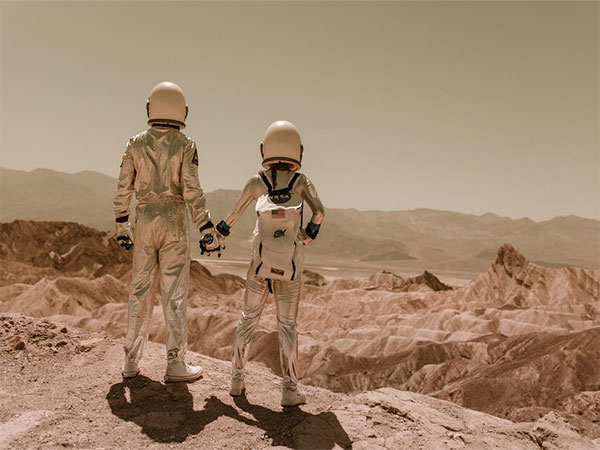
Representative image (Image source: Pexels)

Indiana [US], August 12 (ANI): The scientific community has definitely proven that Mars had habitable surface environments early in its existence.  Water, energy sources, elements such as carbon, hydrogen, nitrogen, oxygen, phosphorus, and sulfur, as well as crucial catalytic transition metals linked to life as we know it were all produced by these conditions.
It is unknown, though, if that possibility sparked continued development toward the independent emergence of life on Mars.
A team of scientists comprised of Juergen Schieber, a Professor in the Department of Earth and Atmospheric Sciences within the College of Arts and Sciences at Indiana University Bloomington, and colleagues on NASA’s Curiosity Rover mission, uncovered the first tangible evidence for sustained wet-dry cycling on early Mars.
The latter condition is considered essential for prebiotic chemical evolution, a stepping-stone toward the emergence of life.
In a new paper, ‘Sustained wet-dry cycling on early Mars’, published in the scientific journal Nature, Schieber and his co-authors utilized data from the Curiosity Rover that currently explores Gale Crater to examine the ancient pattern of mud cracks filled with salt (geometric patterns like pentagons or hexagons) observed in 3.6 billion-year-old mudstones. 
As the mud dries out, it shrinks and fractures into T-shaped junctions – like what Curiosity discovered previously at “Old Soaker,” a collection of mud cracks lower down on Mount Sharp.
Those junctions are evidence that Old Soaker’s mud formed and dried out once, while the recurring exposures to water that created the new mud cracks caused the T-junctions to soften and become Y-shaped, eventually forming a hexagonal pattern.
Although Professor Schieber’s main research interest is the geology of shales and mudstones on Earth, his interest in the underlying fundamentals prompted him to postulate an abundance of mudstones on Mars, and that got him into a conversation with people that were planning the Mars Science Lab (MSL) Curiosity Rover mission at NASA’s Jet Propulsion Laboratory in Southern California.
“Given my expertise about these rocks I was invited to join the MSL science team, and since landing in August 2012, 11 years ago almost to the day, our traverse has been dominated by mudstones,” said Professor Schieber.
Sustained wet-dry cycling on Mars—a consequence of repeated desiccation, recharge, and flooding, creates cracks in the lake bed and within those cracks high salt concentrations develop that force the crystallization of minerals left after the lake’s evaporation and cementation of sediment. 
Ultimately this process was preserved as the polygonal (hexagon- or pentagon-shaped) patterns observed with the Rover. Due to desiccation, the residual water likely had high concentrations of dissolved salts and, potentially, organic molecules that can serve as the building blocks of life.
“The theory is, that as these elements and organic molecules are forced closer and closer together with increasing salinity, they may start polymerizing and make longer chains, creating the conditions for spontaneous chemistry that may start the complex chemical evolution that could lead to living organisms,” said Schieber.
“It is that mental image that got us excited when we observed these honeycomb-shaped, or polygonal, ridge patterns on the surface of mudstone beds. Here was evidence for wetting and drying that could drive interesting chemistry within the cracks.”
Knowing from earlier studies that likely residuals from the lake’s desiccation should be calcium and magnesium sulfate minerals, the team used the “Chemcam” instrument on the Curiosity Rover to probe the cemented ridges to confirm their chemical composition.
The sedimentary features of the mudstones that Schieber and his co-authors studied can be interpreted to have resulted from multiple wetting and drying cycles resulting in mineral precipitates—minerals left behind when water evaporates—stacked on top of each other over time. 
If organic molecules were present in residual brines, this setting may have been conducive to the evolution of more complex organic molecules and pre-biotic chemistry, the study authors report. (ANI)


Get the App

What to Read Next

Science

Astronomers find the smallest main-belt asteroids ever detected:

Astronomers find the smallest main-belt asteroids ever detected:

The majority of known asteroids orbit inside the main asteroid belt, which is positioned between Mars and Jupiter at an average distance of around 250 million km from Earth. Since the discovery of the first asteroid in 1801, about 750.000 asteroids have been identified, primarily in the last decade thanks to several optical surveys that examine the sky on clear nights.

Read More
Science

Chemists design novel method for generating sustainable fuel

Chemists design novel method for generating sustainable fuel

Tuning this environment by controlling how the CoPc catalyst was distributed on the carbon nanotube surface allowed carbon dioxide to be as much as eight times more likely to produce methanol, a discovery that could increase the efficiency of other catalytic processes and have a widespread impact on other fields, said Robert Baker, co-author of the study and a professor in chemistry and biochemistry at The Ohio State University.

Read More
Science

Study shows how protein folding drives multicellular evolution

Study shows how protein folding drives multicellular evolution

Researchers discovered a mechanism that drives the creation of multicellular life. They found that altered protein folding causes multicellular evolution.

Read More
Science

Butterflies mimic each other's flight patterns to evade predators

Butterflies mimic each other's flight patterns to evade predators

Researchers discovered that inedible butterfly species that replicate one other's colour patterns have developed similar flight habits to warn predators and avoid being eaten.

Read More
Science

Study probes novel therapeutics development for metastatic tumors

Study probes novel therapeutics development for metastatic tumors

Researcher Paul Dent of Virginia Commonwealth University's Department of Biochemistry and Molecular Biology found that tumours that have metastasized to distant locations, such as the brain, are most often impossible to treat and cure, despite recent successes in some tumour types such as NSCLC and cutaneous melanoma.

Read More
Science

Plant receptors that regulate growth have common origin: Study

Plant receptors that regulate growth have common origin: Study

As in animals, plants have immune responses that help them defend against pathogens such as viruses, bacteria, fungi, and oomycetes. Before invaders can be stopped, they must first be detected, and this is accomplished by pattern recognition receptors located on the surface of plant cells

Read More
Science

How video technology can track changes in species evolution

How video technology can track changes in species evolution

Scientists have made a significant advance in the study of species evolution, providing additional proof that cutting-edge visual technology may be used to track the smallest changes in the growth of various organisms.

Read More
Science

Wearable devices may help astronauts avoid being 'lost' in space

Wearable devices may help astronauts avoid being 'lost' in space

The sky is no longer the limit - but flying is risky. We lose many of the clues we need to orient ourselves when we leave the Earth's surface, and this spatial disorientation can be fatal. Astronauts typically require extensive training to protect themselves against it. However, scientists have discovered that wearable devices that vibrate to provide orientation cues may considerably improve the efficacy of this training, making spaceflight slightly safer.

Read More
Science

Alpine rock displays plate movement dynamics in Earth's interior

Alpine rock displays plate movement dynamics in Earth's interior

Geoscientists examined rocks in mountain ranges to determine how they originally travelled lower into the depths and then back up to the surface.

Read More
Science

Genome research reveals 30 years of Darwin's finch evolution

Genome research reveals 30 years of Darwin's finch evolution

A ground-breaking investigation on the most recent evolutionary change in natural populations has been published by an international team of academics. Nearly 4,000 Darwin's finches make up one of the largest genomic datasets yet created for animals living in their natural habitat, which is used in this work. The study has identified the genetic underpinnings of adaption in this famous population. The journal Science has published the findings.

Read More
Home About Us Our Products Advertise Contact Us Terms & Condition Privacy Policy

Copyright © aninews.in | All Rights Reserved.
