

ADD ANI AS A TRUSTED SOURCE
googleads
ANI Logo
Menu
Quirky

Study examines how we understand emojis

Bochum [Germany], January 24 (ANI): A study was conducted to understand how people perceive emojis in their daily lives.

ANI Jan 24, 2022 17:24 IST googleads

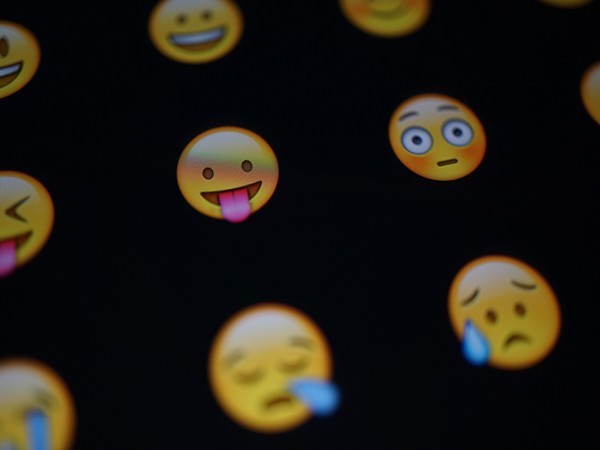
Representative image

Bochum [Germany], January 24 (ANI): A study was conducted to understand how people perceive emojis in their daily lives.
The study has been published in the 'Computers in Human Behavior Journal'.
Emojis are small image icons that originated in Japan: Japanese "e" means picture, "moji" means word.
"We set out to explore to what extent reading emoji is more similar to reading words or interpreting pictures," explained Tatjana Scheffler.
To this end, the researchers conducted an online study where participants read sentences in which some words were replaced by emoji, and measured the reading time for each word. Subsequently, they asked questions to test whether the participants understood the sentences.
"As we had suspected and as other studies suggest, our participants easily understood sentences with emoji instead of nouns," the researcher pointed out.
The comprehension questions were even answered correctly slightly more often - but not significantly so - following the sentences containing emoji than following the same sentences without any emoji.
Normal words, however, do not only lead to the meaning while they are being processed; they also have other properties that are activated during reading: for example their pronunciation. And words can be homophones: when two words have the same pronunciation but different meanings, for example, the knight and the night. The researchers wanted to find out if emoji can also trigger this phenomenon.
"Therefore, we had our test participants read sentences in which the emoji doesn't show the intended object but its homophone," Tatjana Scheffler explained.
"We showed that the sentences were almost always understood correctly, even when homophones were used," points out Tatjana Scheffler.
"This indicates that an emoji can be broken down into a complete 'lexicon entry' that contains information about its pronunciation. Based on this information, the participants then derive the other, homophonic meaning," Scheffler added.
Still, the team also showed that the reading times differed considerably. The average reading time for a written-out word is approximately 450 milliseconds, for a corresponding emoji approx. 800 milliseconds and for an emoji depicting a homophone more than 900 milliseconds.
This leads the researchers to conclude that the image must be interpreted first when reading emoji. Emoji are generally less recognisable and more unusual, and therefore not as easy to read as written words.
"This is also supported by the fact that those test participants who self-assessed as using emoji often, read matching emoji more quickly," Tatjana Scheffler said.
Since readers can also derive a pronunciation for emoji just like for words, homophone emoji are also readily understood. This takes longer, however, because the visual information has to be suppressed and the meaning of the homophonic word has to be recalled.
"In this case, the fact that someone is used to emoji is no longer helpful. Participants who use emoji more often read the homophone emoji just as slowly as the others," Tatjana Scheffler concluded.
Together with the team at Charite, she plans to conduct a similar study with people living with schizophrenia. Since some of them have difficulty identifying non-literal meanings, a comparison with a control group should provide additional insight into language processing, the linguistic structure of non-literal meaning and the linguistic effects of schizophrenia. (ANI)


Get the App

What to Read Next

Others

Social media 'trust'/'distrust' buttons may reduce misinformation

Social media 'trust'/'distrust' buttons may reduce misinformation

According to a new experimental study led by UCL researchers, the addition of 'trust' and 'distrust' buttons on social media, alongside the standard 'like' buttons, could help to reduce the spread of misinformation.

Read More
Food

Study finds how natto consumption could reduce anxiety

Study finds how natto consumption could reduce anxiety

Researchers at Osaka Metropolitan University found that familiar and affordable foods can help create a society where people are healthier and less stressed. Japanese natto, which is made from softened soybeans that have been boiled or steam-fermented with a bacteria known as Bacillus subtilis var. natto, might be one example of such a food. The study was published in the journal, 'Journal of Applied Microbiology'.

Read More
Others

Positive news pieces can help to soften mental toll

Positive news pieces can help to soften mental toll

People who saw the news about kindness among people after consuming news about a terrorist attack or other immoral acts felt less negative emotions and retained more belief in the goodness of humanity.

Read More
Others

Good articles can emotionally buffer impact of negative stories

Good articles can emotionally buffer impact of negative stories

According to a study people who saw the news about kindness among people after consuming news about a terrorist attack or other immoral acts felt less negative emotions and retained more belief in the goodness of humanity.

Read More
Culture

Make creativity part of study programmes for science graduates

Make creativity part of study programmes for science graduates

In the latest editorial in the scientific journal Nature Biotechnology, they advocate teaching the importance of creative processes for the advancement of science especially in graduate study programmes.

Read More
Others

Research: There is no day count to promise formation of habits

 Research: There is no day count to promise formation of habits

Getting dressed and making your way to the gym can be a chore at first. You may gradually create the habit of getting to the gym and swiftly transitioning to your Zumba class or treadmill run. According to a new study by social scientists at Caltech, it takes an average of six months to acquire a gym habit.

Read More
Others

Wealthy people's swimming pools make cities thirsty: Research

Wealthy people's swimming pools make cities thirsty: Research

Rich elites with large swimming pools and manicured lawns are leaving underprivileged people in cities throughout the world without basic water access.

Read More
Others

Rich people's swimming pools make cities thirsty: Research

Rich people's swimming pools make cities thirsty: Research

Wealthy elites with huge swimming pools and well-kept lawns are leaving underprivileged people in cities throughout the world without basic access to water. According to a new study, societal inequalities drive urban water issues more than environmental factors like climate change or urban population increase.

Read More
Others

How teens' trust on internet info is associated with stress

How teens' trust on internet info is associated with stress

According to a Cornell-led psychology study, teens' faith in the news they read on social media -- or lack thereof -- may be key to whether it supports or detracts from their well-being.

Read More
Fitness

Fitness tips to improve stamina during Ramzan

Fitness tips to improve stamina during Ramzan

Ramzan is all about enhancing one's spiritual credence and detoxing the body by fasting from dawn to sunset, but for those who are not fully prepared, it may prove to be enervating. During this time, people have two main meals - the 'suhoor' or 'sehri' just before dawn and the 'iftar' after sunset. So, it's important to focus on our health and focus on how to improve our stamina. This auspicious month is a great opportunity to focus on bringing back a balanced and healthy lifestyle. And today as it is world health day, let's make it more special by looking at fitness tips to improve stamina.

Read More
Home About Us Our Products Advertise Contact Us Terms & Condition Privacy Policy

Copyright © aninews.in | All Rights Reserved.


