ADD ANI AS A TRUSTED SOURCE
googleads
Menu
Health

Walnut consumption may slow cognitive decline!

California [US], Jan 28 (ANI): Walnut consumption by healthy, elderly adults had little effect on cognitive function over two years, but had a greater effect on elderly adults, who had smoked more and had a lower baseline neuropsychological test scores, says a study conducted by researchers in California and Spain.

ANI Jan 28, 2020 16:17 IST googleads

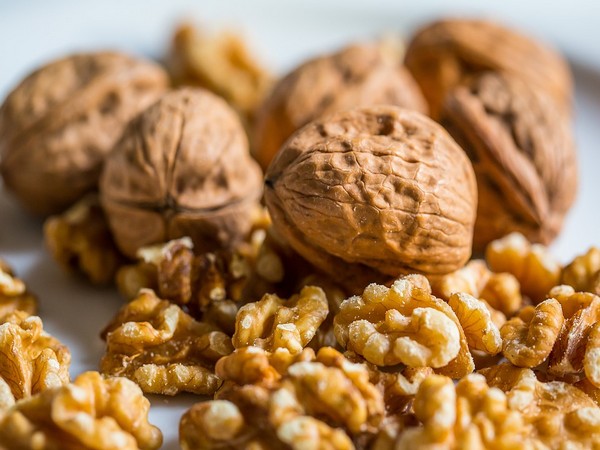
Walnuts contain Omega-3 fatty acids and polyphenols.

California [US], Jan 28 (ANI): Walnut consumption by healthy, elderly adults had little effect on cognitive function over two years, but had a greater effect on elderly adults, who had smoked more and had a lower baseline neuropsychological test scores, says a study conducted by researchers in California and Spain.
Walnuts contain omega-3 fatty acids and polyphenols, which have previously been found to counteract oxidative stress and inflammation, both of which are drivers of cognitive decline.
The study published in 'The American Journal of Clinical Nutrition' examined nearly 640 free-living elders in Loma Linda, California, USA, and in Barcelona, Catalonia, Spain. For two years, the test group included walnuts in their daily diet, and the control group abstained from walnuts.
Study's principal investigator Joan Sabate said: "While this was a minor result, it could lead to better outcomes when conducted over longer periods of time."
"Further investigation is definitely warranted based on our findings, especially for disadvantaged populations, who may have the most to gain from incorporating walnuts and other nuts into their diet."
Sabate and his research team at Loma Linda University were the first to discover the cholesterol-lowering effect of nut consumption specifically walnuts, with lowering blood cholesterol. Findings were first published in the New England Journal of Medicine in 1993.
Subsequently, findings from Loma Linda University researchers have linked nut consumption to lower risk of cardiovascular diseases. (ANI)

Get the App

What to Read Next

Health

'Brain activity can predict risky decisions before they happen'

'Brain activity can predict risky decisions before they happen'

Scientists at the University of California, San Francisco (UCSF) and the University of California, Berkeley have identified two neighbouring regions in the human brain that appear to compete when a person decides whether to take a risk, and found that their activity can predict the decision nearly half a second before it is made.

Read More
Health

Study finds weight loss medicines link to hair loss in men

Study finds weight loss medicines link to hair loss in men

Weight loss drugs such as Ozempic, Wegovy and Zepbound may be linked to a higher risk of male pattern hair loss, with men already genetically predisposed to the condition facing a 7 per cent added risk, according to a new study led by researchers at NYU Langone Health.

Read More
Health

Low fat vegan diet help people lose weight without eating less

Low fat vegan diet help people lose weight without eating less

A low-fat vegan diet may support weight loss without the need to count calories, reduce portion sizes, or constantly battle hunger. In a 16-week clinical trial, participants following a diet centred on fruits, vegetables, grains and legumes consumed around 357 fewer calories per day, despite eating nearly the same amount of food overall.

Read More
Health

Daily glass of fruit juice may links to lower depression scores

Daily glass of fruit juice may links to lower depression scores

A daily glass of 100% fruit juice or a smoothie may help improve more than just fruit intake. In a small four-week trial, participants who added one to a healthier diet showed significantly lower depression scores, hinting that a simple dietary change could also support mental well-being.

Read More
Health

Scientists detect sharp acceleration in global warming

Scientists detect sharp acceleration in global warming

According to the study published on the Science Daily website, the acceleration, which became visible around 2013 to 2015, appeared across five major global temperature datasets with more than 98% statistical certainty.

Read More
Home About Us Our Products Advertise Contact Us Terms & Condition Privacy Policy

Copyright © aninews.in | All Rights Reserved.