Brain activity can predict risky decisions before they happen: Study
Scientists at the University of California, San Francisco (UCSF) and the University of California, Berkeley have identified two neighbouring regions in the human brain that appear to compete when a person decides whether to take a risk, and found that their activity can predict the decision nearly half a second before it is made.
ANI
Sep 15, 2026 23:00 IST

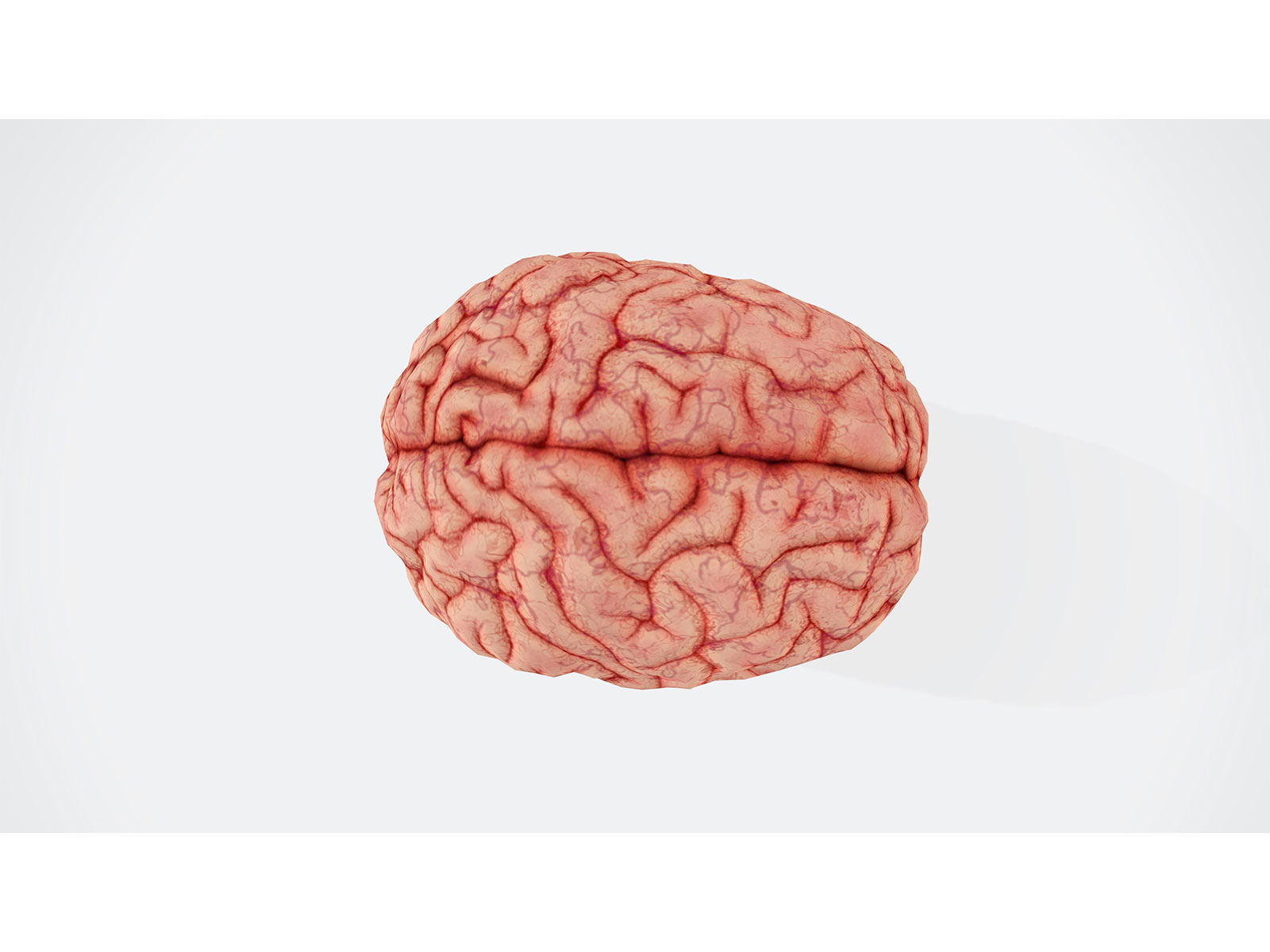
San Francisco (California) [US], September 15 (ANI): Scientists at the University of California, San Francisco (UCSF) and the University of California, Berkeley have identified two neighbouring regions in the human brain that appear to compete when a person decides whether to take a risk, and found that their activity can predict the decision nearly half a second before it is made.
As per Eureka Alert!, the findings, published in Nature Neuroscience, offer a real-time look at how the brain weighs risk against reward and could eventually help improve treatments for psychiatric conditions associated with excessive risk-taking or avoidance, including addiction, gambling disorders, depression and obsessive-compulsive disorder (OCD).
The researchers recorded brain activity directly from the orbitofrontal cortex, a region located just behind the eyes. They worked with patients who already had electrodes implanted as part of surgical evaluation for epilepsy or psychiatric conditions.
The electrodes allowed scientists to monitor neural activity on a millisecond timescale while the patients made decisions in an immersive video game designed specifically to test risk-taking behaviour.
“We’ve long suspected that this region was where the brain weighs reward against risk, but we’ve never been able to measure it while it is happening in the human brain in real time until now,” said Edward Chang, MD, Joan and Sanford I. Weill Chair of the Department of Neurological Surgery at UCSF and co-senior author of the study.
Previous research into decision-making has largely relied on functional magnetic resonance imaging (fMRI). However, the orbitofrontal cortex is difficult to study using fMRI because nearby sinuses can distort imaging signals.
Clara Starkweather, MD, PhD, a neurosurgery chief resident at UCSF, also wanted participants to be genuinely engaged in the decisions they were making.
“They’d be falling asleep, and I thought there was no way they really cared about what they were doing,” Starkweather recalled, adding, “But then I’d see patients sitting in their beds playing Candy Crush, getting really into it.”
That observation led Starkweather to develop an immersive video game in which participants navigated a maze of hallways lined with bombs while attempting to reach glowing treasure chests. Each hallway contained a different combination of potential risks and rewards, including bombs that could explode and rubies that could be found inside the chests.
“There’s just one decision point, whether you go down each hallway,” Starkweather said.
Six patients participated in the study as researchers recorded activity from electrodes across their orbitofrontal cortices.
The team found that activity in one area, the medial orbital sulcus near the middle of the eyebrow, increased shortly before participants chose to take a risk, such as entering a hallway containing bombs.
A neighbouring region located about two centimetres toward the side of the eyebrow showed the opposite pattern. Its activity increased before participants avoided a risk, such as choosing not to enter the bomb-lined hallway.
According to the researchers, the two signals moved in almost exact opposition, down to the millisecond.
Starkweather then developed a computer model to understand how the two regions could interact to produce a single decision. The model suggested that the neural circuitry functions like a tug-of-war, with one signal rising as the other falls until one ultimately dominates.
On straightforward decisions, such as a hallway offering treasure without any bombs, the signal associated with taking the opportunity won almost immediately.
More difficult decisions, involving a closer balance between risk and reward, produced a different pattern. The two signals repeatedly shifted back and forth before one ultimately prevailed.
By analysing these patterns of brain activity, the researchers could determine which decision a participant was about to make before the person actually moved.
“Most models of decision-making assume the brain gradually ramps up evidence until it crosses a threshold, like a dial slowly turning,” said Robert Knight, MD, professor of Psychology and Neuroscience at UC Berkeley and co-senior author of the study.
“What we saw instead was more like a switch flipping back and forth, oscillating between two extremes until one held.”
### Potential implications for psychiatric treatment
The researchers said the findings could have implications for conditions in which the balance between risk-taking and caution becomes disrupted.
People with depression, anxiety and OCD can display excessive avoidance, while addiction and gambling disorders can involve unhealthy risk-taking. The researchers suggested that these behaviours may be linked, at least in part, to an imbalance within the neural circuitry involved in everyday decision-making.
The orbitofrontal cortex is already a target for brain stimulation treatments for some of these conditions. However, the region is relatively large, and treatment effects can vary.
Identifying smaller areas associated with specific behaviours could potentially allow future treatments to target the relevant circuits more precisely.
A related UCSF trial, led by Andrew Moses Lee, MD, PhD, and Andrew Krystal, MD, has involved stimulating brain fibres connected to the same region that Starkweather's study identified as being involved in avoidance. According to the researchers, such an approach could potentially help patients with severe, treatment-resistant OCD make more balanced decisions in real time.
For Starkweather, the broader goal is to develop a more objective way of understanding how psychiatric conditions affect decision-making.
“Right now, psychiatry mostly relies on asking people how they feel,” Starkweather said, adding, “I want to give it something more objective: a real, measurable signature of how someone’s brain weighs risk, so treatment can target the specific circuit that’s off, in addition to a mood score.” (ANI)
Tags:
Get the App