Using near-infrared spectroscopy to study how baby brain responds to touch
Tokyo Metropolitan University researchers have studied how an infant's brain reacts to touch based on the amount of oxygenated haemoglobin in their blood. They discovered that while the amount of variation in levels over time changes with infant age, the moment at which they peak remains constant.
ANI
Dec 11, 2023 18:58 IST

Tokyo [Japan], December 11 (ANI): Tokyo Metropolitan University researchers have studied how an infant's brain reacts to touch based on the amount of oxygenated haemoglobin in their blood. They discovered that while the amount of variation in levels over time changes with infant age, the moment at which they peak remains constant.
They made this discovery using spectroscopic techniques and external sensors applied to the scalps of sleeping babies. Findings such as these provide insight into the development of neonatal physiology.
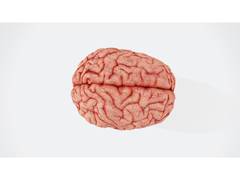
The first phase of a newborn's life is a dazzling array of rapid developmental changes. Neuroscience is giving us unprecedented insight into these processes, powered by state-of-the-art measurement techniques. Two key tools on this journey are functional magnetic resonance imaging (fMRI) and near-infrared spectroscopy (NIRS) of the brain. With NIRS, an array of external sensors placed on an infant's head lets scientists track how the flow of different compounds in the brain changes over time. There is a particular focus on haemoglobin, the key oxygen-carrying component of our blood. As the brain responds to input from the outside world like light, heat, and touch, oxygen rushes to the brain; NIRS lets us pick out levels of haemoglobin, even telling apart whether it is carrying oxygen or has already delivered its cargo.
Now, a team led by Assistant Professor Yutaka Fuchino from Tokyo Metropolitan University have applied NIRS to study how infant brains respond to touch. Looking at a range of infants aged zero to one, the team placed sensors on infants' scalps as they slept, and tracked how oxygenated haemoglobin levels changed over time as their limbs were given a very gentle shake. Interestingly, infants at different ages over their first year showed a very similar response time, with a small peak in haemoglobin appearing a few minutes after the stimulus began. The fact that infants in their first month responded in basically the same way as those over six months suggests that the factors determining the speed of the response are complete at birth.
However, they also noticed that the range over which the signal varied, or the amplitude, was markedly different between infants in different age groups. The change was also not linear, in that it dipped for infants 1 to 2 months old then increased again as the age increased. This curious behaviour could be attributed to certain aspects of a newborn infant's first few months. For one, when they are born, there is a rapid rise in oxygen levels due to being able to breathe normally for the first time. This inhibits the production of erythropoietin, a small protein responsible for stimulating red blood cell production; this leads to temporary anaemia over the first few months. Levels gradually recover as erythropoietin production ramps up again to compensate. Other factors include developments in nerves, veins, and levels of blood flow.
Importantly, the team's work highlights how NIRS statistics of haemoglobin levels in the brain can reflect developmental changes. Future studies promise to compare other physiological responses to changes in blood flow dynamics, yielding further insights into how the brain and its interactions with the body develop. (ANI)
Tags:
Get the App