Sustained cellular immune dysregulation in individuals recovering from COVID-19: Study
Birmingham [UK], December 30 (ANI): Observational clinical research of COVID-19 patients can help clinicians better understand how the previously unknown SARS-CoV-2 virus acts, and findings from recent research can better inform treatment and vaccine design.
ANI
Dec 30, 2020 09:54 IST

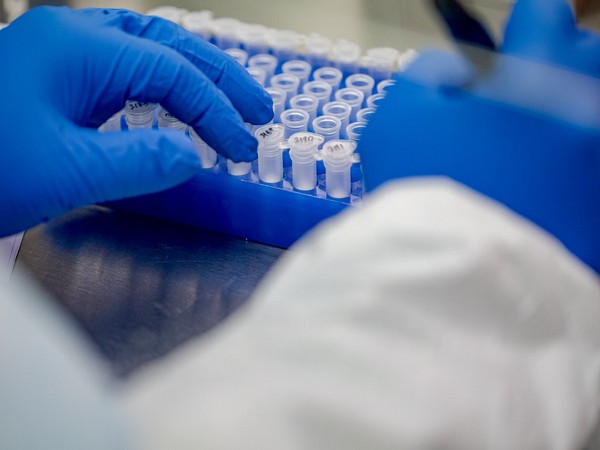
Birmingham [UK], December 30 (ANI): Observational clinical research of COVID-19 patients can help clinicians better understand how the previously unknown SARS-CoV-2 virus acts, and findings from recent research can better inform treatment and vaccine design.
The University of Alabama at Birmingham researchers, led by first-author Jacob "Jake" Files and co-senior authors Nathan Erdmann, M.D., PhD, and Paul Goepfert, M.D., have now reported their observational study, "Sustained cellular immune dysregulation in individuals recovering from SARS-CoV-2 infection," published in the Journal of Clinical Investigation.
COVID-19, which has killed 1.7 million people worldwide, does not follow a uniform path.
Many infected patients remain asymptomatic or have mild symptoms. Others, especially those with comorbidities, can develop the severe clinical disease with atypical pneumonia and multiple system organ failures.
Since the first cases were reported in December 2019, the SARS-CoV-2 virus that causes COVID-19 has surged into a pandemic, with cases and deaths still mounting. Ongoing observational clinical research has become a priority to better understand how this previously unknown virus acts, and findings from this research can better inform treatment and vaccine design.
In a commentary on the UAB study, published in the same issue, Phillip Mudd, M.D., Ph.D., and Kenneth Remy, M.D., both of Washington University, wrote, "The importance of these studies to provide context for the interpretation of immune responses generated by participants in COVID-19 vaccine trials, including how those responses change over time, cannot be over-emphasized. This information will be key in potential modifications to existing COVID-19 vaccines and treatments."
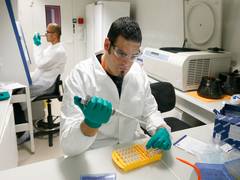
The UAB researchers obtained blood samples and clinical data from 46 hospitalized COVID-19 patients and 39 non-hospitalized individuals who had recovered from confirmed COVID-19 infection. Both groups were compared to healthy, COVID-19-negative controls. Importantly, most individuals in the hospitalized group had active SAR-CoV-2 viruses in their blood and were in the hospital at the time of sample collection. All individuals in the non-hospitalized group were convalescent at the time of sample collection.
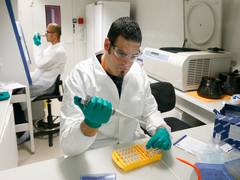
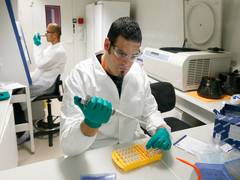
From the blood samples, researchers were able to separate specific immune cell subsets and analyze cell surface markers. From this complex information, immunologists can analyze how each individual's immune system is responding during infection and during convalescence. Some of these results can reveal whether immune cells have become activated and exhausted by the infection. Exhausted immune cells may increase susceptibility to a secondary infection or hamper development of protective immunity to COVID-19.
In addition, the researchers were able to analyze changes over time, in two ways. The first was observing changes in surface markers over time, defined as days since the onset of symptoms for non-hospitalized samples. The second was directly comparing the frequencies of these markers between the first and second clinic visits for non-hospitalized patients who had blood samples collected at two sequential timepoints.
The most surprising finding involved non-hospitalized patients. While the UAB researchers saw upregulated activation markers in hospitalized patients, they also found several activation and exhaustion markers were expressed at higher frequencies in non-hospitalized convalescent samples.
Looking at these markers over time, it was apparent that immune dysregulation in the non-hospitalized individuals did not quickly resolve. Furthermore, the dysregulation of T cell activation and exhaustion markers in the non-hospitalized cohort was more pronounced in the elderly. "To our knowledge," the researchers reported, "this is the first description of sustained immune dysregulation due to COVID-19 in a large group of non-hospitalized convalescent patients."
For details of the comprehensive look at immune cells subsets during and after COVID-19 infection in hospitalized and non-hospitalized people, see the study, which includes an in-depth characterization of the activation and exhaustion phenotype of CD4+ T cells, CD8+ T cells and B cells.
The B and T cells from both patient cohorts had phenotypes consistent with activation and cellular exhaustion throughout the first two months of infection. And in the non-hospitalized individuals, the activation markers and cellular exhaustion increased over time. "These findings," Mudd and Remy said in their commentary, "illustrate the persistent nature of the adaptive immune system changes that have been noted in COVID-19 and suggest longer-term effects that may shape the maintenance of immunity to SARS-CoV-2."
A question now being explored, the UAB researchers say, is whether these observed immunologic changes are associated with symptoms experienced well beyond the acute infection, often described as "Long COVID."
Co-authors with Files, Erdmann and Goepfert in the Journal of Clinical Investigation report are Sushma Boppana, Mildred D. Perez, Sanghita Sarkar, Kelsey E. Lowman, Kai Qin, Sarah Sterrett, Eric Carlin, Anju Bansal, Steffanie Sabbaj, Olaf Kutsch and James Kobie, Division of Infectious Diseases, UAB Department of Medicine; and Dustin M. Long, Department of Biostatistics, UAB School of Public Health. (ANI)
Tags:
Get the App