Simulation training helps perfecting surgical skills, finds study
Sapporo [Japan], February 8 (ANI): Practice makes a person perfect, but what if the practice itself is life-threatening? Dangerous professions, such as aviation or the military, require extensive simulation-based training to assist the person till they learn to do the job. With advances in technology, simulation-based training is an option to improve skills in even more fields, including surgery.
ANI
Feb 08, 2022 18:08 IST

Sapporo [Japan], February 8 (ANI): Practice makes a person perfect, but what if the practice itself is life-threatening? Dangerous professions, such as aviation or the military, require extensive simulation-based training to assist the person till they learn to do the job. With advances in technology, simulation-based training is an option to improve skills in even more fields, including surgery.
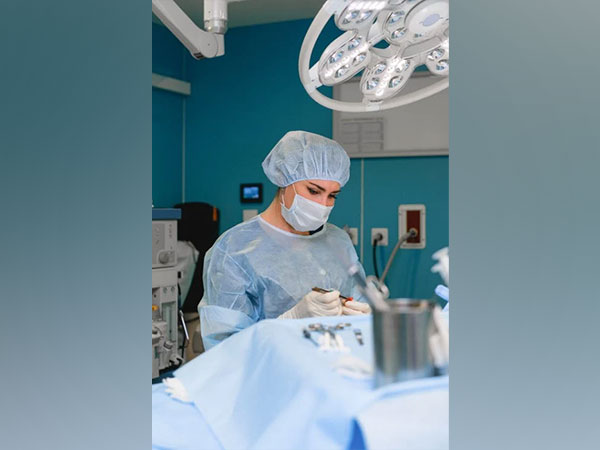
A large-scale study has found that simulation-based surgical training produced an increase of surgeons' skills for more complex surgeries. The results were published in the journal 'European Urology'.
An international research team leading a randomized controlled trial across 10 countries found that while simulation-based training did not statistically improve initial learning curves regarding surgeon's general proficiency, it did produce an increase of skills in more complex surgeries, with fewer total complications and ureteric injuries in the simulation group.
"To date, there have been limited data, mostly from small-scale studies conducted with medical students, assessing the transferability of surgical simulation," said one of the paper's authors, Takashige Abe, Associate Professor of Urology at Hokkaido University's Graduate School of Medicine in Japan. "The aim of this multicenter international randomized controlled trial was to evaluate whether surgical residents who undergo additional simulation training are able to achieve proficiency sooner and with better patient outcomes when compared to standard operation room-based training."
The trial followed 65 participants in 10 countries for 18 months, or to a completion of 25 procedures. Split relatively evenly by location, a total of 32 participants received simulation-based training and 33 received conventional apprenticeship-style training. Both remained supervised by more experienced surgeons. Altogether, the participants performed a total of 1,140 surgeries, either semi-rigid or flexible ureteroscopy to remove ureteral or renal stones, respectively, demonstrating "mixed results" in proficiency.
"For our primary outcome measure, while we showed what might be deemed a clinically meaningful difference, it was not statistically significant," Abe said. "However, when stratified to each procedure type, there were higher rates of proficiency in the simulation-based training group when it came to the more technically challenging flexible ureteroscopy procedure."
Abe also noted that those who underwent simulation-based training outperformed the other group, scoring higher on a standard assessment for each surgery.
"Simulation-based training led to higher overall proficiency scores than for conventional training, and fewer procedures were required to achieve proficiency in the complex form of the index procedure, with fewer serious complications overall," Abe said. "It is expected that the results of the trial will have a positive impact for advanced procedural training beyond the fields of surgery and urology in order to promote patients' safety as well as better surgical outcomes." (ANI)
Tags:
Get the App