Researchers discover new type of Brain cells that allow you to remember objects
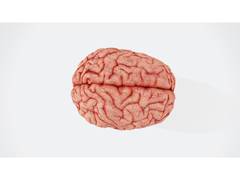
Researchers have discovered a new type of neuron that plays a fundamental role in recognition memory. It means how the brain registers the difference between new and familiar objects and forms long-term memories. These are named Ovoid Cells. They are found in the hippocampus of mice, humans and other mammals.
ANI
Feb 14, 2025 23:00 IST

Vancouver [Canada], February 14 (ANI): Researchers have discovered a new type of neuron that plays a fundamental role in recognition memory. It means how the brain registers the difference between new and familiar objects and forms long-term memories. These are named Ovoid Cells. They are found in the hippocampus of mice, humans and other mammals.
Discovering the neuron provides key insights into how memories form and into the treatment of brain conditions related to object recognition, such as Alzheimer's disease, Autism Spectrum Disorder, and epilepsy.
In a study published today in Nature Communications, the researchers have discovered a new type of brain cell that plays a central role in our ability to remember and recognize objects.
Called 'ovoid cells,' these highly specialized neurons activate each time we encounter something new. It triggers a process that stores those objects in memory and allows us to recognize them months--potentially even years--later.
"Object recognition memory is central to our identity and how we interact with the world," said Dr. Mark Cembrowski, the study's senior author, and an associate professor of cellular and physiological sciences at UBC and investigator at the Djavad Mowafaghian Centre for Brain Health. "
Knowing if an object is familiar or new can determine everything from survival to day-to-day functioning, and has huge implications for memory-related diseases and disorders."
Ovoid cells, named for the distinct egg-like shape of their cell bodies, are present in relatively small numbers within the hippocampus of humans, mice, and other animals.
Adrienne Kinman, a PhD student in Dr Cembrowski's lab and the study's lead author, discovered the cells' unique properties while analyzing a mouse brain sample when she noticed a small cluster of neurons with highly distinctive gene expression.
"And with further analysis, we saw that they are quite distinct from other neurons at a cellular and functional level, and in terms of their neural circuitry."
The researchers are now investigating the role that ovoid cells play in a range of brain disorders. The team's hypothesis is that when the cells become dysregulated, either too active or not active enough, they could be driving the symptoms of conditions like Alzheimer's disease and epilepsy. (ANI)
Tags:
Get the App