ADD ANI AS A TRUSTED SOURCE
googleads
Menu
Health

Research: Is the cost of treating a hereditary neuromuscular disease affected by the timing of treatment?

New Jersey [US], June 8 (ANI): Early detection and treatment of children with spinal muscular atrophy (SMA), a genetic ailment characterised by muscle weakness and wasting, can minimise the total financial expenditures associated with the condition, according to new research.

ANI Jun 08, 2022 13:53 IST googleads

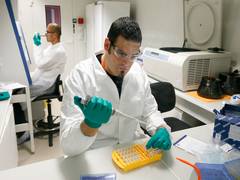
Representative image

New Jersey [US], June 8 (ANI): Early detection and treatment of children with spinal muscular atrophy (SMA), a genetic ailment characterised by muscle weakness and wasting, can minimise the total financial expenditures associated with the condition, according to new research.
The research is published in the journal, "Developmental Medicine & Child Neurology."
In the analysis of data pertaining to 149 patients, (93 untreated, 42 treated after symptoms arose, and 14 treated after early diagnosis), the total societal cost was lower in untreated patients (due to high drug costs in treated patients), but costs were lower for treated patients who were identified by newborn screening than for treated patients identified due to the development of symptoms.
"These data are important as they are issued from a real-life perspective collection. They demonstrate clearly that as long as the decision to reimburse treatments for SMA has been made, newborn screening becomes a no-brainer--not only because it gives patients a much better future, but also because it saves a significant amount of money for the taxpayer," said senior author Laurent Servais, PhD, of the University of Liege, in Belgium and the University of Oxford, in the UK. "Using these data issued from the real world, we are working currently on a model that estimates the lifetime cost of the different strategies."
Developmental Medicine & Child Neurology (DMCN) is a multidisciplinary journal that has defined the fields of paediatric neurology and childhood-onset neuro disability for over 60 years. DMCN disseminates the latest clinical research results globally to enhance the care and improve the lives of disabled children and their families. (ANI)

Get the App

What to Read Next

Health

The truth about ‘Eating for Two’ explained by doctors

The truth about ‘Eating for Two’ explained by doctors

Health experts warn that interpreting the advice literally can lead to excessive calorie intake, unhealthy weight gain and a higher risk of Gestational Diabetes Mellitus (GDM), a condition that affects blood sugar levels during pregnancy.

Read More
Health

Pre-workout supplements may cut sleep in half for young users

Pre-workout supplements may cut sleep in half for young users

A popular fitness trend among young people may be quietly undermining their sleep. A new study led by researchers at the University of Toronto has found that teenagers and young adults who use pre-workout supplements are significantly more likely to experience extremely short sleep durations.

Read More
Health

Scientists discover reason high altitude protects against diabete

Scientists discover reason high altitude protects against diabete

Living at high altitude appears to protect against diabetes, and scientists have finally discovered the reason. When oxygen levels drop, red blood cells switch into a new metabolic mode and absorb large amounts of glucose from the blood.

Read More
Health

Scientists find clue to human brain evolution in finger length

Scientists find clue to human brain evolution in finger length

Human evolution has long been tied to growing brain size, and new research suggests prenatal hormones may have played a surprising role. By studying the relative lengths of the index and ring fingers, a marker of prenatal exposure to oestrogen and testosterone, researchers found that higher prenatal oestrogen exposure was associated with larger head size in newborn boys.

Read More
Health

Scientists find hidden synapse hotspots in the teen brain: Study

Scientists find hidden synapse hotspots in the teen brain: Study

The scientists have discovered that the adolescent brain does more than prune old connections. During the teen years, it actively builds dense new clusters of synapses in specific parts of neurons.

Read More
Home About Us Our Products Advertise Contact Us Terms & Condition Privacy Policy

Copyright © aninews.in | All Rights Reserved.