People with more muscle power tend to live longer: study
Washington DC [USA], Apr 15 (ANI): Here's yet another reason to hit the gym and lift weights. According to a recent study, by increasing your muscle power, you can prolong your life.
ANI
Apr 15, 2019 10:34 IST

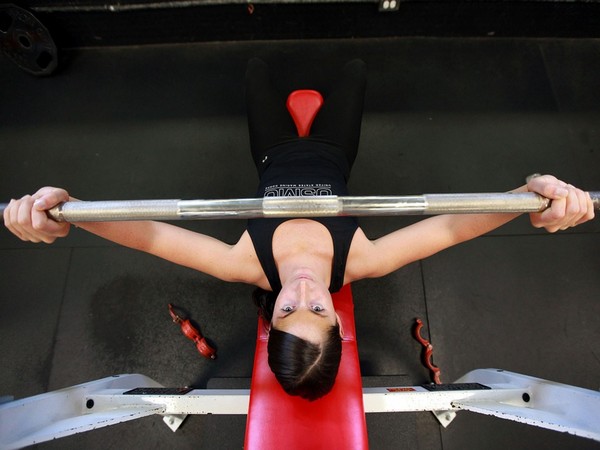
Washington DC [USA], Apr 15 (ANI): Here’s yet another reason to hit the gym and lift weights. According to a recent study, by increasing your muscle power, you can prolong your life.
“Rising from a chair in old age and kicking a ball depends more on muscle power than muscle strength, yet most weight-bearing exercises focus on the latter. Our study shows for the first time that people with more muscle power tend to live longer,” said Professor Claudio Gil Araújo, lead author of the study.
Power depends on the ability to generate force and velocity and to coordinate movement. In other words, it is the measure of the work performed per unit time; more power is produced when the same amount of work is completed in a shorter period or when more work is performed during the same period. Climbing stairs requires power - the faster you climb, the more power you need. Holding or pushing a heavy object (for example a car with a dead battery) needs strength.
“Power training is carried out by finding the best combination of speed and weight being lifted or moved. For strength training at the gym, most people just think about the amount of weight being lifted and the number of repetitions without paying attention to the speed of execution. But for optimal power training results, you should go beyond typical strength training and add speed to your weight lifts,” Araújo explained.
The study, discussed in the meeting of EuroPrevent 2019, enrolled 3,878 non-athletes aged 41-85 years who underwent a maximal muscle power test using the upright row exercise between 2001 and 2016. The average age of participants was 59 years, 5% were over 80, and 68% were men. The highest value achieved after two or three attempts with increasing loads was considered the maximal muscle power and expressed relative to body weight (i.e. power per kg of body weight). Values were divided into quartiles for survival analysis and analysed separately by sex.
During a median 6.5-year follow-up, 247 men (10%) and 75 women (6%) died. Median power values were 2.5 watts/kg for men and 1.4 watts/kg for women. Participants with a maximal muscle power above the median for their sex (i.e. in quartiles three and four) had the best survival. Those in quartiles two and one had, respectively, a 4-5 and 10-13 times higher risk of dying as compared to those above the median in maximal muscle power.
Professor Araújo noted that this is the first time the prognostic value of muscle power has been assessed. Previous research has focused on muscle strength, primarily using the handgrip exercise. The upright row exercise was chosen for the study because it is a common action in daily life for picking up groceries, grandchildren, and so on. The researchers are currently examining the link between muscle power and specific causes of death including cardiovascular disease and cancer.
He added: "Doctors should consider measuring muscle power in their patients and advise more power training."
How to train to increase your muscle power:
* Choose multiple exercises for the upper and lower body
* Choose a weight with the load to achieve the maximal power (not so easy to lift and not so heavy that you can barely lift it)
* Do one to three sets of six to eight repetitions moving the weight as fast as possible while you contract your muscles (slow or natural speed in returning to initial position)
* Rest for 20 seconds between each set to sufficiently replenish the energy stores in your muscles to start the new set
* Repeat the above for the other exercises (biceps curl, etc.)
How to progress:
* Start with six repetitions in each set and when the exercise becomes easy, try to increase to eight
* If it becomes easy again, increase the weight and go back to six repetitions
* If you are unable to complete the repetitions with the proper technique, avoid cheating and go back to less repetitions or less weight. This is important to prevent injuries. (ANI)
Tags:
Get the App