

ADD ANI AS A TRUSTED SOURCE
googleads
ANI Logo
Menu
Health

Moderate physical activity favours good sleep: Research

Proper sleep is critical for the maintenance of good health, and vice versa -- a healthy lifestyle has been found to improve sleep quality. To better examine the relationship between physical activity and sleep, a team of researchers conducted a comprehensive study among middle-aged Japanese people. By outlining the factors improving sleep quality, this line of research can hopefully help in preventing sleep-related disorders.

ANI Feb 01, 2023 01:10 IST googleads

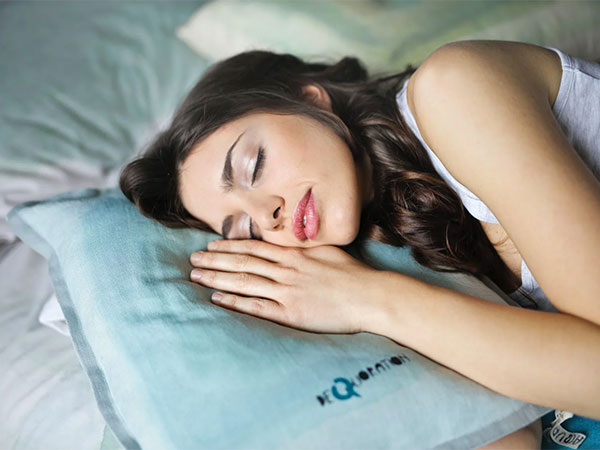
Representative Image

Tokyo [Japan], February 1 (ANI): Humans need a sufficient amount of high-quality sleep to maintain their physical and mental health. For instance, getting enough quality sleep can help treat a number of conditions, such as dementia, mental illness, and metabolic, cardiovascular, and metabolic disorders. On the other hand, sleep disorders like insomnia, narcolepsy, and excessive drowsiness are very common all over the world and may cause major health problems.
50 to 70 million adult Americans from sleep disorders, particularly insomnia. Meanwhile, a meta-analysis of 17 research found that 15 per cent of people in China suffer from sleeplessness. It's crucial to research the elements that support high-quality sleep in order to comprehend such conditions better. According to earlier studies, leading a healthy lifestyle that includes eating well and exercising frequently is beneficial.
Previous studies have indicated that a proper lifestyle, including a healthy diet and regular physical activity, is beneficial for good sleep. However, a systematic comprehensive study is lacking in this area of research.
To this end, a team of researchers from Japan, Canada, and Taiwan -- led by Associate Professor Javad Koohsari from the School of Knowledge Science at Japan Advanced Institute of Science and Technology (JAIST), who is also an adjunct researcher at the Faculty of Sport Sciences at Waseda University, has probed the inter-relationship between sedentary behaviour, physical activity, and sleep quality in a sample of the middle-aged Japanese population.
The research group, comprising Professor Yukari Nagai, also from JAIST; Professor Akitomo Yasunaga from Bunka Gakuen University; Associate Professor Ai Shibata from the University of Tsukuba; Professor Yung Liao from National Taiwan Normal University; Associate Professor Gavin R. McCormack from the University of Calgary, and Professor Koichiro Oka and Professor Kaori Ishii from Waseda University, based their study on Japanese adults between 40 and 64 years of age -- a crucial time window which often marks the onset of various health issues. Their work has been recently published in Scientific Reports.
The researchers used an isotemporal substitution approach, which estimates the effect of replacing one activity type with another for the same amount of time. Dr Koohsari said, "We replaced 60 minutes of sedentary behaviour or light-intensity physical activity with moderate-to-vigorous physical activity in the participants' schedules."
An accelerometer monitored the participants' level of physical activity for seven consecutive days. A questionnaire was then used to assess the participants' quality of sleep and rest.
The replacement of sedentary behaviour with moderate-to-intense exercise indeed improved sleep quality. Interestingly, this association was seen to be gender-based and was only found in women. This is in agreement with reports that have shed light on gender-based differences in sleep disorders. More studies are, however, required to understand why these gender-based dissimilarities occur.
In summary, this study contributes to the existing pool of studies that provide empirical evidence of the importance of physical activity in promoting good-quality sleep. Hopefully, these studies will serve as a useful platform for further research on the prevention of sleep-related disorders.
Surely, we now have enough motivation for regularising our workout schedules! (ANI)


Get the App

What to Read Next

Health

The truth about ‘Eating for Two’ explained by doctors

The truth about ‘Eating for Two’ explained by doctors

Health experts warn that interpreting the advice literally can lead to excessive calorie intake, unhealthy weight gain and a higher risk of Gestational Diabetes Mellitus (GDM), a condition that affects blood sugar levels during pregnancy.

Read More
Health

High-fat keto diet may boost exercise benefits

High-fat keto diet may boost exercise benefits

A new study suggests that eating more fat rather than less could help the body gain greater benefits from exercise when blood sugar levels are high, offering an unexpected perspective on how diet and physical activity work together to support metabolic health.

Read More
Health

Pre-workout supplements may cut sleep in half for young users

Pre-workout supplements may cut sleep in half for young users

A popular fitness trend among young people may be quietly undermining their sleep. A new study led by researchers at the University of Toronto has found that teenagers and young adults who use pre-workout supplements are significantly more likely to experience extremely short sleep durations.

Read More
Health

The more you fear aging, the faster your body may age

The more you fear aging, the faster your body may age

Worrying about getting older especially fearing future health problems may actually speed up aging at the cellular level, according to new research from NYU.

Read More
Health

Scientists discover reason high altitude protects against diabete

Scientists discover reason high altitude protects against diabete

Living at high altitude appears to protect against diabetes, and scientists have finally discovered the reason. When oxygen levels drop, red blood cells switch into a new metabolic mode and absorb large amounts of glucose from the blood.

Read More
Health

Scientists reveal how exercise protects brain from Alzheimer's

Scientists reveal how exercise protects brain from Alzheimer's

Exercise may sharpen the mind by repairing the brain's protective shield. Researchers found that physical activity prompts the liver to release an enzyme that removes a harmful protein, causing the blood-brain barrier to become leaky with age.

Read More
Health

Scientists find clue to human brain evolution in finger length

Scientists find clue to human brain evolution in finger length

Human evolution has long been tied to growing brain size, and new research suggests prenatal hormones may have played a surprising role. By studying the relative lengths of the index and ring fingers, a marker of prenatal exposure to oestrogen and testosterone, researchers found that higher prenatal oestrogen exposure was associated with larger head size in newborn boys.

Read More
Health

MRI scans show exercise can make the brain look younger

MRI scans show exercise can make the brain look younger

New research suggests that consistent aerobic exercise can help keep your brain biologically younger. Adults who exercised regularly for a year showed brains that appeared nearly a year younger than those who didn't change their habits.

Read More
Health

Scientists solve a major roadblock in cancer cell therapy: Study 

Scientists solve a major roadblock in cancer cell therapy: Study 

Researchers have found a reliable way to grow helper T cells from stem cells, solving a major challenge in immune-based cancer therapy. Helper T cells act as the immune system's coordinators, helping other immune cells fight longer and harder.

Read More
Health

Swedish study reveals when fitness and strength begin to fade

Swedish study reveals when fitness and strength begin to fade

A long-running Swedish study has followed adults for nearly five decades, uncovering when physical decline truly begins. Fitness and strength start slipping around age 35, then worsen gradually with age.

Read More
Home About Us Our Products Advertise Contact Us Terms & Condition Privacy Policy

Copyright © aninews.in | All Rights Reserved.


