Imagining recent meal as larger than reality might reduce snacking: Research
The 'meal-recall effect,' or recalling a recent meal, can limit the amount of food a person would consume later. The effect on meal-recall effect of believing that a recent meal was twice as big and satisfying as reality or recalling a recent meal in detail was explored by researchers from the University of Cambridge (e.g., what it felt like to chew and swallow the food).
ANI
Mar 07, 2023 23:20 IST

Cambridge [England], March 7 (ANI): The 'meal-recall effect,' or recalling a recent meal, can limit the amount of food a person would consume later. The effect on meal-recall effect of believing that a recent meal was twice as big and satisfying as reality or recalling a recent meal in detail was explored by researchers from the University of Cambridge (e.g., what it felt like to chew and swallow the food).
In an experiment involving 151 participants, the researchers found that imagining a meal as larger and more filling than reality resulted in 24g fewer biscuits being eaten later - equivalent to approximately two biscuits, or 122kcal fewer. Trying to vividly recall the meal, as if to relive eating it, did not elicit the meal-recall effect.
"Your mind can be more powerful than your stomach in dictating how much you eat," said lead author Dr Joanna Szypula, who conducted the research while a PhD student at Cambridge's Department of Psychology. "Our findings could give people a method to control their eating with their mind."
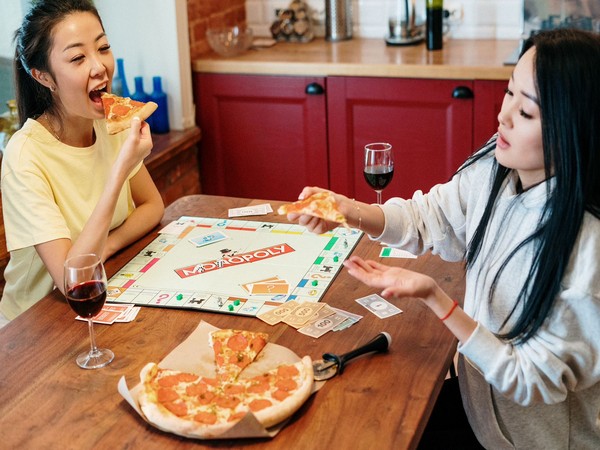
Participants in the experiment were given a microwave ready meal of rice and sauce and a cup of water. They were asked to finish their meal if possible, but not if it made them feel uncomfortably full. A three-hour interval followed in which participants were asked not to eat anything. They were then invited back to the lab to perform imagination tasks before a 'taste test' of biscuits.
Participants were then randomly allocated to one of five different groups. In three of the groups, participants were asked to recall their recent lunch at the lab. They were then asked to either imagine moving their recent lunch around a plate, recall eating their recent lunch in detail or imagine that their recent lunch was twice as big and filling as it really was.
The fourth group was shown a photograph of spaghetti hoops in tomato sauce and asked to write a description of it before imagining moving the food around a plate. The fifth group was given the same tasks, but experimenters swapped spaghetti for stationery (paperclips and rubber bands).
Next, all participants took part in a bogus 'taste test' of chocolate fingers, digestives and chocolate chip cookies. Participants rated the biscuits on 12 different taste attributes (e.g., how crunchy, chocolatey or salty they were). They were told that they were free to eat as many biscuits as they wished, as the biscuits would have to be disposed of at the end of the session for hygiene reasons. This was simply a rouse for covertly assessing snacking.
The most biscuits were eaten by the group who imagined spaghetti hoops (75.9g), followed by the group who had been asked to imagine stationary (75.5g). The group who had been asked to imagine moving their lunch around the plate ate the third greatest quantity of biscuits (72.0g), followed by the group who relived eating their lunch (70.0g). Those people who imagined their meal twice as big ate the fewest biscuits (51.1g).
Finally, all participants were asked to estimate the size of their lunch by spooning out rice and sauce to recreate their original portion sizes. Surprisingly, the group that was tasked with imagining the meal as twice as big as reality significantly underestimated portion size. This suggests that while people reduced their intake of biscuits following the imagination task, they were aware that their food portion was not actually as big as they imagined. It also suggests that the mechanism for this decrease in biscuit consumption is unlikely to be due to falsely remembering the meal as bigger than reality. No effect was found for the other groups.
"More research is needed to understand how and why the meal-recall effect works," said Szypula. "This might mean that we are able to harness the effect in a more efficient way and possibly offer valuable advice to people." (ANI)
Get the App