 हिंदी खबर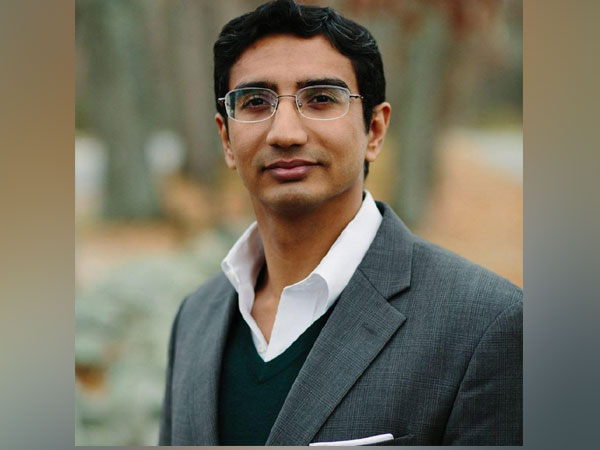

By Reena Bhardwaj
Washington D.C. [USA], Oct 10 (ANI): After welcoming Pakistan Prime Minister Imran Khan in Beijing on Tuesday, next in line for Chinese President Xi Jinping is his 'informal' visit to India, followed by the Himalayan kingdom of Nepal. As preparations are in full swing for Prime Minister Narendra Modi to receive the Chinese President in Mamallapuram, experts say that the two leaders will certainly seek cooperation over conflict.
Just a day ahead of Xi arrival in the southern Indian town of Mamallapuram for the 24-hour trip, analysts say President Jinping and Prime Minister Modi's informal summit may not see big trade or security breakthroughs, instead, the focus would be on ironing out ties.
"I think the (Indian) government has been clear from the outset that the purpose of these informal summits is not to achieve specific deliverables, but to better manage the relationship," Dhruva Jaishankar, Director at US initiative at Observer Research Foundation (ORF) in Washington told ANI.
He also said that Xi's visit to India was unlikely to see concrete discussions over further trade ties. Jaishankar reflected upon the trade deficit that has been brought up repeatedly by Indian officials over the years, including market access issues. And how it has also affected other things, like the raising of Indian tariffs on certain goods or complicating India's negotiations towards a Regional Comprehensive Economic Partnership- a proposed free trade agreement between 16 countries, including China and India.
"The question is what can India export to China that addresses this deficit, and are other actors able to compete? Barring such structural shifts, minor trade concessions on agriculture, pharmaceuticals, or other products are unlikely to address the yawning trade deficit," Jaishankar told ANI.
Reacting over Indo-China ties in the region, the ORF Director further stressed that as a neighbour, Pakistan's growing dependence on the Communist mainland may be a worrying issue, with adverse strategic implications for New Delhi.
India, on Wednesday, reacted to reports of Chinese President Xi Jinping and Pakistan Prime Minister Imran Khan discussing Kashmir saying, "China is well aware of our position. It is not for other countries to comment on the internal affairs of India."
Ministry of External Affairs spokesperson Raveesh Kumar said, "We have seen the report regarding the meeting of Chinese President Xi Jinping with Pakistan's Prime Minister Imran Khan which also refers to their discussions on Kashmir."
Khan's visit to Beijing marked his third to the Chinese capital in a year. And as expected, Khan, yet again raised the issue of Kashmir, just before President Xi Jinping's visit to India. Regardless of Khan's pitch, observers believe the summit between India and China, by all means, will sidestep the ongoing tensions between India and Pakistan over Jammu and Kashmir.
The Pakistan prime minister on Tuesday not only met President Xi but also several top business leaders to seek a bailout for Pakistan's crumbling economy. Pakistan has been one of the biggest recipients of China's Belt and Road Initiative (BRI) in recent years, but those infrastructure projects are slowing down.
Jaishankar explained that Pakistan embraced the BRI because it viewed the project as a way of overcoming its dependency on the United States. For China, Pakistan has been a key recipient for strategic reasons; the port in Gwadar is of particular strategic significance.
"However, the terms of Chinese loans have proved onerous and there have been some political sensitivities," Jaishankar added.
Jaishankar further asserted that even though elements like the thermal power projects have progressed well, they have not been accompanied by necessary power sector reforms. This means Pakistan's economic burden will be greater, and the benefits have not been forthcoming to Pakistan's economy as a whole.
"From India's point of view, Pakistan's growing dependence on China is worrying, with adverse strategic implications for New Delhi," he added.
Meanwhile, keeping the US-China trade war in view that has been gradually leading to a global economic fallout, Jaishankar further stressed that India's equation with the US may have miffed the Chinese.
China has its frustrations with India, too, from recent Indian military exercises along its borders to the upgrading of the US-Japan-Australia-India "Quad" dialogue to a ministerial level, something that serves a signalling value.
"I am not sure how China has perceived it, but India has always made it clear that it will not allow another country to have a veto over whom it can talk to. For example, India still conducts high-level meetings with Russia and China, even if the U.S. and others may not like that." Jaishanker told ANI.
The ORF Director also addressed Xi's subsequent visit to Nepal.
Xi will be the first Chinese leader to visit Nepal since 1996. From a primarily political influence, China has recently increased its economic footprint. The growing bonhomie between the two nations has India concerned according to regional experts.
Jaishankar opined that while there could be grand pronouncements when Xi visits Nepal which should not be ignored, the experience of Bangladesh is important to keep in mind. Furthermore, there are hints in Kathmandu of frustration with China and an attempt at redressing some of the irritants in relations with India.
"The Indian and Nepali governments have doubled down on efforts to implement various projects. Overall, while India should carefully watch developments in its neighbourhood, there is no need to hyperventilate over Xi's important visit to Nepal," Jaishankar said.
Dhruva Jaishankar is the Director of the US initiative of the Observer Research Foundation, a public policy think tank supported by Reliance Industries. Jaishankar has conducted research in India-US relations and India's relations in Asia and Pacific nations. (ANI)
Xi-Modi 'informal' summit not to achieve specific deliverables, but manage relations: ORF's Dhruva Jaishankar
Reena Bhardwaj | Updated: Oct 10, 2019 09:18 IST




