WHO Chief Scientist says India's COVID-19 figures worrying, calls for exercises to report actual numbers
Geneva [Switzerland], May 11 (ANI): As India is in the grasp of a devastating second wave of COVID-19, World Health Organisation (WHO) Chief Scientist Soumya Swaminathan on Monday (local time) termed the rate of infections and deaths in the country as "worrying" and called on governments to boost exercises on reporting actual numbers.
ANI
May 11, 2021 04:24 IST

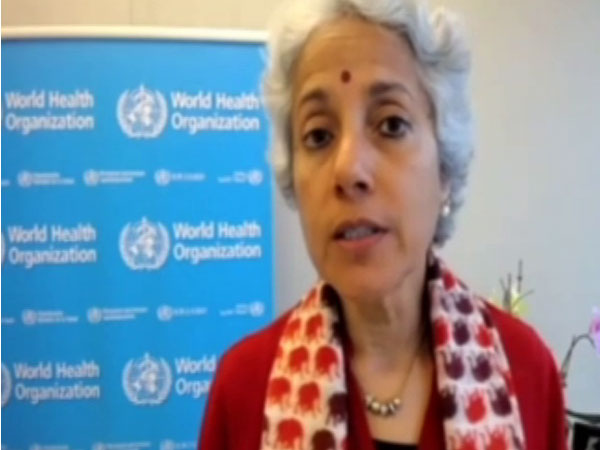
Geneva [Switzerland], May 11 (ANI): As India is in the grasp of a devastating second wave of COVID-19, World Health Organisation (WHO) Chief Scientist Soumya Swaminathan on Monday (local time) termed the rate of infections and deaths in the country as "worrying" and called on governments to boost exercises on reporting actual numbers.
In an exclusive interview with ANI, Swaminathan said that the projections of one million deaths by August projected by the Institute for Health Metrics and Evaluation (IHME) are based on models and available data, which are not predictions of the future and can be changed.
"I would say that at this point of time, the situation is very worrying, the daily number of cases and deaths that we are seeing today in India and other countries in the Southeast area region is a big concern for us and we also realise that these are underestimates. Every country in the world, in fact, the number of cases and deaths has been underestimated to its true number," she told ANI, adding that governments should boost exercises to report actual numbers.
The WHO on Monday said that the coronavirus variant first identified in India last year was being classified as a variant of global concern, with some preliminary studies showing that it spreads more easily.
"We are classifying this as a variant of concern at a global level," Maria Van Kerkhove, WHO technical lead on COVID-19, told a briefing.
The B.1.617 variant is the fourth variant to be designated as being of "global concern" and requiring heightened tracking and analysis and data collection must be done in a transparent way, the Chief Scientist added.
"It should be done and we should be aware because the better the data, the better the policies can be directed towards what is happening. Let's remember, people are not just dying of COVID, people are also dying of other illnesses for which they are not able to access healthcare," Dr Swaminathan asserted.
Indian coronavirus infections and deaths held close to record daily highs on Monday, increasing calls for the Indian government to lock down the world's second-most populous country.
Soumya Swaminathan said studies were underway in India to examine the variant's transmissibility, the severity of the disease it causes and the response of antibodies in people who have been vaccinated. The WHO scientist called for more genome sequencing in India to get a full picture of what is going on in different parts of the country, while saying that it should be hand-in-hand with clinical epidemiological studies.
"Sequencing does not give you the full picture. You do not know whether it is more transmissible, whether it causes more severe disease or what impact it has on your diagnostics," she said.
While replying to a query on travel amid the pandemic, Swaminathan said that the Review Committee on International Health Regulations (IHR) has said that vaccine passports should not be a pre-condition for travel.
"The scientific reason is that just because you are vaccinated does not mean you cannot get infected. You can see infection or you could be asymptomatic but when you travel you may infect others. The ethical argument is that not everyone has access to vaccinations now," she said, while advocating safe travel with precautions.
She also said that the double mutant - B.1.617 - is highly transmissible and a WHO committee has classified it as a 'variant of concern'.
"For now, the message is that it will be more transmissible, but it behaves the same way as other viral strains replicate the same proportions. Vaccines are still very effective against every variant in the world in protecting against severe disease and hospitalisations," she informed.
Swaminathan also called on countries to continuously update policies regarding the pandemic, which should be based on science and data. "We have to continue to adapt our policies. We cannot become stagnant. What is needed first is to call strong leadership which is based on science and data at public health principles. That needs to be updated from time to time even if you take treatment," Swaminathan added. The WHO scientist also urged data transparency in different countries and that people should be explained why certain decisions are being made and the rationale behind them.
Earlier today, WHO director-general Tedros Adhanom Ghebreyesus said that the WHO Foundation was launching a "Together for India" appeal to raise funds to purchase oxygen, medicines and protective equipment for health workers.
India is currently battling a deadly second wave of the COVID-19 pandemic, which is believed to being led by the 'double mutant'. The current wave has strained the country's health infrastructure and overburdened frontline medical workers. (ANI)
Get the App