"Want to help Cuba on humanitarian basis," says Trump
Trump was asked by a reporter that regarding Cuba, if the Nimitz aircraft carrier was sent there to intimidate the Cuban government.
ANI
May 22, 2026 01:45 IST

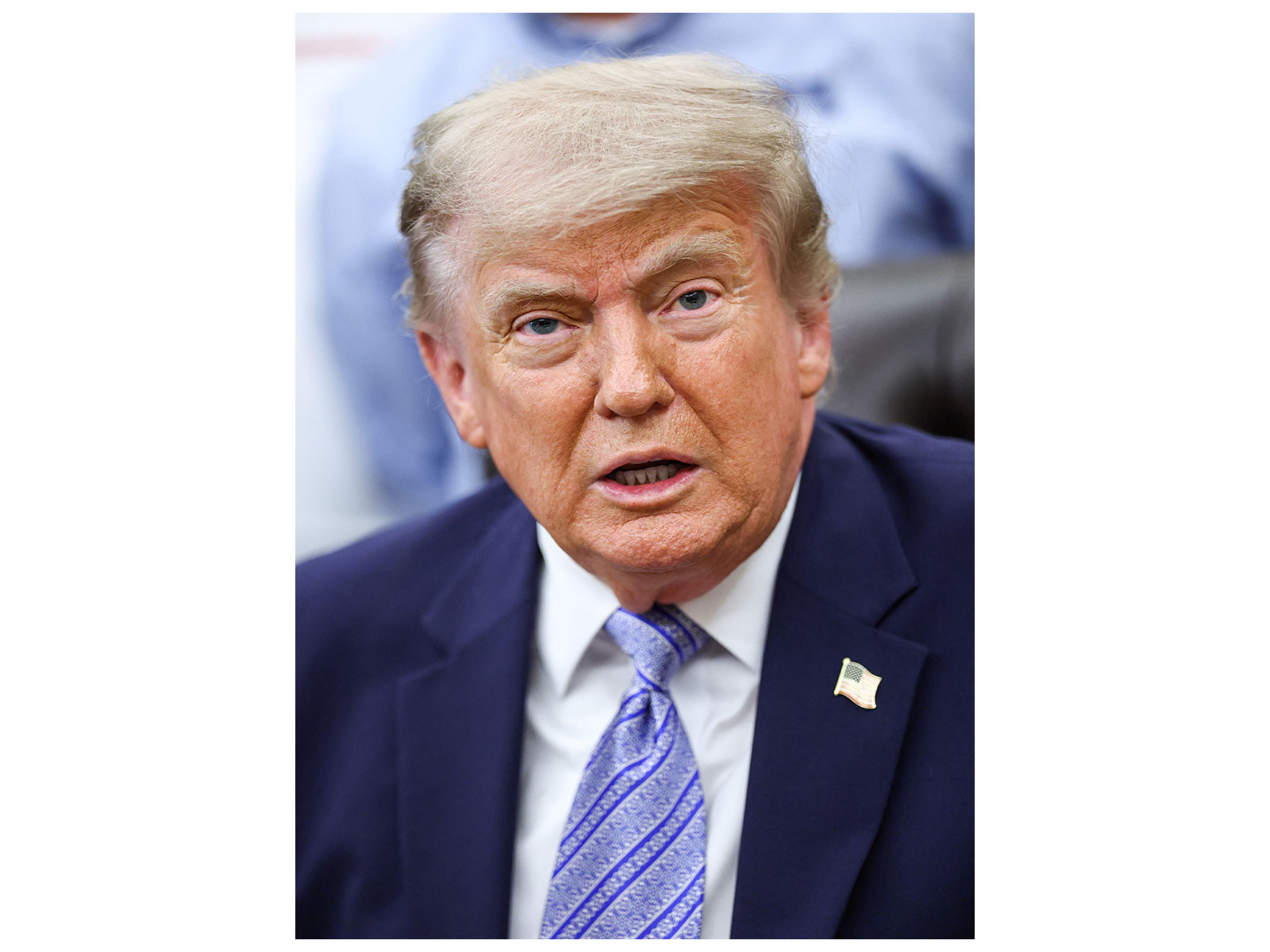
Washington DC [US], May 22 (ANI): US President Donald Trump on Thursday said the United States wants to help Cuba on humanitarian grounds amid the country's ongoing economic and power crisis.
Speaking to reporters, Trump dismissed speculation that the deployment of the aircraft carrier USS Nimitz near the region was aimed at intimidating the Cuban government.
"No, not at all. The Cuba look, it's a failed country. Everybody knows it. They don't have electricity, they don't have money, they don't have really anything. They don't have food. And we're going to help them along and we're going to help them because the people because number one, I want to help them on a humanitarian basis," he said.
He also referred to the Cuban-American community in Florida, saying many wanted to help rebuild Cuba.
"But we have the Cuban-American population, much of it living in Miami and Florida. That's a great group of people, amazing group of people, industrious, just they're great Americans. They've wanted this to happen. They want to go back to their country. They want to help their country. I hope they're going to stay here, but they want to go back; they want to invest in their country and, you know, see if they can bring it back," he said.
Trump added that previous US presidents had considered taking similar steps for decades.
"Other presidents have looked at this for 50, 60 years doing something and it looks like I'll be the one that does it. So it would be happy to do. We want to open it up to Cuban-Americans where they can go back and help," he added.
Meanwhile, US Secretary of State Marco Rubio said Washington remained engaged with Cuba through diplomatic channels, but claimed the country's political and economic systems were failing.
"Here's the problem we have: we'll engage with the Cubans. We have our ambassadors met with them recently. The CIA director was down there a few weeks ago. There's some State Department communications that occur. I just don't see a lot of... At the end of the day, they've got to make a decision," Rubio said.
He described Cuba as a "failed state" and argued that its current economic model could not succeed.
"Their system doesn't work, right? Their economic system does not work. It's broken. And you can't fix it with the current political system that's in place. They just don't comprehend how to do it. And it's a failed state. Like their economy and the model they're trying to follow in Cuba doesn't resemble what anyone is doing anywhere in the world. I mean, there are other ways to do it that can provide the people of Cuba prosperity and opportunity and that's what I said in the video to them the other day," he said.
Rubio added that the reforms proposed by the Cuban leadership were merely "cosmetic" and insisted that the people of Cuba should have the same freedoms seen in neighbouring countries.
"You look at Cuba, in the Bahamas, in Jamaica, in the Dominican Republic, here in Florida. Cuba's surrounded by places where people have the right to do things like own a business, work for themselves, and be able to vote and for the leaders that govern them and or replace them. So if that's possible all around Cuba, why isn't it possible inside of Cuba? And right now there just doesn't seem to be people over there in charge of the regime who are in any way open to any of those changes. And the things they talk about economically are cosmetic in nature. They're not real," he said.
Rubio said that diplomacy is always on the table.
"Because that's what they've gotten used to all these years is just buying time and waiting us out. They're not going to be able to wait us out or buy time. We're very serious, we're very focused as I told you a moment ago in the context of Iran. The President's preference is always a negotiated agreement that's peaceful. That's always our preference. That remains our preference. With Cuba, I'm just being honest with you, the likelihood of that happening given who we're dealing with right now is not high. But if they have a change of heart, you know, we're here. And in the meantime we'll keep doing what we need to do," he said.
The US Secretary of State also warned that instability in Cuba could directly affect the United States because of the island's proximity to the US mainland.
"It's not nation building. It's we are addressing something that's directly related to the national security of the United States. We are involved in places all over the world. You're asking me about Ebola--important, but Ebola's in Africa. Cuba is 90 miles from our shores. So if you have a systemic meltdown in that country, which is where they're headed--their power plants, by the way, the reason why their power plants break down, they've been having blackouts for years. They had major blackouts last year and they were still getting free Venezuelan oil. They haven't spent a penny in fixing their energy production at their electrical grid. They don't spend any money on that stuff. They pocket it," he said.
He accused Cuba's military-linked business conglomerate GAESA of controlling billions of dollars in assets without benefiting ordinary citizens.
"They have a private military company named GAESA, who is sitting on $18 billion of assets. And not a penny of that transfers over to the state budget. Not a penny of that goes over to help the people of Cuba. Not one cent. So even if they had all the diesel in the world, they still wouldn't be able to generate energy because they they've stolen the money and haven't invested in their energy infrastructure. So you're heading for a failed state. That's what you have now, but it's 90 miles from our shores. So we'll be impacted by the migratory crisis, by any violence and instability that happens there. It's a direct directly implicates the United States' national interest. So the future of Cuba belongs to the people of Cuba in terms of how they're governed, what the system looks like and so forth. But the national security threat, that's 100 percent something we're going to focus on because that that's about America," he said.
Rubio reiterated that the Trump administration preferred diplomacy but said the US President retained the authority to act if American national security was threatened.
"Our preference in Cuba and anywhere in the world is a negotiated diplomatic settlement. Okay? And that's what I would say to you. The President always has the option to do whatever it takes to support and protect the national interest, the national security of the United States. He has the option to do that if there's a threat to the national security of the United States. And he has shown his willingness to do that when he identifies such a threat. That said, our preference is always a diplomatic solution. Always. And and or you know a negotiated agreement. That's always our preference. But to answer your question, if there's a threat to the national security of the United States, the President not just has the right, he has the obligation to address that national security threat," he said.
The timing of this administrative messaging coincides with the American government's decision to formally charge former President of Cuba, Raul Castro, over a historic 1996 military strike targeting two civilian aircraft flown by four exiled Cuban nationals.
Castro, who held the position of Minister of the Revolutionary Armed Forces during that period, faces federal charges involving the destruction of the aircraft, along with four counts of murder stemming from an alleged conspiracy targeting United States nationals. (ANI)
Tags:
Get the App