US cautions American vessels in Strait of Hormuz to remain "as far as possible" from Iranian waters
The United States has issued new navigation guidelines for US-flagged vessels transiting the Strait of Hormuz, advising them to avoid Iran's territorial waters and exercise caution amid heightened tensions, following recent US-Iran indirect talks and ongoing regional security concerns.
ANI
Feb 10, 2026 10:20 IST

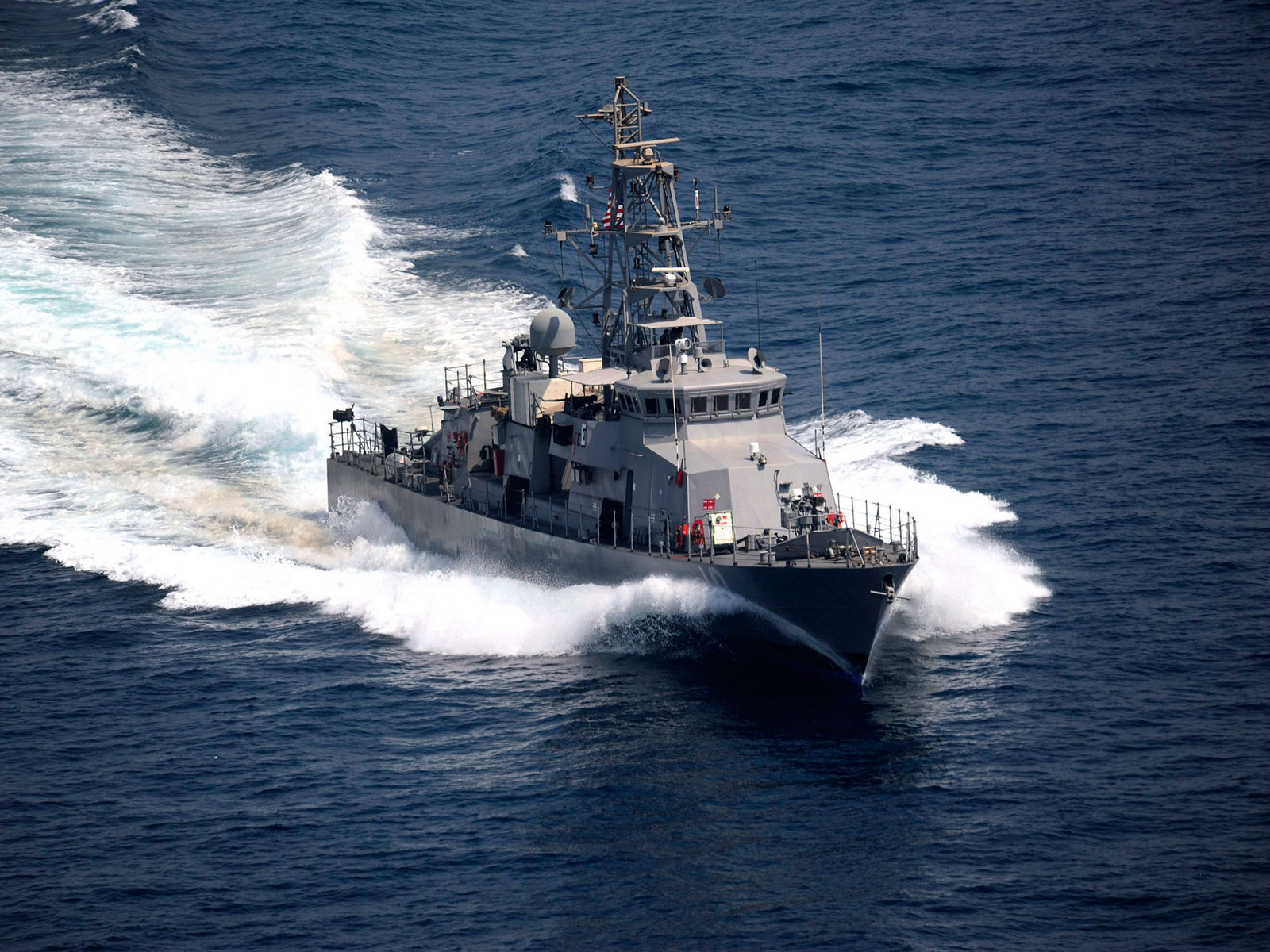
Washington, DC [US], February 10 (ANI): The United States has rolled out updated navigational instructions for US-flagged commercial vessels passing through the Strait of Hormuz, urging ships to steer clear of Iran's territorial waters as tensions persist between Washington and Tehran.
The guidance, issued on Monday by the US Maritime Administration, also cautioned American ship captains against allowing Iranian forces to board US-registered vessels while operating in the strategically sensitive waterway.
"If Iranian forces board a US-flagged commercial vessel, the crew should not forcibly resist the boarding party. Refraining from forcible resistance does not imply consent or agreement to that boarding," the advisory said.
"It is recommended that US-flagged commercial vessels transiting these waters remain as far as possible from Iran's territorial sea without compromising navigational safety. When transiting eastbound in the Strait of Hormuz, it is recommended that vessels transit close to Oman's territorial sea."
The guidance was issued shortly after indirect talks between the United States and Iran were held in Oman, following weeks of heightened rhetoric that had raised concerns about a possible military confrontation, according to Al Jazeera.
Shipping lanes across the Middle East have repeatedly come under strain during periods of regional instability, with commercial vessels often caught in the crossfire of geopolitical disputes, the Qatar-based broadcaster noted in its regional coverage.
Historical precedents include the Iran-Iraq conflict of the 1980s, when both nations targeted merchant shipping in what later became known as the Tanker War, Al Jazeera reported in an earlier analysis.
In more recent years, Yemen's Houthi group has carried out attacks on vessels linked to Israel in the Red Sea, describing the campaign as an attempt to pressure Israel to end its war in Gaza, according to separate reporting by Al Jazeera.
Tensions around the Strait of Hormuz intensified further after Israeli strikes on Iran in June last year, when an Iranian lawmaker publicly suggested that closing the vital waterway could be considered if hostilities escalated.
The United States has long referred to the strait as the "world's most important oil chokepoint" due to the volume of global energy supplies that transit through the narrow passage.
In late January, Iran's Islamic Revolutionary Guard Corps conducted naval drills in the strait, prompting warnings from the US military against what it described as "unsafe and unprofessional" actions.
The US military later said it had shot down an Iranian drone that came close to one of its aircraft carriers operating in the region.
Washington has also previously seized Iranian oil tankers as part of its sanctions campaign against Tehran.
In 2019, the United Arab Emirates reported sabotage incidents involving four vessels in the Gulf of Oman, although there have been no recent publicly declared threats against commercial shipping in the area.
The United States has continued to strengthen its military posture in the region, with President Donald Trump repeatedly warning of renewed strikes against Iran.
In December, Trump said Washington would attack Iran if it sought to revive its nuclear or missile programmes.
US forces had bombed Iran's three main nuclear facilities during the June 2025 conflict, which erupted after Israel launched strikes while negotiations between Tehran and Washington were still underway.
Iranian officials have maintained that the current talks are "exclusively nuclear", while the Trump administration has indicated it also wants to address Iran's missile capabilities and its support for regional non-state actors such as Hezbollah and Hamas.
One of the central unresolved issues remains uranium enrichment. Iran, which denies pursuing nuclear weapons, argues that enrichment is a sovereign right under the Treaty on the Non-Proliferation of Nuclear Weapons, while Trump has pushed for zero enrichment.
Asked about Washington's red line in the negotiations, US Vice President JD Vance said the president would likely keep his position private.
"If you go back to the original negotiation that happened between us and the Iranians, the president was trying very, very hard to actually strike a constructive deal that would have been good for the United States," Vance said.
"But frankly, the entire administration agreed if the Iranians were smart enough to have made that agreement, then it would have been good for them, too." (ANI)
Tags:
Get the App