Trump's reciprocity policy is more realistic to maintain stable relations with China: Critics
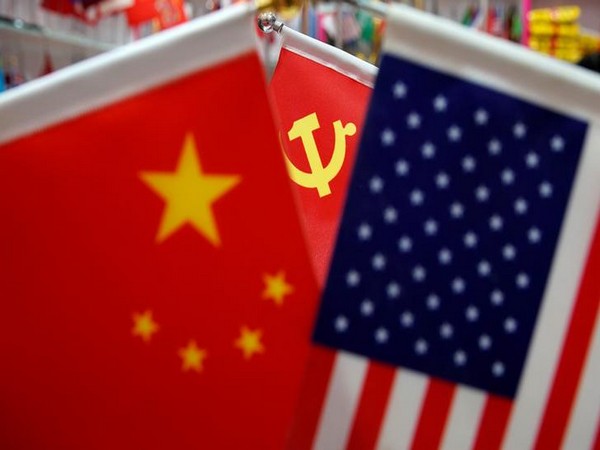
Washington D.C. [USA], July 9 (ANI): Critics have opined that the Trump administration does not have a coherent China policy but if it is only based on reciprocity it may turn out to be more effective in rebalancing ties and maintaining stable relations between the world's two most powerful nations.
ANI
Jul 09, 2020 16:14 IST

Washington D.C. [USA], July 9 (ANI): Critics have opined that the Trump administration does not have a coherent China policy but if it is only based on reciprocity it may turn out to be more effective in rebalancing ties and maintaining stable relations between the world's two most powerful nations.
This summer, as the international travel industry began its struggle to rebuild after collapsing during the coronavirus pandemic, Beijing maintained a near-blanket ban on US airlines flying into China while allowing Chinese carriers to fly freely from American airports back home. By the beginning of June, with Chinese flights increasing on American soil, Washington announced that it would block Chinese passenger air flights into the United States in retaliation to the prohibition. Within one day of the announcement, Beijing indicated that it would relax its restriction.
Critics have said in the US-based Foreign Policy magazine that America's new policy of reciprocity approach towards China does not ensure a cycle of worsening relations. Instead, it may offer a more effective means of correcting inequities in a relationship.
"Reciprocity is a prudent attempt to make policy fit real conditions and its built-in drive toward balance prevents it from swinging too far in the direction of either accommodation or antagonism. The goal is to encourage further engagement -- but only if both sides clearly benefit equally from the interaction," they said.
"Reciprocity is also a brake on unrealistic US expectations and it can protect against the disappointment that can further undermine relations when Chinese promises are not kept or American hopes fall short. A reciprocity policy does not come without significant challenges, however. It will call into question liberal values deeper than just free trade, such as the open society that Westerners take for granted," they added.
Critics of President Trump, for example, former National Security Advisor John Bolton, in his new book, has described the White House as vacillating wildly or barreling toward an outright break in ties with China.
He further claims that President Donald Trump's China policy is "chaotic," reflects "incoherence," and is "not grounded in philosophy, grand strategy or policy" but rather in domestic political calculations.
Critics have also said Trump's new approach is a fundamental shift from Washington's four decades of diplomatic engagement with Beijing, when working-level diplomatic and economic opportunities in the 1970s through the 1990s had made America safer and wealthier but stopped benefiting the country's economic or political security.
"After nearly a half-century of engagement, there is a widespread recognition that the best of Washington's intentions did not produce either the bilateral relationship or the China, for which generations of US leaders hoped. The CCP chose a path that it believed best fit its interests, one in congruence with much of China's authoritarian, bureaucratic history and not the brief moment of democracy glimpsed during the 1919 May 4 Movement," the Foreign Policy opinion said further.
Washington's new realism now heralds a different approach toward Beijing. "In the light of decades of experience, the Trump administration is betting that a policy of reciprocity may turn out to be the most realistic means for rebalancing ties and maintaining stable relations between the world's two most powerful nations," the critics stressed.
The signing of the winter agreement on "phase one" trade deal between the two global powers, had seemed to presage a return to the pre-Trump status quo, prioritising stability in the bilateral relationship over radical reform, but any return to the old policy was swept away by the coronavirus pandemic.
As the pandemic swept from China across the globe, shuttering economies and locking down societies, charges and counter-charges traded between Washington and Beijing over responsibility for the COVID-19 catastrophe led to a precipitous downward spiral in relations, revealing the dearth of trust and cooperative relations between the two nations.
"More significantly, the chilling of relations seems to have spurred the administration to fully embrace a policy of reciprocity as a more viable means to shape Beijing's actions," the critics opined. (ANI)
Get the App