India welcomes appointment of two female judges at International Residual Mechanism for Criminal Tribunals
New York [US], June 15 (ANI): India on Tuesday welcomed the appointment of two female judges - Farimata Sanou Toure of Burkina Faso and judge Margaret deGuzman of US to the judicial roster of International Residual Mechanism for Criminal Tribunals.
ANI
Jun 15, 2022 03:20 IST

New York [US], June 15 (ANI): India on Tuesday welcomed the appointment of two female judges - Farimata Sanou Toure of Burkina Faso and judge Margaret deGuzman of US to the judicial roster of International Residual Mechanism for Criminal Tribunals.
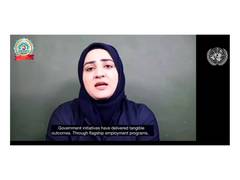
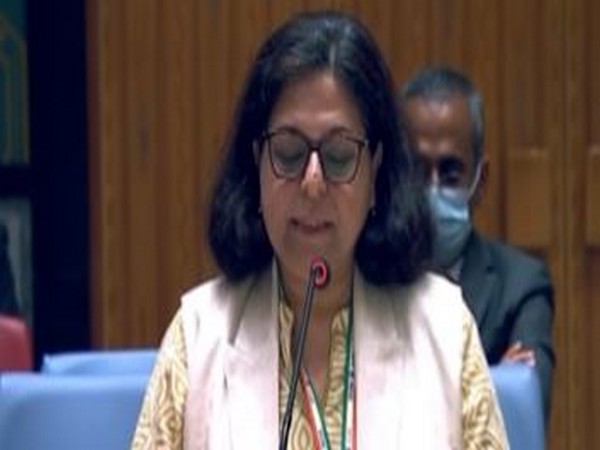
Dr Kajal Bhat, Counsellor/Legal Adviser in India's Permanent Mission to the UN speaking at the UNSC meeting on International Residual Mechanism for Criminal Tribunals (IRMCT) said, "We welcome the appointment of judge Farimata Sanou Toure of Burkina Faso and judge Margaret deGuzman of US to the judicial roster of the Mechanism. The appointment of female judges to the Mechanism is a positive step to gender parity at the highest levels in UN bodies."
President Carmel Agius presented the Mechanism's twentieth progress report, as well as its fourth review report, to the United Nations Security Council.
President Agius emphasised the Mechanism's substantial reduction of judicial workload in recent years, and he reported that following the delivery of the appeal judgement in the Fatuma et al. case later this month, there will be only two main cases left.
In this regard, the President explained that the Stanisic and Simatovic appellate proceedings remain on track to be completed by June 2023, while in the Kabuga case the Trial Chamber issued its decision yesterday concerning the accused's fitness to stand trial and commencement of proceedings accordingly.
"The residual mechanism is in line with the mandate of the Security Council and has played an important role in supporting the concerned member states in addressing issues related to impunity, justice and reconciliation. In this context, my delegation appreciates Judge Carmel Agius for his able stewardship as President of IRMCT and for ensuring that the mechanism remains on track and continues to deliver," said Dr Bhat.
She also commended the Mechanism efforts made towards ensuring business continuity to the extent possible under extraordinary circumstances.
"The coordination between the three principles organs - Chambers, Prosecutor and Registry in ensuring fulfilment of the mechanism, result-oriented mandate deserves appreciation," said the Indian representative.
"We are hopeful that these efforts will positively help in adhering to the timelines laid down for case completion. We reiterate the importance of implementing of the mandate by Mechanism strictly in accordance with the principles of justice, impartiality and fairness. We acknowledge the progress made, either judicial matters during the reporting period such as the variation of protective measures, access to confidential materials for use in cases before domestic jurisdictions and relocation of acquitted and released persons," added Dr Bhat.
She also highlighted the work of the prosecutor's office in its other residual functions and said that India looks forward to early resolution of the impasse posed in the context of acquitted and released persons relocated to the Republic of Nigeria. "This is a humanitarian issue that needs to be addressed with urgency and sensitivity," said Dr Bhat.
The Indian representative further welcomed the efforts made by the Mechanism towards resolving their predicament.
"We firmly believe that the situation can be successfully addressed by collective use of Mechanisms - political, diplomatic and administrative efforts. The Mechanism should continue to make headway in its remaining residual functions, including protecting victims, and witnesses, cracking the remaining fugitives of the International Criminal Tribunals for Rwanda, extending assistance to national jurisdiction and managing the archives of the ad hoc tribunal and the Mechanism," she added.
President Agius underscored the major recent advances in the tracking of fugitives of the International Criminal Tribunal for Rwanda (ICTR). (ANI)
Get the App