 हिंदी खबर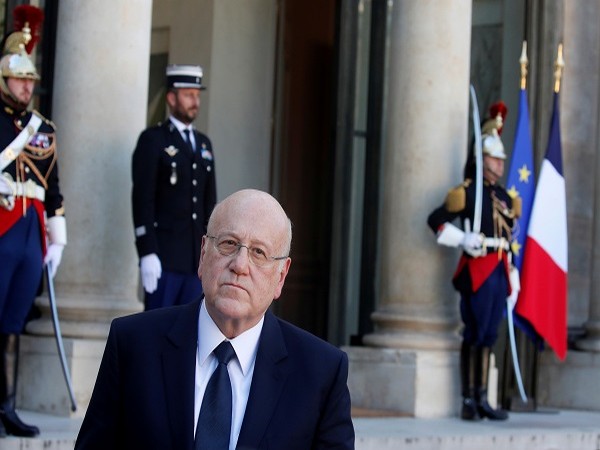

Nicosia [Cyprus], September 27 (ANI): Last Monday, Lebanese billionaire Najib Mikati, succeeded in winning in parliament a vote of confidence for his 24-member government.
This took place after 13 months of absolute political and economic paralysis, that brought Lebanon close to being designated as a failed state. But the big question is whether Mikati will be able to make the necessary reforms and produce a credible economic blueprint to unlock billions of dollars promised by international donors and a bailout by the International Monetary Fund?
"Our government emerged to light a candle in this deep darkness and spark a torch of hope and determination that we are able to combine our sincerest efforts for this beloved country," Mikati told the parliament.
Indeed, the fact that there is a government in Beirut after 13 horrible months is a ray of hope for ordinary Lebanese, as almost three-quarters of them live in poverty. The economic crisis currently facing Lebanon is so acute that the World Bank has ranked the country among the world's three worst crises over the past 150 years. This is the result of decades of fiscal mismanagement that aggravated Lebanon's economic woes.
Bloomberg reports that Lebanon's annual rate of inflation has risen to the highest of all countries tracked by the media conglomerate, surpassing Zimbabwe and Venezuela, as the financial meltdown in the Middle East nation worsens. The Lebanese currency has lost about 90 percent of its value, sparking, inflation and almost totally eroding the purchasing power of the population. Waves of protesters have vented their anger at banks for enforcing capital controls that do not allow them to withdraw their money. Several banks were set on fire.
Lebanon is running out of everything: from fuel and gas to medicine and bread. There are long queues for bread and petrol, long periods of blackouts and virtually empty pharmacies and supermarkets. As the value of the Lebanese pound has collapsed, essential goods such as food, fuel and medicine are usually sold in dollars, but in recent months dollars are nearly impossible to find.
Consumer prices rose 10.25% from a month earlier, while food prices rose 20.82%. The economy in 2020 contracted about 25%. Unemployment has reached unprecedented heights as hundreds of companies have closed down, prompting a wave of emigration among the country's educated youth.
Politicians have done little to halt the collapse that has plunged three quarters of the population into poverty and resulted in severe power and fuel shortages. The various political parties could not even agree on the formation of a government for 13 months, as each wanted a bigger share in government portfolios, although the country was facing an imminent economic meltdown. The weak caretaker government had been unable to get changes passed through parliament, because power remains in the hands of proxy militias who owe their loyalty to outside powers than their own country.
The desperation of the Lebanese people reached a climax last August when a huge explosion ripped through the port of Beirut, killing 218 people, wounding over 7,000 and destroying large parts of the capital. The explosion was caused by 2,750 tones of ammonium nitrate stored in the port, without proper safety measures, for more than six years. The property damage caused is estimated at 15 billion US dollars.
In December 2020, Lebanon's former Prime Minister Diab and three former ministers were charged with negligence over the Beirut port explosion. Judge Tarek Bitar, who was tasked with investigating the port explosion, tried to interrogate the three of former ministers and MPs, as the Parliament followed stalling tactics around voting on whether to lift their immunity. However, last week Bitar scheduled interrogations for the trio, as their legal immunity is currently lifted until the next session of the Parliament which reconvenes on October 19.
As state coffers are depleted, the Lebanese government is unable to subsidize the cost of fuel for consumers and for the power stations which now provide electricity for just a couple of hours every day. Families used generators to produce the electricity they needed for some months, but as their money has run out, they have now abandoned the effort and now sit in the dark. Motorists must wait for many hours at the petrol stations to get some fuel if they still have some dollars to pay for it.
The desperation felt by ordinary Lebanese is so great, that some people openly express the wish that a foreign country may occupy Lebanon, so that they could have at least electricity, water, and security.
CaludeSalhani, columnist of the Arab Weekly, points out:" There is only so much that a person can put up with: the lack of electricity, the absence of security, rampant corruption in government, the high rate of unemployment, rising cost of living, pollution, lack of clean air and all the other woes that befell this once-pristine country often described as the Switzerland of the Middle East."
On 16 September the Hezbollah Shia Islamist political party and militant group, scored a political victory, when it brought into the country two convoys of 40 trucks of Iranian fuel, which according to Hezbollah Secretary-General Hassan Nasrallah would be donated to institutions such as public hospitals, the Red Cross, Civil Defence forces, and orphanages.
Prime Minister Mikati on Saturday travelled to Paris where he met French President Emmanuel Macron saying he went there to reassure Macron that he and his new government were committed to reforming. However, it is not at all certain that he will succeed in this task.
As investigative journalist Kareem Chehayeb says: "Many experts believe that Mikati will struggle to deliver meaningful changes and that at best, Lebanon is looking at "Band-Aid" fixes that fail to address the underlying causes of its current crisis and place the country on firmer economic footing." (ANI)
Will Mikati's government stop Lebanon's economic and political paralysis?
By John Solomou | Updated: Sep 27, 2021 09:41 IST




