Is the newly inaugurated Iranian President Raisi going to follow more hardline or pragmatic policies?
Nicosia [Cyprus], August 9 (ANI): With pomp and ceremony,ultra-conservative cleric Ebrahim Raisi was sworn in last Thursday in Tehran as Iran's eighth President, in the presence of more than 100 representatives of various countries and organizations. Raisi, a protege of Iran's Supreme Leader Ayatollah Ali Khamenei, had easily won the presidential elections in June, after an engineered process that guaranteed his victory, as almost all credible opponents were disqualified. Hard-liners now control the entire political system in Iran, and the question is whether Ebrahim Raisi will follow a more hardline foreign and domestic policy or a more pragmatic one?
ANI
Aug 09, 2021 08:49 IST

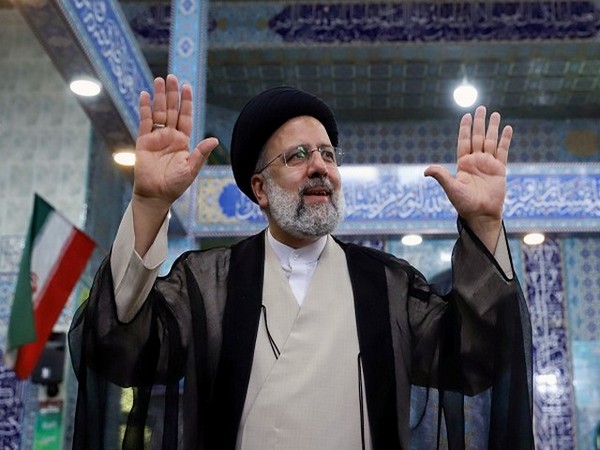
Nicosia [Cyprus], August 9 (ANI): With pomp and ceremony,ultra-conservative cleric Ebrahim Raisi was sworn in last Thursday in Tehran as Iran's eighth President, in the presence of more than 100 representatives of various countries and organizations. Raisi, a protege of Iran's Supreme Leader Ayatollah Ali Khamenei, had easily won the presidential elections in June, after an engineered process that guaranteed his victory, as almost all credible opponents were disqualified. Hard-liners now control the entire political system in Iran, and the question is whether Ebrahim Raisi will follow a more hardline foreign and domestic policy or a more pragmatic one?
Speaking at his swearing-in ceremony Raisi said the "crises of the region must be resolved through real intra-regional dialogue and on the basis of ensuring the rights of nations," and added: "I extend a hand of friendship and brotherhood to all countries in the region, especially neighbours, and I warmly shake their hands."
In a speech after his inauguration, Raisi stressed that he would seek to eliminate "the tyrannical sanctions" imposed by the United States but made it clear that he would not return to the Joint Comprehensive Action Plan (JCPOA) deal at all costs. He added: "We will not make people's livelihood conditional; we will not tie all things to foreigners. We will definitely pursue the matters that are immediate issues for us, that we are facing today. The sanctions must be lifted. We will support any diplomatic plan that supports this goal."
Under the JCPOA deal, reached in 2015, Iran agreed to curbs on its nuclear program in return for the lifting of international sanctions, but three years ago, President Donald Trump withdrew from the deal and reimposed sanctions that have crippled Iran's economy.
Tehran has since breached limits imposed on its nuclear activities under the agreement. Iran has increased its uranium enrichment and stockpiling far beyond the limits set in the deal. Raisi repeated the fatwa of Iran's Supreme Leader Ayatollah Ali Khamenei that "nuclear weapons have no place in the defense strategy of the Islamic Republic," and stressed that sanctions against Tehran must be lifted. He concluded by saying that he will support any diplomatic plan that achieves this goal."
Since the election of US President Joe Biden six rounds of indirect talks have taken place in Vienna - as the US and Iran are not directly negotiating. France, Germany, the United Kingdom, Russia, and China are holding talks on the one hand with the Iranians and with the US on the other. A German official involved in the talks described the progress made in the last three rounds of discussions as "quite substantial" despite coming to a standstill last June.
A likely scenario after President Raisi's inauguration is one with a JCPOA renegotiation deal already reached in Vienna under former President Rouhani's administration. The Biden Administration has urged Iran to return to the talks and stressed that the process in Vienna "cannot go on indefinitely".
As Luciano Zaccara, of Qatar University's Gulf Studies Centre notes: "The achievement of such an agreement would indeed liberate Raisi from starting his mandate negotiating directly with the US, something that he was strongly opposed to being his first foreign policy objective. However, this does not mean he will not comply with a deal signed by the outgoing administration and the negotiation team in Vienna. At the end of the day, if there is a negotiation, it is because Khamenei approved it and Raisi is obliged to comply."
Speaking at his first news conference after his election Raisi said that Tehran's ballistic missile program is "not negotiable". Asked whether he would ever speak with President Biden, Raisi simply said: "No!"
It should be mentioned that the United States two years ago placed Raisi on a sanctions list for human rights abuses, as he was a member of a four-person committee that interrogated and executed thousands of prisoners in 1988. The ultra-conservative cleric said that he was acting according to a fatwa of Ayatollah Ruhollah Khomeini who ordered the formation of a committee to speed-up the executions.
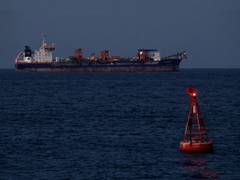
In the coming days, Iran may be facing Israel's retaliation for a drone attack on an Israeli-linked tanker in the Gulf of Oman that left two people dead. The US, the EU and Israel blamed Tehran for the attack. Furthermore, Iranian-backed Hezbollah fired from Lebanon several rockets into Israel, and the Israeli Prime MinisterNaftali Bennet ominously said: "We know how to send a message to Iran in our own way."
The new Iranian President indicated that he would try to avoid escalating tensions with Tehran's neighbours and will try to resolve outstanding disputes. Speaking before the Parliament on August 5, he stressed that the crises in the region "must be resolved through real intra-regional dialogue based on ensuring the rights of nations. I extend a hand of friendship and brotherhood to all countries of the region, and I warmly shake their hands."
It is believed that Raisi would continue the negotiations started with Saudi Arabia aimed at reducing tensions between the two countries concerning the war in Yemen.
The fact that Ebrahim Raisi is now the President of Iran and that conservatives currently control all branches of the government does not necessarily mean that Raisi will follow much harder domestic and foreign policies. Being a very likely candidate to become the Supreme Leader of Iran when Khamenei dies, he must tread very carefully and try to improve his international standing which was tarnished by his role in the execution of political prisoners in 1988. So, he has tobe a pragmatist and refrain from using hardline policies.
As Luciano Zaccara points out: "Pragmatism will therefore be the most likely the driving force behind his foreign policy decisions, which could contribute to guarantee the respect for a JCPOA re-negotiation deal reached in Vienna, still during Rouhani's mandate." (ANI)
Get the App