 हिंदी खबर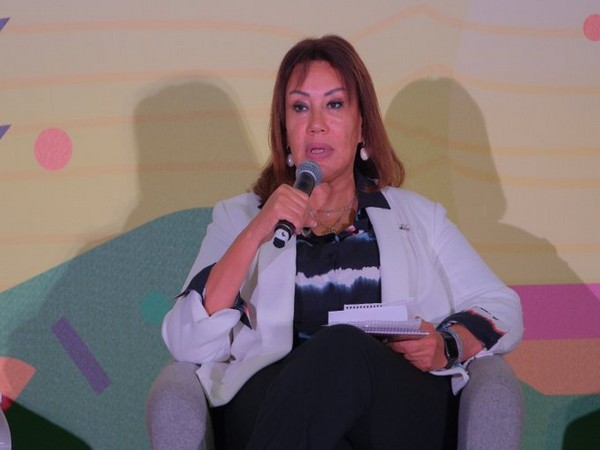

Cape Town [South Africa], November 26 (ANI): Abla Abdel-Latif, Executive Director and Director of Research at The Egyptian Centre for Economic Studies, emphasized the global responsibility to support nations most vulnerable to climate change.
Abdel Latif pointed out that the key aim is to achieve a shift to a low-carbon economy while ensuring that no one is left behind. However, she noted that climate finance alone cannot guarantee an inclusive transition.
Speaking during the plenary session "Financing a Just Transition: Balancing Climate Action and Green Development" at the Cape Town Conversation on Sunday, Abla Abdel Latif said, "The international community must meet its responsibility to the countries most vulnerable to climate change. The New Quantified Goal on Climate Finance must be much more ambitious than it was in the past."
"Just Transition finance has two goals -- (1) shift to a low carbon economy, and (2) leave no one behind. Climate finance alone does not guarantee that no one will be left behind in the transition," she added.
Lucy Corkin, Business Strategist, RMB, FirstRand,urged financial institutions to redefine their perception of value and play a more significant role in understanding the social value of climate action. She emphasized the importance of inclusivity and integrating just transition principles into the decision-making processes of these institutions.
Corkin said, "Financial institutions and businesses need to be clear about what they are doing and who they are doing it for. There is a need to be more inclusive and integrate just transition into the core decision-making process of these institutions."
"Financiers need to change the way in which we see value and can play a greater role in understanding the social value of climate action -- this is essential for crowding in greater capital for green projects," she added.
While addressing the same plenary session, Igor Makarov, School of World Economy, HSE University asserted the necessity of involving the private sector. He cited examples such as Russia's shift to an open economy, emphasizing the importance of providing alternative livelihoods for those affected.
Makarov said, "It is essential to look at the examples of economic transitions to inform what a just transition should look like. For example, Russia's shift from command and control to an open economy required providing alternative livelihoods for those left behind in the new economy."
He further said, "A just energy transition is about economic development. It is essential to involve the private sector, but this only works when there is a common value which businesses can use to assess their investment in sustainable development."
Nilanjan Ghosh, Director, Centre for New Economic Diplomacy, Observer Research Foundation and Director, Think20 India Secretariat, who was moderator at the plenary session, said, "There is a global call to create alternate #development pathways that account for the reality of #climatechange. However, the transition will only be fast if it is also just and equitable. The key question is--who will bear the costs of the transition?"
Meanwhile, Heungchong Kim, Distinguished Professor, College of International Relations, Korea University, stated that multilateral cooperation should focus on creating green trade routes and value chains to provide strong incentives for businesses to finance effective climate action.
He further said, "MDBs should focus on constructing the right incentive structure to make the private sector move in the right direction. This will require creating the right regulatory framework and investing more money to crowd in capital."
'Cape Town Conversation' is taking place from November 24-26 in South Africa's Cape Town. Cape Town Conversations serves as an annual South Africa-based platform that brings together key stakeholders and new voices.
It is designed as a common platform where established and emerging actors convene for a global conversation on contemporary issues of global governance --identifying new challenges, ideating possible solutions and shaping the world order of the future.
In another session "Critical and Inexorable: Scripting the Agenda for South Rising" at the Cape Town Conversation, Anil Sooklal, BRICS Sherpa and Ambassador at Large for Asia and BRICS, stated, "Success of BRICS lead of success of G20." He noted that BRICS is on the right track and should not get distracted. He stated that India has overtaken the UK and added that India, China, Brazil and Russia will be top economies by 2050.
He said, "BRICS is no different from any other grouping--it's a highly heterogeneous group. But within this family, you have giants. The #GlobalSouth didn't rise suddenly, it's been there for quite some time. The #Bandung conference led the template for South South cooperation."
Anil Sooklal said, "We don't allow bilateral differences to dominate the #BRICS agenda. And now with the 6 new entrants, we'll have to find ways to continue our cooperation without diluting values. This year, we were constantly being pitted against the #G7."
He added, "We were asked, "Will you start behaving like the Global North once you become powerful?" And we told them this is not what BRICS is about. We work on the basis of consensus and maintaining that all partners are equal. And we want to work with the Global North as well, not be in competition with it."
While speaking at the same session, Samir Saran, President, the Observer Research Foundation and Chair, Think20 India Secretariat, said, "Some of the most important players to get the world right in the future will be countries with the largest stake in it. This grouping--even as it is heterogenous--is collectively referred to as the Global South."
He stated that there are hegemons within the BRICS itself. He questioned BRICS for demanding reform of multilateralism when Russia and Russia don't want the reform of the United Nations Security Council.
He said, "The big complaint that the Global South has with the existing power structures, is--some would argue--that countries in the Global South are adopting the same way as the Global North. After all, there are hegemons within the BRICS itself. How can BRICS demand reform of #multilateralism when China and Russia don't want reform of the #UNSC?" (ANI)
Int'l community must meet its responsibility to nations must vulnerable to climate change: Abla Abdel-Latif
ANI | Updated: Nov 26, 2023 20:40 IST




