 हिंदी खबर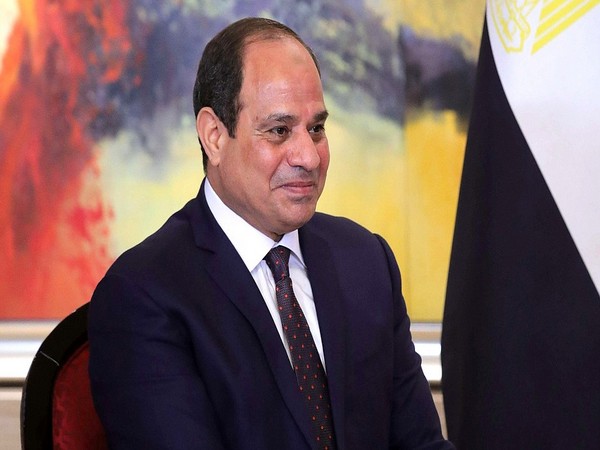

Nicosia (Cyprus) April 5 (ANI): Egyptian President Abdel Fattah el-Sissi last Tuesday issued a stern warning to Ethiopia that Egypt's share of the waters of the Nile is "untouchable" and added ominously that "if the Grand Ethiopian Renaissance Dam (GERD) is filled and operated without a legally binding agreement, there will be instability that no one can imagine...No one can take a single drop of water from Egypt, and whoever wants to try it, let him try," he said. "No one imagines that it will be far from our capabilities.''
The warning came after the latest round of talks between Egypt, Ethiopia and Sudan which have been going on intermittently for many years failed to produce any agreement. Egypt has repeatedly been calling on the international community to get involved in the talks. Already, the United States has threatened to withhold development aid to Ethiopia if the conflict is not resolved and an agreement reached.
It is recalled that last October former US President Donald Trump during a public phone call to Sudan's Prime Minister Abdalla Hamdok and Israel's Prime Minister Benjamin Netanyahu said: 'It's a very dangerous situation because Egypt is not going to be able to live that way... And I said it and I say it loud and clear - they'll blow up that dam. And they have to do something."
The response of the Ethiopian Prime Minister Abiy Ahmed was that "Ethiopia will not cave in to aggression of any kind" and that threats were "misguided, unproductive and clear violations of international law."
Earlier Abiy Ahmed had warned that "no force can stop Ethiopia from building a dam. If there is a need to go to war, we could get millions readied."
But why is GERD so important that could lead to war? The GERD is really a huge dam having a volume of 74 billion cubic feet of water, which is about 1.5 times the average annual flow of the Blue Nile. Its primary purpose is to generate electricity for Ethiopia, a country of 110 million people, which is facing an acute electricity shortage and may also export affordable electricity to neighbouring countries.
Its planned installed capacity will amount to 6.45 gigawatt when the dam is completed. It will be the largest hydroelectric power plant in Africa and the 7th largest in the world.
The Nile, the world's longest river, is a lifeline supplying both water and electricity to the 10 countries it traverses.
It should be noted that Egypt, depends on the Nile for about 97 per cent of its irrigation and drinking water, and sees the dam as an existential threat, as the project will allow Ethiopia to control the flow of the Nile. Hydroelectric power stations do not consume water, but the speed with which Ethiopia fills up the dam's reservoir will affect the flow downstream.
The Egyptian government says that the dam will affect the income of about 2 million farmers during the filling period.
Another country that is seriously concerned about the filling of the huge dam with water is Sudan, which fears that its own dams will be compromised if Ethiopia proceeds with filling the GERD before a deal is reached.
Ethiopia wants to fill the dam in six years, but Egypt insists on a much longer period, so that there is no sharp fall in the level of the river, particularly in the first phase of filling the reservoir.
The other issues in the dispute among Ethiopia, Egypt and Sudan is how much water Ethiopia will release downstream in case of a multi-year drought, the method of the annual replenishment of the dam and the method of settling future disputes.
In February 2021, the Ethiopian Minister of Water and Irrigation, Seleshi Bekele, said that the engineering work in constructing the dam reached 91percent, while the total construction rate was 78.3%. Filling the reservoir will take 5-15 years and even by using all generating units at maximum capacity will not drain it within a few months.
Bekele points out that the installed power of 6.45 gigawatts, in combination with the size of the reservoir, will help to manage the side effects of the next severe drought, when other hydropower plants may have to stop their operations.
The GERD has become a source of national pride for Ethiopia. Its cost of about USD 5 billion is entirely self-funded - 80% from Ethiopian taxpayers and 20 percent through bonds, and has been one of the few issues that unite all Ethiopians.
As Addisu Lashitew, a fellow at the Brookings Institute, points out: "The Ethiopian Renaissance Dam is a national project that enjoys the support of the government, opposition parties and the public as well. It has been a uniting force in Ethiopia, as it has been built by Ethiopians' money,"
John Mukum Mbaku, also of the Brookings Institution, says that Ethiopia should adopt a drought mitigation program that includes the possibility that GERD managers may have to release water from the reservoir, when necessary to mitigate droughts and adds: "Such mitigation program can make it much easier for Egyptian and Sudanese authorities to cooperate with Ethiopia and other riparian states in creating and adopting an agreement for the management of the Nile. Similarly, both the final agreement between the riparian states for the allocation of water and resources should include a dispute resolution mechanism." (ANI)
Egyptian President el-Sissi issues stern warning over Grand Ethiopian Renaissance Dam
By John Solomou | Updated: Apr 05, 2021 14:15 IST


