Captagon pills (a.k.a.poor man's cocaine) are flooding oil-rich Arab states
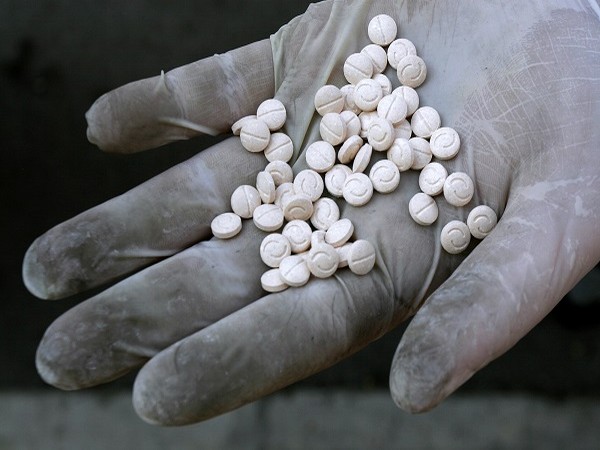
Nicosia [Cyprus], December 27 (ANI): A counterfeit version of Captagon, which is highly addictive, has become the drug of choice among young people in the oil-rich countries of the Arab Gulf and mainly Saudi Arabia, the United Arab Emirates and Kuwait. As it is much cheaper than cocaine, many people call it: "poor man's cocaine."
ANI
Dec 27, 2021 09:02 IST

By John Solomou
Nicosia [Cyprus], December 27 (ANI): A counterfeit version of Captagon, which is highly addictive, has become the drug of choice among young people in the oil-rich countries of the Arab Gulf and mainly Saudi Arabia, the United Arab Emirates and Kuwait. As it is much cheaper than cocaine, many people call it: "poor man's cocaine."
Hardly a week goes by without an announcement that Customs or other authorities in various countries have confiscated millions of counterfeit Captagon pills. It should be noted, however, that as a rule the drugs seized by authorities are less than one-tenth of the illicitly imported Captagon pills, that have become the new rage in the region.
Captagon was first produced in Germany to treat narcolepsy and depression, among other things. It was banned in the 1980s when doctors decided that its addictiveness outweighed its benefits. Asfenethylline, the amphetamine used in the long-banned brand name version, has been a controlled substance for decades now and is presently quite difficult to obtain legally, the illicit manufacturers use other amphetamines in the counterfeit version.
Unlike cocaine and heroin, the base ingredients of counterfeit Captagon are easy to get hold of and so it is much cheaper to produce than the other two drugs. The pills often contain amphetamine and caffeine or, less frequently, methamphetamine and ephedrine.
A Captagon pill costs just a few cents to produce in Syria or Lebanon and can be sold for up to 20 US dollars. So, smugglers and pushers can earn billions of dollars every year.
In 2020 the value of pills seized that originated in Syria was estimated to be $3.46 billion. Manufacturing Captagon pills has become a major, albeit illegal, industry for Syria and Lebanon which in 2019 had other combined total exports worth less than $5 billion.
On 1 December Saudi Authorities seized a huge quantity of 30,3 million tablets of the drug which was hidden in imported cardamon. Dubai police on 23 December uncovered $15.8 million worth of captagon pills hidden in a shipment of Lemons.
In November Dubai Customs foiled an attempt to smuggle about 80,000 Captagon pills hidden in the inner body of a car trunk. Earlier this year, Customs officers in Kuwait foiled an attempt to smuggle more than three million Captagon pills in a container that arrived in the country. In Qatar, the Ruwais Port Customs thwarted the smuggling of prohibited Captagon narcotic pills after an inspector became suspicious of a refrigerator truck engine. A total of 7,330 tablets were seized during the inspection.
Greece's Coast Guard intercepted a ship flying the flag of Syria on 5 December as it passed the island of Crete. After a search, they seized Captagonpills and hashish that were hidden in double-bottom shipping containers amid spices, coffee, and sawdust. The value of the confiscated drugs exceeds 100 million US dollars.
The biggest haul of the Captagon amounting to 14 tons and having a street value of more than 1.16 billion US dollars- was made in July last year in the port of Salerno in containers destined for Dubai.
According to the UN Office on Drugs and Crime (UNODC], between 2015 and 2019 more than half of all Captagon pills seized in the Middle East were in Saudi Arabia. The Saudis have insinuated that Lebanon's Hezbollah is behind the production and transportation of cannabis and Captagon which find their way into the Kingdom.
Captagon became popular in the Middle East during the war in Syria, as it numbed fear and helped combatants stay awake and endure hard battles. That's why some people also call it "the Jihadi magic potion". The BBC said it was "the drug fueling conflict in Syria.
The drug provides a boost of energy, enhances a person's ability to do dangerous things, helps people stay awake for longer periods of time, and produces a feeling of euphoria, which can be useful in combat conditions. On the downside, Captagon is highly addictive.
As the war in Syria dragged on, the different sides in the conflict started manufacturing and trafficking Captagon because it generated considerable revenue and helped them finance their wars. Eventually, the drug trade created its own shadow economy both in Syria and the areas under the control of Hezbollah in Lebanon.
Some government officials in these two countries are believed to turn a blind eye to the trafficking of Captagon as it brings much-needed foreign currency and has even become much more important than other exports.
The Saudi government last October banned exports from Lebanon, dealing a heavy blow on the government in Beirut, which is facing a crippling political and economic crisis.
Riyadh wants the Lebanese government to curb Hezbollah, which Saudis believe is behind the drug exports from Lebanon. Saudi Arabia slammed Lebanon's failure to "stop the export of the scourge of drugs... to the kingdom, especially in the light of the terrorist Hezbollah's control of all ports."
It should be said, however, that Hezbollah categorically denies that it is involved in the drug trade.
Some researchers believe that boredom and social restrictions are the main cause of drug use in the oil-rich Gulf states and suggest that easing these restrictions could help a lot in preventing the creation of new addicts.
According to the World Drug Report of the United Nations Office on Drugs and Crime, Saudi Arabia alone accounts for more than one-third of global amphetamines seizures a year, and three-quarters of patients treated for drug problems there are addicted to amphetamines, almost exclusively in the form of Captagon. Qatar, Kuwait and the UAE have reported similar spikes in multimillion-tablet seizures of the drug in the past two years.
As Captagon is generating huge profits for illicit manufacturers and drug smugglers and is relatively cheap it will continue to be widely used in the rich Arab states in the Gulf and in the next few years could become a major problem for these states.
(Disclaimer: The author of this opinion article is John Solomou, who writes on West Asia politics. Views are personal) (ANI)
Get the App