

ADD ANI AS A TRUSTED SOURCE
googleads
ANI Logo
Menu
Others

5 billion people could face difficulty accessing water in 2050: UN

Geneva, [Switzerland], October 6 (ANI): More than five billion people globally are expected to face a shortage of water by 2050, a United Nations (UN) agency report has warned.

ANI Oct 06, 2021 11:15 IST googleads

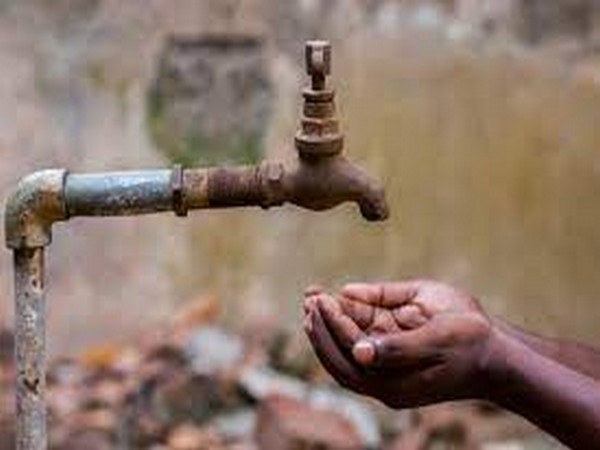
Representative image

Geneva, [Switzerland], October 6 (ANI): More than five billion people globally are expected to face a shortage of water by 2050, a United Nations (UN) agency report has warned.
The World Meteorological Organization (WMO), on Tuesday, said that climate change increases the global risk of water-related hazards like floods and droughts, and the number of people affected by water scarcity is also expected to soar.
"According to figures cited in the report, 3.6 billion people had inadequate access to water at least one month per year in 2018. By 2050, this is expected to rise to more than five billion," the report titled "The State of Climate Services 2021: Water" said.
It further highlighted the need for urgent action to improve cooperative water management, embrace integrated water and climate policies and scale up investment in this precious commodity which underpins all the international goals on sustainable development, climate change adaptation and disaster risk reduction.
"Increasing temperatures are resulting in global and regional precipitation changes, leading to shifts in rainfall patterns and agricultural seasons, with a major impact on food security and human health and well-being," said World Meteorological Organization Secretary-General Prof. Petteri Taalas.
In the past 20 years, terrestrial water storage - the summation of all water on the land surface and in the subsurface, including soil moisture, snow and ice - has dropped at a rate of 1cm per year.
According to the report, the biggest losses are occurring in Antarctica and Greenland, but many highly populated lower latitude locations are experiencing significant water losses in areas that are traditionally providing water supply, with major ramifications for water security.
The situation is worsening by the fact that only 0.5 per cent of water on Earth is useable and available freshwater.
Water-related hazards have increased in frequency over the past 20 years. Since 2000, flood-related disasters have risen by 134 per cent compared with the two previous decades. Most of the flood-related deaths and economic losses were recorded in Asia, where end-to-end warning systems for riverine floods require strengthening.
The number and duration of droughts also increased by 29 per cent over this same period. Most drought-related deaths occurred in Africa, indicating a need for stronger end-to-end warning systems for drought in that region, the report added. (ANI)


Get the App

What to Read Next

Asia

"India harnessed digital tools to expand...": MEA Secy (West)

George highlighted how digital tools and AI empower 1.4 billion Indians.

Read More
Asia

India consistently supported Maldives in crisis: Mohamed Nasheed

India consistently supported Maldives in crisis: Mohamed Nasheed

He highlighted India's role as a "first responder" for the Maldives, emphasising that India's support during critical periods has been fundamental to the stability and security of the island nation.

Read More
Asia

"Bangladeshi workers are in devastating situation in Gulf," WARBE

Haque, in a conversation with ANI, said that about four Bangladeshis have died, and 12-13 are injured.

Read More
US

Ending Iran's nuclear ambitions over oil profits: Trump clarifies

Ending Iran's nuclear ambitions over oil profits: Trump clarifies

In a post by the White House, President Trump, while acknowledging that the United States is currently the world's leading oil producer and stands to benefit financially from higher crude prices, emphasised that his administration's overriding mission remains the permanent dismantling of Iran's nuclear program.

Read More
Europe

Blasphemy laws in Pakistan target religious minorities: GHRD

Blasphemy laws in Pakistan target religious minorities: GHRD

At the 61st session of the United Nations Human Rights Council, the organisation Global Human Rights Defence (GHRD) raised concerns over the continued misuse of blasphemy laws in Pakistan and their impact on religious minorities.

Read More
Europe

Akshar Foundation highlights Northeast India’s development at UN

Akshar Foundation highlights Northeast India’s development at UN

On the sidelines of the 61st session of the United Nations Human Rights Council (UNHRC), Mazin Mukhtar, Co-founder and Associate Director of the Akshar Foundation, highlighted development initiatives in India's northeastern region and urged global recognition of progress made in previously neglected areas.

Read More
Europe

ECO FAWN Society raises Pahalgam terror attack at UN Human Rights

ECO FAWN Society raises Pahalgam terror attack at UN Human Rights

At the 61st session of the United Nations Human Rights Council (UNHRC), Yasser Laaroussi, from the ECO FAWN Society, during General Debate under Item 3, in his oral statement, highlighted the terrorist attack that took place in Pahalgam on April 22, 2025. He urged the international community to intensify efforts to combat terrorism and ensure accountability for attacks targeting civilians

Read More
Europe

Indian Rights Activist raises cadaver organ donation issue at UN

Indian Rights Activist raises cadaver organ donation issue at UN

Gobind Gurbani, speaking through video conference, drew attention to the growing gap between the number of patients requiring organ transplants and the limited availability of donated organs.

Read More
Europe

Growing empowerment of women reflects changing social landscape

Growing empowerment of women reflects changing social landscape

In her statement, Bhat said new pathways to empowerment are emerging across the Union Territory, supported by government initiatives and community participation.

Read More
Asia

"US will never risk sending its navy to open up Strait of Hormuz”

Sibal argued that the US is unlikely to risk a naval operation to forcibly "reopen" the Strait of Hormuz as the deep-water channel necessary for large vessels lies within Iranian territorial waters. Iran does not need sophisticated long-range missiles to defend this corridor; short-range missiles, torpedoes, and mines can easily sink high-value naval assets.

Read More
Home About Us Our Products Advertise Contact Us Terms & Condition Privacy Policy

Copyright © aninews.in | All Rights Reserved.


