"Will keep going until we take away the existential threat": IDF on conflict with Iran
"I'm not going to give any specific timeframe, but I'll tell you that we're going to keep going until we know that we've taken away that existential threat," the IDF spokesperson said.
ANI
Mar 14, 2026 23:07 IST

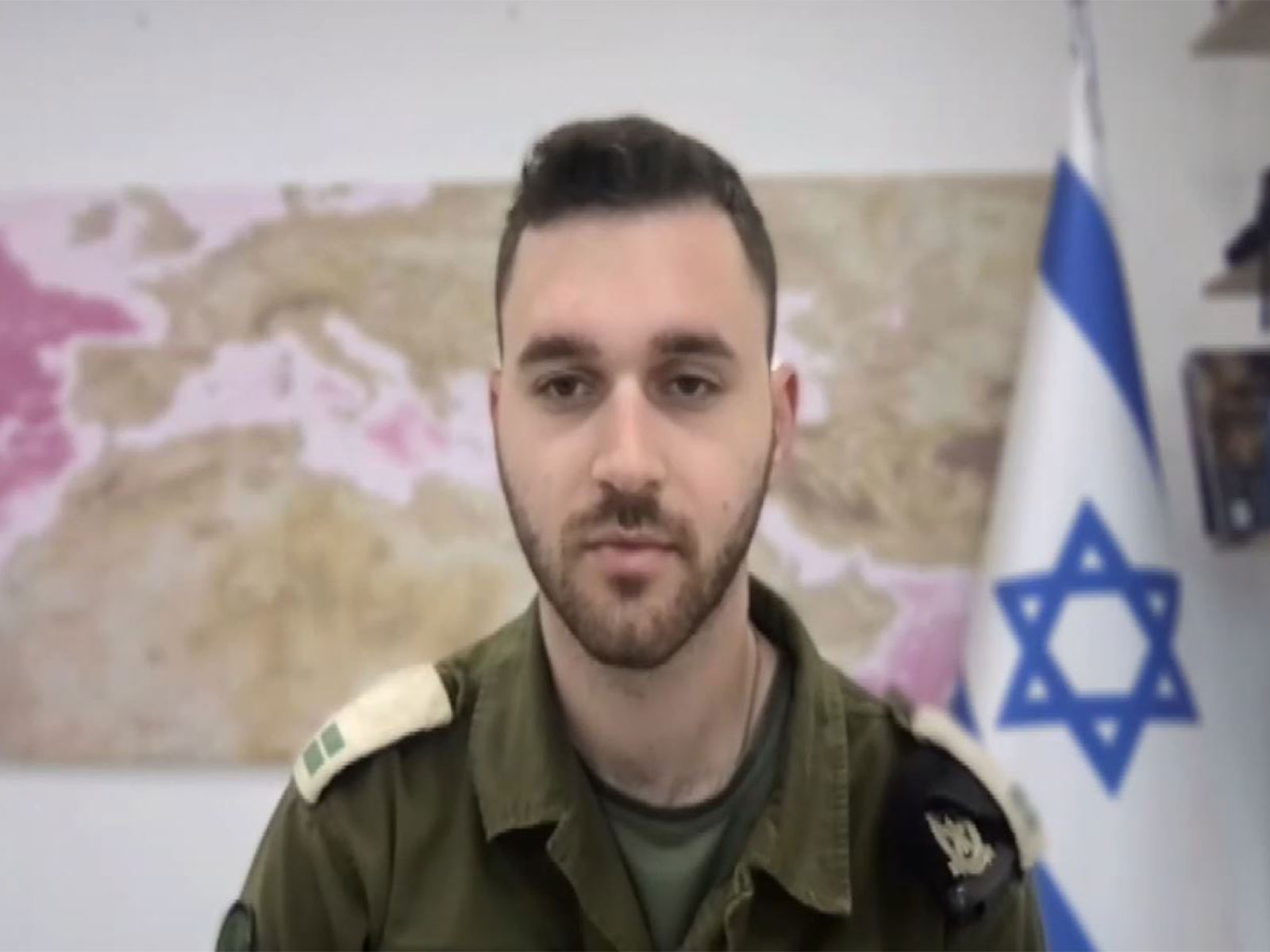
Tel Aviv [Israel], March 14 (ANI): The Israel Defence Forces (IDF) on Saturday said its joint military operations with the US against Iran in the Middle East will continue until an "existential threat" to Israel is eliminated.
Speaking in an interview with ANI, IDF spokesperson Lt Ben Cohen said Israel is prepared for a prolonged operation if required, stressing that the objective is to neutralise Iran's military capabilities that threaten Israel and the wider region.
"I'm not going to give any specific timeframe, but I'll tell you that we're going to keep going until we know that we've taken away that existential threat," Cohen said.
Cohen noted that while Israel generally seeks to avoid prolonged conflicts, operations against Iran's military infrastructure could take time due to the scale of the threat.
"Israel historically, we're not looking for long wars. We have an objective; we want to achieve that objective and get out. But when you're talking about an Iranian regime that has vast territory and significant military capabilities that we want to take away, that goal takes time," he said.
"We want to be able to take away this loaded gun that's put to our head because we want it to be not there anymore. Not because we want to take away the bullets and then they'll just reload. So that thing takes time, and we'll do it for as long as it takes to achieve that goal," he added.
The IDF spokesperson said the ongoing campaign began under Operation Roaring Lion, as a joint operation in coordination with the United States, intending to eliminate threats posed by Iran.
According to Cohen, the initial phase of the operation involved an opening strike during the first 100 hours, targeting senior Iranian military leadership and key air defence systems in order to establish aerial superiority.
He added that Israeli and US forces have since moved to the next stage of operations, focusing on degrading Iran's military infrastructure, including command and control centres, ballistic missile capabilities and weapons manufacturing facilities.
The current round of conflict began on February 28 with the killing of 86-year-old Iran's Supreme Leader, Ayatollah Ali Khamenei, in joint military strikes by the US and Israel, after which Iran, in its retaliation, targeted Israeli and US assets in several Gulf countries and Israel, causing disruption in the waterway and affecting international energy markets and global economic stability.
Due to the conflict in the region, Iran has virtually closed the Strait of Hormuz, a critical transit route for global energy supply.
Cohen further stated that Israel and the United States have been working closely in planning and executing the campaign, adding that both countries are targeting strategic military capabilities of what he described as the Iranian regime while ensuring close operational coordination.
"We've been working hand in hand for months. This isn't just the kind of operation where we're letting each other know what we're doing. We're working hand in hand. We're coordinating. Everyone knows what the other side is doing. We have our own regions; we have our own responsibilities, everyone has their own targets, but at the end of the day, we're working together for a common goal--a common goal against an enemy whose military capabilities we're trying to take away from in the most strategic way possible, but also a common goal because the basis for this operation is against a terrorist regime that calls in the same sentence "Death to Israel" and 'Death to America'," he said.
Responding to questions about Iranian retaliatory strikes, Cohen said Israel has invested heavily in its defensive systems and civil protection measures to safeguard civilians and highlighted Israel's multi-layered air defence systems and early warning mechanisms, along with efforts to intercept missile launchers before they fire.
He added that the country has developed multiple systems and strategies to counter missile and drone threats.
"Israel has invested a lot of time, money, and resources in order to be able to protect our civilians because we understand that for years--for 47 years to be exact--the Iranian terrorist regime has been building itself up, along with all of its proxies across the Middle East, with one goal, and that's to destroy Israel and to kill our civilians. We have a lot of means and methods to do that. Whether it be the way that we target their ballistic missile launchers before they even launch into the air, whether it be our air defence systems or whether it be our Home Front Command that puts a lot of effort into making sure that our civilians protect themselves whenever there may be missile fire or any sort of fire incoming," he stated. (ANI)
Tags:
Get the App