Qatar, Iran discuss mediation efforts as regional tensions escalate
Qatar, Iran, and Yemen escalated regional diplomatic and military actions amid ongoing cross-border hostilities. Meanwhile, Iran's IRGC claimed "Operation Nasr" targeted Israeli air bases in retaliation for radar strikes. The kinetic escalation severely threatens US President Donald Trump's efforts to negotiate a comprehensive nuclear deal with Tehran.
ANI
Jun 08, 2026 12:20 IST

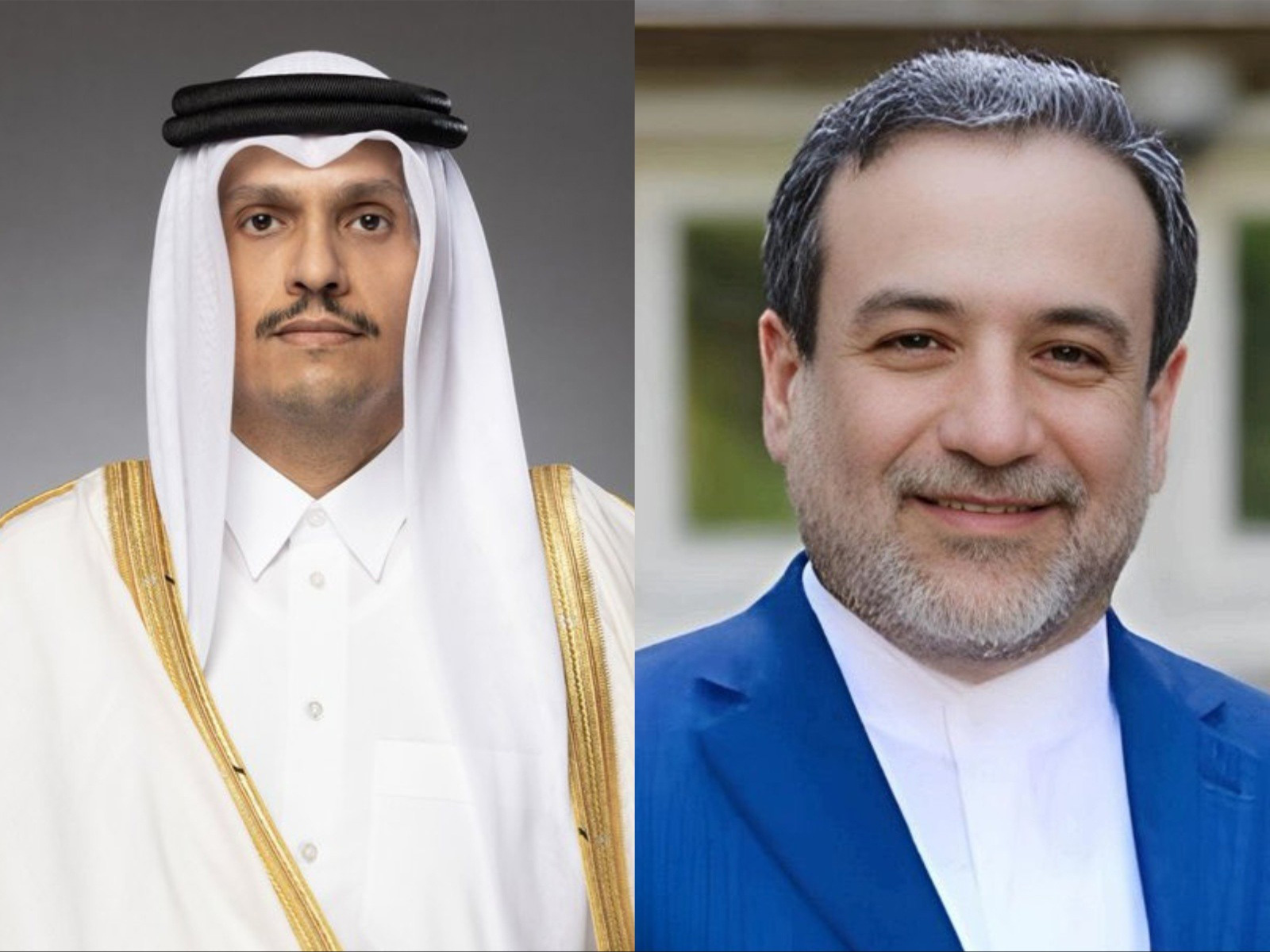
Doha [Qatar], June 8 (ANI): In a fresh diplomatic push to address ongoing regional volatility, Qatar's Prime Minister Sheikh Mohammed bin Abdulrahman Al Thani has held a telephonic conversation with Iranian Foreign Minister Abbas Araghchi to discuss bilateral mediation frameworks and the security situation in West Asia, according to an official statement released by the Qatari government.
During the high-level dialogue, the two leaders "reviewed efforts at mediation" currently underway between the United States and Iran, alongside evaluating the evolving geopolitical landscape "along with the latest developments in Lebanon", the statement noted.
Amidst intensifying cross-border hostilities across multiple fronts, Sheikh Mohammed also affirmed Qatar's institutional "support for all endeavours aimed at containing escalation and reaching a comprehensive agreement that contributes to consolidating security and stability, and achieves lasting peace in the region".
Meanwhile, the Yemeni Armed Forces have claimed a fresh military strike targeting a high-value Israeli installation, amid escalating regional cross-border hostilities in West Asia. The spokesperson for the Yemeni Armed Forces, Brigadier General Yahya Saree, announced that an Israeli sensitive asset in occupied Jaffa has been struck, Iran's state-run IRNA news agency reported.
This multi-front volatility expanded significantly as the Islamic Revolutionary Guard Corps (IRGC) Aerospace Force says it has launched a fresh wave of military strikes targeting key Israeli air installations, Iran's semi-official Mehr News Agency reported on Monday. The military offensive, designated as "Operation Nasr," reportedly targeted core sectors within two of Israel's most critical aerial warfare hubs, the Nevatim and Tel Nof air bases.
According to the Mehr News Agency, the paramilitary force says that the operation was carried out in direct retaliation for recent Israeli missile strikes that hit Iranian radar sites at three separate locations across the country. Detailing the commencement of the retaliatory assault, the IRGC issued an official statement saying that its aerospace wing had initiated the cross-border strikes, stating, "With trust in Almighty God, minutes ago the brave fighters of the IRGC Aerospace Force launched Operation Nasr, targeting key centres of the strategic air bases of Nevatim and Tel Nof."
This high-stakes offensive unfolded directly on the heels of another major cross-border flashpoint where the Israeli military confirmed executing targeted airstrikes against a major industrial site in southwestern Iran, marking an aggressive expansion of its cross-border kinetic operations.
In a brief operational update published on social media platform X, the military apparatus disclosed that the Israeli Air Force had recently "attacked several targets at the petrochemical complex in Mahshahr", located in the strategic, energy-rich coastal belt of Iran. The military command refrained from immediately disclosing the precise extent of the structural destruction, though defence officials indicated that "more details will be shared soon" once bomb damage assessments are completed.
These targeted industrial incursions occurred in close proximity to a broader kinetic exchange, during which air raid sirens resonated across central and southern Israel. Confirming an unfolding barrage on social media platform X, the Israeli Air Force noted that advanced aerial defence networks were actively engaging the threats, stating, "The IDF identified that a short while ago, missiles were launched from Iran toward the territory of the State of Israel. The defence systems are operating to intercept the threat."
Amidst the incoming salvo, Israel's domestic defence apparatus swiftly mobilised emergency broadcast protocols, with the Home Front Command issuing a preliminary directive directly to mobile phones to notify civilian populations to enter protected spaces.
The immediate real-world impact of the ballistic bombardment was confirmed by top diplomatic officials on the ground. Taking to social media platform X from an emergency bunker, the United States Ambassador to Israel, Mike Huckabee, detailed the intense kinetic activity taking place overhead, writing, "In the shelter now. Hearing loud booms overhead. Hopefully it's the interception." Highlighting deep security frustrations, the US envoy added, "Another day we live under threat of crazed Iranian regime."
This rapid, day-on-day deterioration of the security environment occurred precisely as earlier diplomatic efforts completely collapsed. The fragile West Asian ceasefire faltered early Monday after Iran struck Israel for the first time since the April 8 truce, drawing sharp retaliatory strikes from the Jewish state as loud detonations resonated across central and western parts of Iran.
This foundational breakdown of the truce infrastructure had originally intensified when Tehran initialised a projectile barrage in response to intense Israeli airstrikes targeting Hezbollah's command centres in the southern suburbs of Beirut, which proceeded despite specific calls from Washington to avoid regional escalation.
Following that exchange, the IRGC issued an explicit warning designed to deter further countermeasures, threatening broader responses that "will encompass all American and Zionist targets throughout the region," specifically pointing to prospective operations stretching across Lebanon, the Iranian coast, and maritime assets navigating the Strait of Hormuz.
In response to those specific warnings, the regional confrontation caused immediate security ripples across neighbouring territories. This drew a fierce warning from the Iraqi Shiite militia Kata'ib Hezbollah, which published a short declaration on its official website warning that "if America intervenes in the confrontation, we will target its bases and interests in Iraq and the region."
The sudden re-eruption of hostilities has cast a foreboding shadow over diplomatic efforts to permanently end the war, which originally commenced on February 28. This kinetic escalation severely threatens to derail US President Donald Trump's last-ditch efforts to establish an off-ramp by negotiating a comprehensive nuclear deal with Tehran.
Trump, who had been actively pressuring Israeli Prime Minister Benjamin Netanyahu to exercise maximum military restraint, recently affirmed his supreme authority over the ongoing international mediation. Stating in an interview that he "calls the shots", Trump indicated that Netanyahu would ultimately have to accept the negotiated terms to stop the conflict, warning that a continuous cycle of retaliation would trap the region in a perpetual state of violence: "If Bibi strikes them back, it's just going to keep going like the last 47 years, or the last 3,000 years."
The expanding regional volatility materialised precisely as Trump was utilising multiple media channels to urge both state actors to de-escalate. Speaking to Fox News, the US President expressed immense frustration over the timing of the strikes, noting that diplomatic breakthroughs were imminent. "We're very close. I would say an agreement would be signed on Monday, Tuesday or Wednesday of this coming week. And now this takes place," Trump told Fox News, before directly addressing the leadership in Tehran: "You've shot your missiles, that's enough. Get back to the table and make a deal."
According to Axios, Trump held an immediate phone call with Netanyahu shortly after the initial Iranian salvo in a direct bid to prevent a broader multi-front war from collapsing the talks. Trump publicly minimised the tactical impact to reduce political pressure on Israel to retaliate, telling Axios, "The Iranian strikes didn't hurt anybody. Hopefully Israel is not going to retaliate."
Meanwhile, talking to the Financial Times, Trump reiterated that Netanyahu would lack the political leverage to block a broader bilateral agreement between Washington and Tehran, confidently asserting, "He won't have any choice." (ANI)
Tags:
Get the App