 हिंदी खबर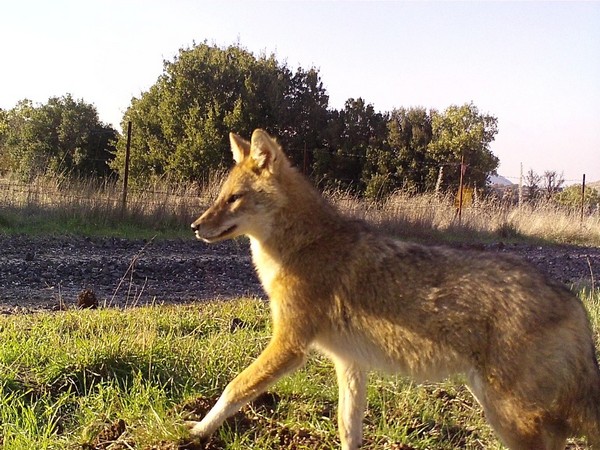

Tel Aviv [Israel], May 18 (ANI/TPS): In a groundbreaking discovery, Israeli researchers have found evidence that living in close proximity to humans may be leading to the domestication of jackals.
Golden jackals, an overabundant species in urban habitats, have long been observed thriving near human populations. However, a Tel Aviv University study conducted in the Golan Heights suggests that the existing closeness between humans and jackals might be initiating the first stages of domestication, akin to the domestication of dogs from wolves.
The study conducted by Ayelet Barash, a PhD student from Tel Aviv University's School of Zoology, was published in the peer-reviewed Scientific Reports in May, presenting findings that challenge the current understanding of jackal behaviour.
Working in collaboration with Dr Yaron Dekel from the Shamir Institute for Research and the University of Haifa, and Professor Tamar Dayan from the Steinhardt Museum of Natural History and Tel Aviv University, the researchers initially suspected that a jackal exhibiting traits of a domesticated animal was a hybrid of a jackal and a dog. However, through comprehensive genetic and morphological analyses, Barash's team confirmed that the animal was a wild jackal and not a hybrid.
This was the first documented case of an animal possessing characteristics resembling domestication without recent hybridization.
One indicator of domestication is a change in fur colour, Barash explained. During a camera survey in the Golan Heights, the researchers discovered five unusual jackals with long fur, white patches, and upright tails. One of these jackals, nicknamed "Jackie," became the focal point of the study.
Genetic and skull examinations confirmed that Jackie was 100 per cent jackal, ruling out any dog hybridization or known coat colour mutations.
The discovery of Jackie raises the possibility that this might be an incipient stage of self-domestication, a phenomenon that has not been witnessed in thousands of years since the domestication of the last wild mammal. Israel, particularly the Golan region, holds historical significance as the birthplace of plant and mammal domestication.
The observation of Jackie's domestication-like traits offers researchers a unique opportunity to explore this ongoing evolutionary process. Dr Yaron Dekel described the findings as a scientific breakthrough, emphasizing the importance of ongoing research in genetics, evolution, and ecology to gain a deeper understanding of this remarkable phenomenon.
Prof. Dayan said the study highlighted significant insights into the evolution of human-animal interactions and the processes behind animal domestication. The study's comparative research, using collections from the Natural History Museum, helped confirm the identity of "Jackie" as a wild jackal.
According to the researchers, the population of jackals in the Golan Heights continues to increase each year, mirroring the conditions during the early stages of dog domestication over 15,000 years ago. Similar to the past, the availability of food waste around human environments attracts jackals that are gradually becoming less fearful of humans. Over time, these individuals may undergo physical and behavioural changes, ultimately leading to self-domestication.
As researchers embark on this fascinating journey, further investigations will shed light on the evolutionary implications of jackal domestication and the potential for the emergence of a new domesticated species. The study not only enhances scientific knowledge but also emphasizes the importance of preserving natural history collections for future research endeavours.
With jackals becoming a regular sight in urban areas, it remains crucial for wildlife and municipal authorities to educate the public about the risks of approaching or feeding these animals. (ANI/TPS)


