 हिंदी खबर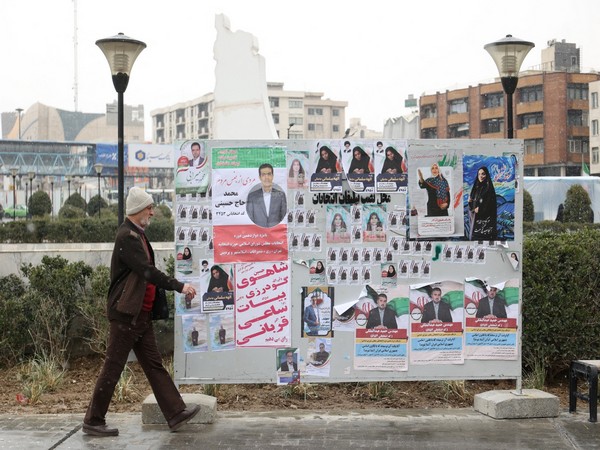

Tehran [Iran], March 1 (ANI): Iranians are gearing up for a significant moment as they head to voting stations on Friday to participate in parliamentary elections, and elect religious leaders, Al Jazeera reported.
Notably, this election will decide the country's next supreme leader.
With the multitude of challenges surrounding the nation following a tumultuous period since the parliamentary elections in 2020, here are some key points to consider in anticipation of the polls.
Who can vote and when?
Voters must be at least 18 years old, and over 61.2 million people are eligible to vote in a country with a population of approximately 85 million. Polls across Iran will open at 8 am local time and will remain open for 10 hours, although in the past, voting time has often been extended based on demand, according to Al Jazeera.
Voting stations and security measures:
There will be 59,000 operational voting stations across the country, with Tehran hosting 5,000 and the wider province of Tehran accommodating 6,800. At 1,700 stations, electronic voting devices will be used. The Interior Ministry has deployed 2,50,000 security force personnel to oversee the process, supported by the Islamic Revolutionary Guard Corps (IRGC) and its Basij forces, along with the army, reflecting the importance of maintaining security in the wake of recent events.
Who is being elected?
The votes cast will determine the composition of the 290-member parliament for the next four years. Additionally, voters will choose 88 clerics who will each hold a seat for eight years at the Assembly of Experts, responsible for selecting the country's supreme leader. All candidates have undergone vetting by the Guardian Council, a powerful constitutional body, before being deemed eligible to run, as reported by Al Jazeera.
Expected voter turnout:
Voter apathy remains a concern as the country grapples with various challenges. The previous parliamentary elections in 2020 saw a turnout of 42 per cent, the lowest since the establishment of the Islamic Republic in 1979. In the 2021 presidential elections, only 48 per cent of the electorate cast their votes, signalling a trend of diminishing participation in recent years.
Factors influencing turnout:
Several factors contributed to the low turnout in 2020, including the aftermath of the US assassination of IRGC Quds Force commander Qassem Soleimani, the downing of a Ukrainian passenger flight, and the early stages of the COVID-19 pandemic. Economic challenges, exacerbated by harsh unilateral sanctions imposed by the US since reneging on the 2015 nuclear deal, have also played a role. The ongoing economic troubles, including high inflation and unemployment, coupled with a devaluing currency, continue to impact the country.
Expected Winners:
Parliament speaker Mohammad Bagher Ghalibaf is anticipated to secure re-election. He is advocating for a list of 30 allied candidates in Tehran, encompassing conservative and hardline figures, including six women. The majority of parliamentary seats are likely to be won by conservative and hardline candidates, reflecting the dominance of these factions in the wake of the unravelled nuclear deal and increased pressures on Iran.
Opposition Dynamics:
The Reformist Front, functioning as the closest thing to an opposition party, has opted not to participate in what they deem a "meaningless and non-competitive" election. However, some reformist and centrist candidates are collaborating to potentially form a non-conservative minority in the parliament.
International Dynamics:
The elections are taking place in the aftermath of the deadly September 2022 nationwide protests and amidst Israel's war on Gaza, aligning political and military groups across the region backed by Tehran against the US and its allies. These geopolitical tensions add an extra layer of complexity to an already intricate political landscape.
Issues at stake:
While Iran's parliament has limited influence over foreign policy, it plays a crucial role in shaping rules for local affairs. Recent headlines include legislation governing women's dress codes and internet freedom, Al Jazeera reported. (ANI)
Iranians to elect parliament, religious leaders amid geopolitical tensions
ANI | Updated: Mar 01, 2024 01:39 IST




