IAEA pledges technical support to UAE following drone strike on nuclear plant
Following a drone strike on the UAE's Barakah nuclear plant on 17 May, the IAEA is offering technical support. IAEA chief Rafael Grossi praised the quick shutdown of the reactor. The strike, linked to wider US-Israel-Iran regional tensions, marks the first attack on the Middle East's sole operational nuclear hub.
ANI
Jun 03, 2026 02:08 IST

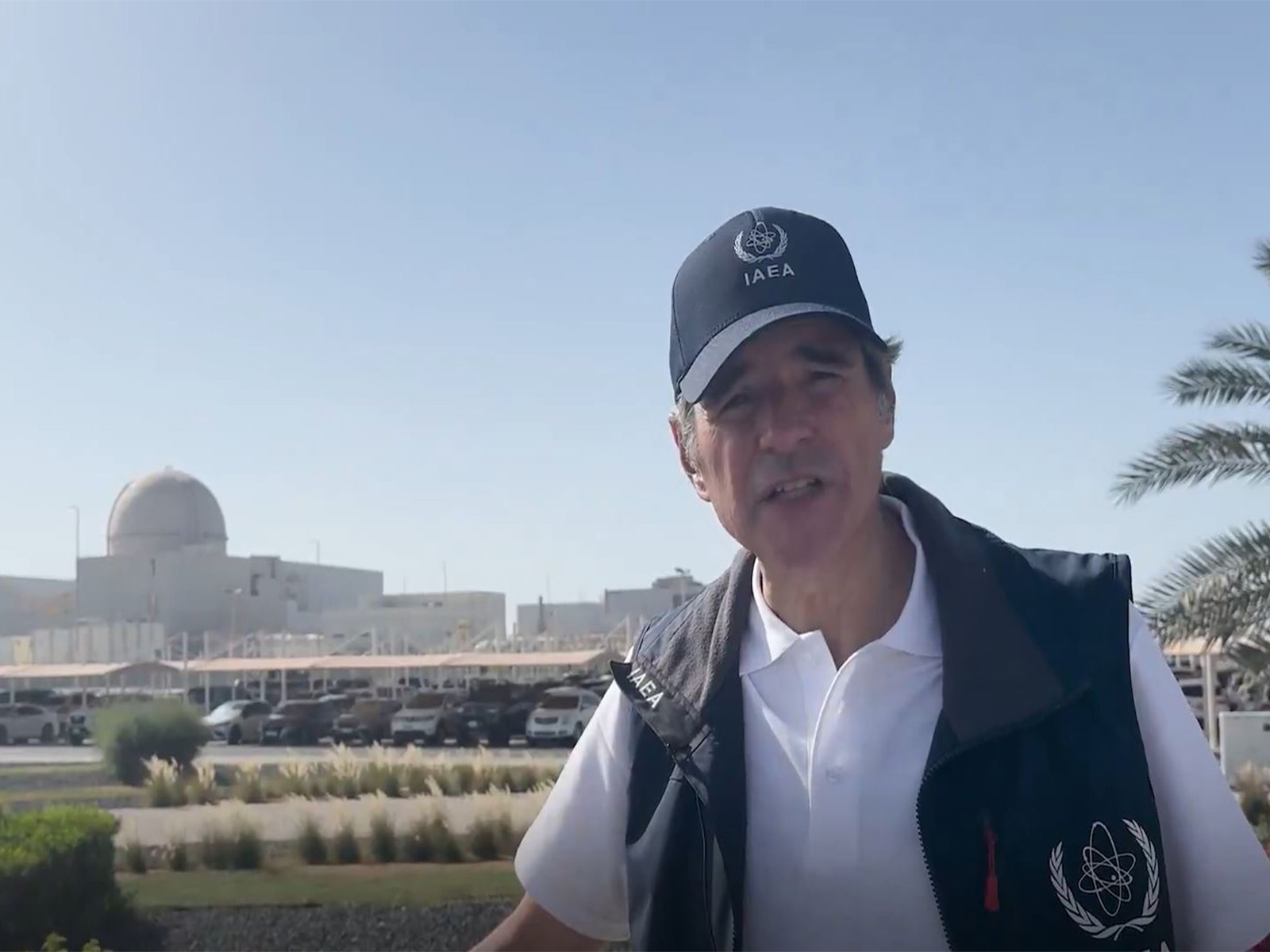
Abu Dhabi [UAE], June 3 (ANI): International Atomic Energy Agency (IAEA) Director-General Rafael Grossi has confirmed that the global nuclear watchdog is extending comprehensive support to the United Arab Emirates following an official visit to the nuclear power facility that was targeted in a drone strike last month, according to a report by Al Jazeera.
Grossi stated that Emirati officials had demonstrated an exceptionally rapid operational response to the incident at the Barakah Nuclear Power Plant, swiftly executing a reactor shutdown sequence immediately after the installation suffered a loss of external power.
The IAEA chief further indicated that a series of technical assessments and operational activities are scheduled to take place to ensure the complete resolution of repairs at the facility.
According to Al Jazeera, Grossi did not provide any further specific details regarding the exact nature or timeline of the forthcoming maintenance work at the power plant.
This critical international intervention comes after a drone strike triggered a fire at the United Arab Emirates' sole nuclear power facility on 17 May, an incident that was subsequently confirmed by state authorities.
Despite the gravity of the attack, the United Arab Emirates has refrained from pointing fingers at any specific nation for the aerial assault, and no faction has stepped forward to claim responsibility for the incident.
According to the UAE Ministry of Defence, an active investigation is currently being conducted to ascertain the launch point of the unmanned aerial vehicles. Detailing the interception, defence officials noted that anti-aircraft systems successfully neutralised two drones, whereas a third managed to impact a power generator adjacent to the nuclear installation.
The defence ministry further disclosed that the inbound drones had crossed over from the "western border" but abstained from offering any additional information regarding their exact origin.
Providing further geographical context to the impact, information released by the Abu Dhabi Media Office detailed that the drone impacted an electrical generator situated outside the heavily secured inner perimeter of the nuclear energy complex.
Following the impact, the International Atomic Energy Agency (IAEA) verified that the strike ignited a fire in the vicinity of the plant, noting that a reactor was forced to temporarily pivot to emergency diesel generators for power.
Underscoring the broader dangers of targeting such infrastructure, the atomic agency emphasised: "Military activity that threatens nuclear safety is unacceptable."
The targeting of the Barakah installation has caused significant concern because the facility, which commenced commercial operations in 2020, generates approximately 25 per cent of the electricity supply for the United Arab Emirates. Constructed via technical collaboration with South Korea, the facility holds the distinction of being the sole operational nuclear power hub in the Middle East.
This vulnerability marks a major escalation in regional friction, as the cross-border strike on 17 May represents the inaugural documented assault directed near the critical energy installation since regional hostilities intensified at the start of the year.
These hostile actions are closely linked to a wider theatre of war. Since the outbreak of the armed conflict following joint US-Israeli military operations against Iran on 28 February, Tehran has consistently aimed strikes at the UAE, alongside other Gulf nations that provide basing facilities for American military forces, with multiple operations impacting civilian zones and vital energy assets. (ANI)
Tags:
Get the App