ADD ANI AS A TRUSTED SOURCE
googleads
Menu
Middle East

After IRGC's terror designation, Iran FM suggests listing US forces too

Tehran [Iran], Apr 8 (ANI): In response to the United States designating Iran's elite Islamic Revolutionary Guard Corps (IRGC) as a "foreign terrorist organisation," Iran's Foreign Minister on Monday suggested the listing of the US Central Command (CENTCOM) in its terror list.

ANI Apr 08, 2019 23:25 IST googleads

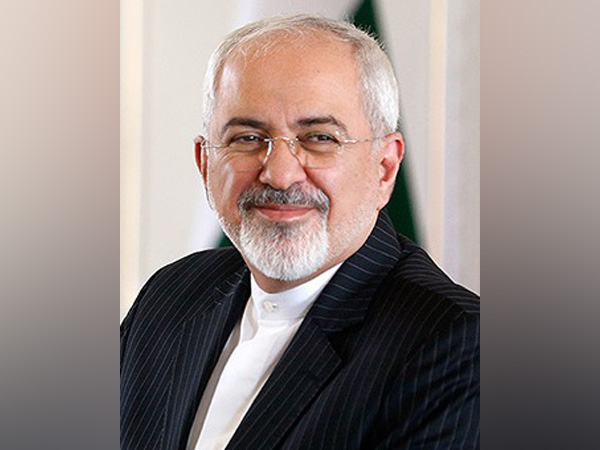
Iran's Foreign Minister Mohammad Javad Zarif (file photo)

Tehran [Iran], Apr 8 (ANI): In response to the United States designating Iran's elite Islamic Revolutionary Guard Corps (IRGC) as a "foreign terrorist organisation," Iran's Foreign Minister on Monday retaliated suggesting enlisting US Central Command (CENTCOM) in its terror list.
In a letter to Iran's President Hassan Rouhani, Foreign Minister Mohammad Javad Zarif highlighted the US forces' alleged support to terrorist groups in the region, and " their direct interference in terror activities," according to Iranian state media.
He added that Iran's National Security Council, headed by Rouhani, should enlist the US forces, in accordance with the 'Bill Against US Adventurist and Terrorist Activities in the Region'.
US Secretary of State, Michael Pompeo, on Monday announced IRGC's designation and said: "The use of terrorism is central to the Iranian regime’s foreign policy. The designation of IRGC, including Qods Force will help starve the regime of the means to execute this destructive policy. Maximum pressure will be unrelenting until Iran’s regime abandons its deadly ambitions."
This is the first time the United States has designated another country's governmental entity as a terror body. The designation makes it illegal to provide any materials to Iran's paramilitary organisation formed in the wake of the 1979 Islamic revolution to defend its government.
"This is just another chapter, there are more chapters to come...This was long overdue," a US official said during Monday's media briefing.
The CENTCOM, established in 1983, focuses on protecting the US' national interests and those of its partners in 20 nations in the Middle East, Central and South Asia, and the strategic waterways that surround them. (ANI)

Get the App

What to Read Next

Middle East

Iran cautions against accusing Houthis over Mecca drone strike

Iran cautions against accusing Houthis over Mecca drone strike

"At the same time, a mere claim of intercepting a drone en route to Mecca al-Mukarramah cannot constitute grounds for accusing a specific party, especially since the Yemeni government of Change and Construction has explicitly denied this claim," he added. 

Read More
Asia

“Energy security paramount”: Ex-diplomat Ashok Sajjanhar

“Energy security paramount”: Ex-diplomat Ashok Sajjanhar

“Basically, number one, I would totally support what the Indian establishment has articulated, has mentioned on this: that this is absolutely of paramount importance, that we will ensure that energy is available at reasonable prices, affordable prices, and regularly, that there are no stoppages as far as energy supplies are concerned,” Sajjanhar told ANI.

Read More
US

Trump plans to sign Russia sanctions bill: White House official

Trump plans to sign Russia sanctions bill: White House official

US President Donald Trump plans to sign a sweeping sanctions bill targeting Russia and Iran, a White House official has told ANI, after the legislation cleared both chambers of Congress.

Read More
Asia

Ex-diplomat VB Soni cautions India over energy amid West Asia war

Ex-diplomat VB Soni cautions India over energy amid West Asia war

"So our interest is not to antagonise. We are supporting American and the stance, but we do not want, at the same time, to antagonise the Houthis, because if they were to take a stance on Bab-el-Mandeb, then we'll be in a very difficult position," he highlighted.

Read More
Asia

China rejects US unilateral sanctions on Russian energy imports

China rejects US unilateral sanctions on Russian energy imports

Beijing reiterated its opposition to "long-arm jurisdiction" and unilateral economic sanctions, stating that any sanctions not authorised by the UN Security Council have no basis in international law. Defending sovereign trade, the Ministry of Foreign Affairs said normal economic and trade cooperation between sovereign nations is not directed at third parties and should not be subjected to external coercion or interference.

Read More
Home About Us Our Products Advertise Contact Us Terms & Condition Privacy Policy

Copyright © aninews.in | All Rights Reserved.