Shafi Burfat alleges ISI and Punjabi military plot to ignite ethnic discord in Sindh
He claimed that the military and its affiliates are exploiting social media to instigate divisions between Sindhi-speaking and Urdu-speaking populations, thereby weakening Sindh's national unity and jeopardising its emerging freedom struggle.
ANI
Aug 07, 2025 13:48 IST

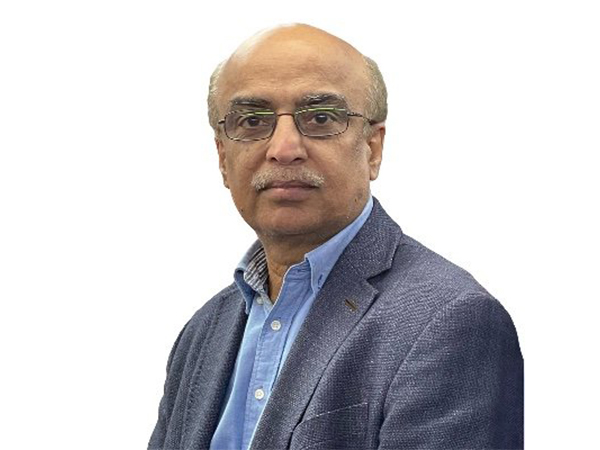
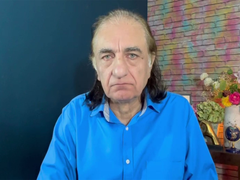
Frankfurt [Germany], August 7 (ANI): Shafi Burfat, the Chairman of the Jeay Sindh Muttahida Mahaz (JSMM), has accused the Punjabi military establishment and Pakistan's intelligence agency ISI of systematically executing a plot to incite ethnic conflict in Sindh.
He claimed that the military and its affiliates are exploiting social media to instigate divisions between Sindhi-speaking and Urdu-speaking populations, thereby weakening Sindh's national unity and jeopardising its emerging freedom struggle.
Burfat asserted that these online conflicts are not mere coincidences but are instead intentional campaigns driven by a longstanding agenda. He noted the resurgence of divisive speech on social media platforms, which, according to him, is disseminated by state actors posing as ordinary citizens or military personnel in disguise. He believes these operations aim to incite hatred, mislead the youth, and undermine the solidarity needed for Sindh's political emancipation.
He mentioned individuals like Afaq Ahmed, an Urdu-speaking politician, accusing him of having worked with the military in the past during operations that resulted in the deaths of numerous Urdu-speaking youth in Karachi. Burfat contends that such figures are now re-emerging to promote harmful anti-Sindh narratives online. Simultaneously, he cautioned that some individuals who speak Sindhi, while responding emotionally to these provocations, are unintentionally assisting these state-driven schemes.
Burfat emphasised that linguistic, ethnic, or religious identities should not separate the people of Sindh. He reiterated that everyone residing in Sindh, regardless of whether they speak Sindhi, Urdu, Saraiki, Balochi, Pashto, Punjabi, Brahui, Dhatki, Kutchi, Memoni, or Lasi, constitutes one Sindhi nation. He stressed that both Hindus and Muslims, as well as Shias and Sunnis, are united by their connection to Sindh and share mutual political, economic, and cultural interests.
He portrayed Sindh not merely as territory but as one of the world's oldest civilisations, the birthplace of the Indus Valley Civilisation, insisting that all communities within its borders are its rightful heirs. He expressed sorrow that within what he referred to as an "unnatural state" like Pakistan, historical nations such as the Sindhis, Balochs, Pashtuns, Brahuis, and Saraikis continue to endure political and economic oppression by Punjabi imperialism.
Drawing a comparison to the events that led to Bangladesh's independence in 1971, Burfat contended that the Punjabi establishment now understands it can no longer maintain control solely through force. As a result, it turns to internal disruption, inciting ethnic discord and communal strife to weaken national movements before they gain significant traction.
He pointed out how provocations are being spread digitally by agents of the Pakistani military establishment, masquerading as civilians. According to him, these actions are motivated by a singular aim: to undermine the Sindhudesh freedom movement from within by dividing communities.
Addressing both Sindhi-speaking and Urdu-speaking individuals, particularly the youth, political activists, journalists, and intellectuals, Burfat called for unity and historical comprehension. He asserted that regardless of language or religion, Sindh is their homeland, and this land has unified them as one people. He emphasised that their common history, identity, and future should not be divided by transient provocations or militarised misinformation.
He also announced a live address scheduled for Wednesday, August 7, at 8 PM (Sindh time) on Facebook, where he stated he would reveal the complete extent of the conspiracy, identify those involved, and explain the propaganda strategies being employed. He claimed that the approach mirrors the formation of Al-Shams and Al-Badr, Islamist militias that the Pakistani military utilised to suppress Bangladesh's independence struggle. He asserted that a similar strategy is currently being implemented in Sindh.
Burfat urged all Sindhis to resist this plot with wisdom, clarity, and a strong sense of their historical duty. He reminded Urdu-speaking Sindhis of a pivotal moment in the past when, during the Partition of 1947, refugees were turned away in Punjab at Lahore, with the remark "Pakistan is further ahead," while Sindh embraced them wholeheartedly. He stated that the Sindhi people opened their homes, lands, and hearts to migrants, regarding them not as outsiders but as siblings, a spirit that persists today.
In his closing appeal, Burfat called on all Urdu-speaking citizens of Sindh to understand the agenda of the Punjabi military as a remnant of colonialism and to refuse to be used as instruments of division. He stressed that Sindh is both their homeland and identity, and just as a mother treats all her children equally, so too should all residents of Sindh foster brotherhood and equality among themselves.
He ended by urging the rejection of all types of ethnic, religious, and racial division; the dismantling of Punjabi imperial schemes; and the ongoing collective effort for a free, just, and unified Sindhudesh. (ANI)
Tags:
Get the App