Pakistan joins hand with Taliban to destroy Afghan identity, culture: Former Pak senator
Amsterdam [Netherlands], November 12 (ANI): A former senator of Pakistan from Khyber Pakhtunkhwa has accused Islamabad of joining hands with the Taliban to "destroy" Afghan identity and its culture.
ANI
Nov 12, 2021 17:26 IST

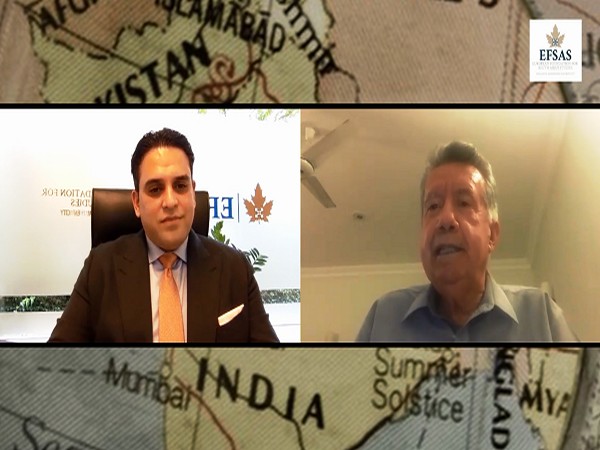
Amsterdam [Netherlands], November 12 (ANI): A former senator of Pakistan from Khyber Pakhtunkhwa has accused Islamabad of joining hands with the Taliban to "destroy" Afghan identity and its culture.
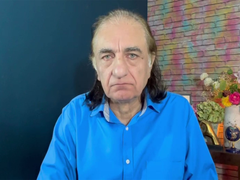
In an interview with the Amsterdam-based European Foundation for South Asian Studies (EFSAS), Afrasiab Khattak, who is also a Pashtun rights activist said, "Pakistan expanded into Afghanistan through its strategic depth policy. During the Afghan civil war, the Pakistani military establishment, aided by the US and the Arab Gulf States, enrolled Afghan refugees in Pakistani madrassas to brainwash them with extremist Islamist ideologies".
Khattak believes that these measures were aimed at ultimately emphasising the Afghans' Muslim identity over their identity as Afghans and Pashtuns, and thereby deconstructing the Afghan/Pashtun component of their communal identity.
He observed that this erosion also played out in practice as the Taliban sought to destroy cultural products and practices that were seen as Afghan, replacing them with the Taliban's interpretation of Sharia law.
The Taliban, according to Khattak, were thus programmed to destroy Afghan identity and thereby serve the Pakistani military establishment's aim of ultimately transforming Afghanistan into a cultural extension of Pakistan.
From the late 1980s onwards, this strategic depth policy was also expanded towards India's Jammu & Kashmir. Here too, the identity of Kashmiris as Muslims was and is prioritised over other identity markers.
However, as Khattak argued, this is a "suicidal policy" for Pakistan, because while Pakistan invests all its efforts in militarisation, its economic development eventually deteriorates. While Pakistan has the potential of becoming even a regional economic power, this strategic policy of Talibanisation has hindered its socio-economic development.
In view of the Pakistani military establishment, Jammu & Kashmir as well as Afghanistan should be treated as extensions of Pakistan aimed at hegemonizing it under Pakistani rule. The Taliban, Khattak concluded, were the most important element of this policy approach. Therefore, the current Pashtun Tahafuz Movement, which aims to protect the Pashtun identity, while being non-violent is met with so much brutality by the Taliban.
Khattak said that Pakistan continues to be home to a hybrid system in which the parliamentary democracy of the country remains heavily influenced and controlled by the Pakistani military establishment and its intelligence agencies, especially the ISI.
In line with his political positions in the past, Khattak argued that Pakistan must reconcile with India for the sake of the country's own social and economic development.
He further criticised Pakistan for historically using Afghan refugees as a political tool and turning these refugees into members of the Taliban against Kabul when relations with respective Afghan governments were strained.
India and Pakistan, he argued, must reconcile as the staunch anti-Indianism in Pakistan legitimises military rule that in turn undermines democracy.
The same was said for Pakistan's relations with Afghanistan: Pakistan's high military expenditures, Khattak argued, curtail Pakistan's political and economic development. The historical role of the Pakistani military establishment embodies the empowered role of the armed forces and the bureaucracy under colonial rule.
In regard to extremism, Khattak suggested that General Zia was not the sole driver of Islamic extremism in Pakistan.
"The 1971 secession of Pakistan was seen as having been enabled by a seeming lack of Islamization of East Pakistan (now Bangladesh) by West Pakistan, motivating an even more pronounced focus on Islam. Religion thus became a way of justifying military rule and served to vindicate political centralization," he argued.
Khattak highlighted that this was also recognized by former Prime Minister of Pakistan, Zulfiqar Ali Bhutto who believed that Pakistan would crumble under the weight of an oversized military. This eventually paved the way for his execution at the hands of the same military establishment. (ANI)
Get the App