Oxford-AstraZeneca vaccine developers claim that it reduces COVID-19 transmission
London [UK], February 4 (ANI): As per a report by developers of the Oxford-AstraZeneca coronavirus vaccine on Sunday, claimed that it can reduce the transmission of COVID-19 virus, reported The Washington Post.
ANI
Feb 04, 2021 13:40 IST

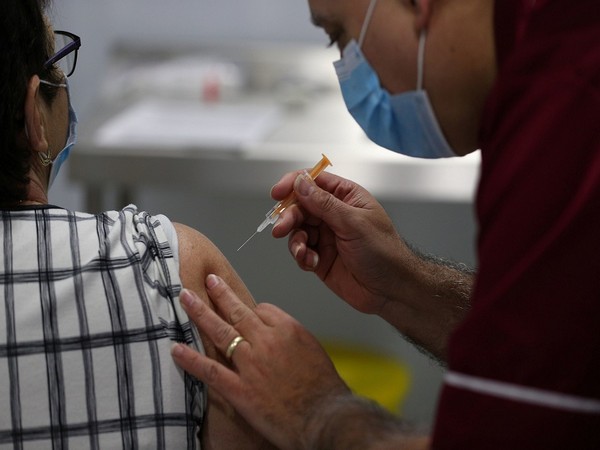
London [UK], February 4 (ANI): As per a report by developers of the Oxford-AstraZeneca coronavirus vaccine on Sunday, claimed that it can reduce the transmission of COVID-19 virus, reported The Washington Post.
In a preprint of an article under review at the Lancet medical journal, the Oxford University vaccine developers report that was based on follow-up studies of their clinical trials found the vaccine safe and effective, there is also "the potential for the vaccine to reduce transmission of the virus".
Many vaccines developed against the virus have produced evidence that they are effective at reducing the number of people who experience symptoms or suffer severe illness or die, but much less is known about whether any of the available vaccines can prevent asymptomatic infections that can pass from one person to another.
The study of Oxford-AstraZeneca vaccine developers found that after people received two doses of the vaccine, they were 54 per cent less likely to have an infection confirmed by a nasal swab, regardless of whether they had symptoms, reported The Washington Post.
In addition, the researchers also said that a single dose of the vaccine was 76 per cent effective against symptomatic virus infection, for up to three months - reducing the need for social distancing and allowing a return to a more normal life.
Independent scientists who were not involved in the Oxford study called the data intriguing but incomplete. They warned that results were preliminary, that the sample size was too small to make bold claims, and that there could be alternative explanations for the findings, such as that the group receiving a single dose included more women, younger people and health workers, reported The Washington Post.
Meanwhile, British officials on Wednesday hailed the report on the homegrown vaccine. They promoted the findings as a vindication for their controversial decision to delay second doses -- from four weeks to 12 weeks -- while trying to get first shots to as many people as possible.
British Health Secretary Matt Hancock said the research results were "absolutely superb."
Pfizer-BioNTech scientists have warned that they do not have evidence to support the British dosing strategy for their vaccine, also in wide use in Britain.
Paul Hunter, a professor in medicine at the University of East Anglia, said the report by the Oxford researchers seemed to support the idea that the efficacy of the vaccine was improved by having a long stretch between first and second doses.
"Taking all this evidence together, the 12-week gap between first and second dose is clearly the better strategy, as more people can be protected more quickly and the ultimate protective effect is greater," Hunter said.
Andrew Pollard, the chief investigator of the Oxford vaccine trial, said the results support the British government's decision to give one dose followed by a second booster shot 12 weeks later. Pollard called it "an optimal approach" that "reassures us that people are protected from 22 days after a single dose of the vaccine."
Natalie Dean, a biostatistics expert at the University of Florida, said "If you think about the way that vaccines work, they can work in two major ways: one is by preventing infection entirely and the other by taking someone who is infected and preventing them from getting symptoms."
Oxford is eager to further establish the credibility of its vaccine, after inconsistent dosing in its clinical trials muddied assessments of its effectiveness and a lack of data on the efficacy in people 65 and older have given some public health officials pause, reported The Washington Post.
Britain has one of the highest per capita coronavirus death tolls in the world. More than 108,000 people have died after being diagnosed with the virus, with a more contagious variant propelling the latest wave, reported The Washington Post.
The vaccine manufacturers have said that their formulas are effective against the variant.
The European Union's regulator of medicines has authorized the vaccine for use in all adults, but officials in France, Germany, Italy, Poland, Sweden and Belgium have cautioned against using it in older populations. Switzerland on Wednesday rejected the vaccine, saying it wanted to see more data. The United States, too, is waiting for more clinical trial data before an authorization decision, reported The Washington Post. (ANI)
Tags:
Get the App