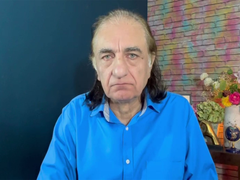
JSMM Chairman Shafi Burfat criticises Pakistan's centralised policies, calls for Sindh's sovereignty
Chairman of Jeay Sindh Muttahida Mahaz (JSMM), Shafi Burfat, has issued a statement accusing the Pakistani state, led by the Punjabi political elite and military establishment, of systematically undermining the rights of Pakistan's ethnolinguistic communities, particularly Sindhis, Baloch, and Pashtuns. According to Burfat, since Pakistan's creation, these communities have been denied their natural rights to national identity, political autonomy, and control over their economic resources.
ANI
Jul 21, 2025 11:56 IST

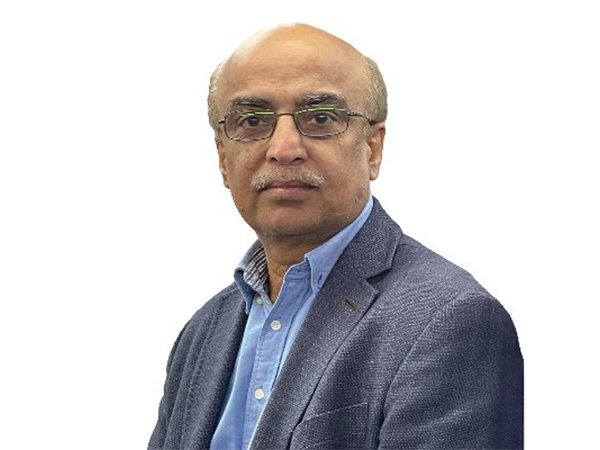
Frankfurt [Germany], July 21 (ANI): Chairman of Jeay Sindh Muttahida Mahaz (JSMM), Shafi Burfat, has issued a statement accusing the Pakistani state, led by the Punjabi political elite and military establishment, of systematically undermining the rights of Pakistan's ethnolinguistic communities, particularly Sindhis, Baloch, and Pashtuns. According to Burfat, since Pakistan's creation, these communities have been denied their natural rights to national identity, political autonomy, and control over their economic resources.
Burfat explained that the Pakistani state deliberately centralised power to ensure Punjab's dominance, turning it into a modern industrialised hub while keeping other provinces like Sindh underdeveloped and agrarian. He said this policy included massive investments concentrated in Punjab, while Sindh faced systematic obstruction in education, industrial development, and socio-economic progress.
"The Sindhi nation, historically a liberal, secular, and urban trading society, was deliberately held back through feudal control, sectarian networks, extremist groups, and state-sponsored policies," Burfat stated. He added that the Baloch and Pashtun communities were similarly marginalised, with Pashtuns being strategically settled in Karachi as part of a demographic engineering plan aimed at diluting Sindh's political power.
Burfat highlighted how the Urdu-speaking community in Sindh was manipulated to foster ethnic divisions and sectarian violence, particularly in Karachi, which became a centre for unrest and religious extremism. This strategy, he argued, was designed to weaken Sindh economically by diverting resources to Punjab and preventing the formation of a united urban middle class.
He further criticised the formation of political parties like MQM as state-engineered entities to channel anti-Sindh sentiments, often detached from Sindh's national and economic interests. However, Burfat expressed hope, noting that a growing section of the Urdu-speaking population is increasingly aligning itself with Sindh's national cause, which he believes could strengthen the movement for Sindhudesh -- the call for Sindh's sovereignty.
"The state's policies have targeted Sindh's liberal and secular identity, replacing it with feudalism, extremism, and ethnic chauvinism," he warned. Burfat called for a well-organised, ideologically aware national movement to liberate Sindh from what he termed Punjabi neo-colonialism and restore Sindh as a sovereign state. Only through such unity and struggle, Burfat concluded, can Sindh reclaim its dignity and secure a self-determined future for its people on the global stage. (ANI)
Get the App