Continue to monitor, assess situation regarding Israeli attacks on nuclear sites in Iran: IAEA chief Rafael Grossi
Rafael Grossi said IAEA inspectors remain present in Iran, ready to be deployed at nuclear sites when possible, even though the number of agency staff has been reduced somewhat, considering the security situation there.
ANI
Jun 20, 2025 09:28 IST

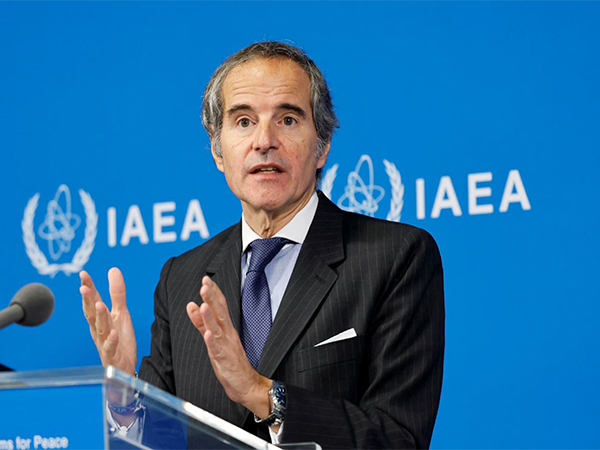
Vienna [Austria], June 20 (ANI): The International Atomic Energy Agency (IAEA) Director General, Rafael Grossi, said on Thursday, that the IAEA continues to closely monitor and assess the situation regarding the Israeli attacks on nuclear sites in Iran, providing frequent public updates about developments and their possible consequences for human health and the environment.
The conflict between Iran and Israel started after the latter launched a series of strikes against military and nuclear infrastructure in Iran under 'Operation Rising Lion' on June 13.
Since the military attacks started almost a week ago, the UN nuclear watchdog has been reporting damage at several of these facilities, including at nuclear-related sites located in Natanz, Arak, Esfahan and Tehran, and their potential radiological effect, according to the statement released by the IAEA.
Rafael Grossi said IAEA inspectors remain present in Iran, ready to be deployed at nuclear sites when possible, even though the number of agency staff has been reduced somewhat, considering the security situation there.
He further said, "The Agency is and will remain present in Iran. Safeguards inspections in Iran will continue as required by Iran's safeguards obligations under its NPT (Non-Proliferation Treaty) Safeguards Agreement, as soon as safety and security conditions allow."
Grossi called for maximum restraint to avoid further escalation. Grossi emphasised that he was ready "to travel immediately and engage with all relevant parties to help ensure the protection of nuclear facilities and the continued peaceful use of nuclear technology in accordance with the Agency mandate, including by deploying Agency nuclear safety and security experts, in addition to our safeguards inspectors in Iran, wherever necessary."
IAEA continues to monitor & assess impact of Israeli attacks on nuclear sites in Iran, providing frequent public updates about developments and their possible consequences for people & environment, @rafaelmgrossi said today.
— IAEA - International Atomic Energy Agency ⚛️ (@iaeaorg) June 19, 2025
Update on developments in Iran: https://t.co/pg07twNIW7 pic.twitter.com/RB2udVFcAx
He said, "Military escalation threatens lives, increases the chance of a radiological release with serious consequences for people and the environment and delays indispensable work towards a diplomatic solution for the long-term assurance that Iran does not acquire a nuclear weapon."
He expressed IAEA's readiness to act within its statutory mandate to assist in preventing a nuclear accident that could result in grave radiological consequences, adding: "For the IAEA to act, a constructive, professional dialogue will have to ensue, and this must happen sooner rather than later."
According to the information available to it, the IAEA has been reporting on the situation at the nuclear facilities and sites in Iran, including Natanz Fuel Enrichment Plant site which was targeted in attacks on June 13 that destroyed the above-ground part of the Pilot Fuel Enrichment Plant, one of the facilities at which Iran was producing uranium enriched up to 60 per cent U-235.
Electricity infrastructure at the plant - including an electrical sub-station, a main electric power supply building, and emergency power supply and back-up generators - was also destroyed. The loss of power to the underground cascades may have impacted the centrifuges there, Director General Grossi told the Board of Governors on June 16.
Earlier this week, the IAEA issued an update, saying that based on continued analysis of high-resolution satellite imagery collected following the attacks on the nuclear site at Natanz, the IAEA identified additional elements that signal direct effect on the underground enrichment halls at Natanz.
Grossi said there has been no radiological effect outside the Natanz site but circumscribed radiological and chemical contamination inside the enrichment facility. He said, "It was limited to this facility. There was no radiological impact externally."
Four buildings were damaged at the Esfahan nuclear site on Friday, which included the central chemical laboratory, a uranium conversion plant, the Tehran reactor fuel manufacturing plant, and the enriched uranium metal processing facility, which was under construction. Off-site radiation levels remain unchanged at the Esfahan nuclear site.
In an update on June 18, the IAEA said that it had information that two centrifuge production facilities in Iran - the TESA Karaj workshop and the Tehran Research Centre - were hit. At the Tehran Research Center, one building was hit where advanced centrifuge rotors were manufactured and tested, according to an IAEA statement. Two buildings were destroyed where different centrifuge components were made.
On June 19, the Khondab Heavy Water Research Reactor, under construction, was hit on 19 June. As the reactor was not operational and did not have any nuclear material, Grossi said no radiological consequence was expected, according to an IAEA statement. While damage to the nearby Heavy Water Production Plant was initially not seen, it is now assessed that key buildings at the facility were impacted, including the distillation unit.
At present, there has been no damage observed at other nuclear facilities in Iran. Grossi noted that so far, no major radiological incident has happened due to the attacks.
He said, "There is a lot of nuclear material in Iran in different places, which means that the potential for a radiological accident with the dispersion in the atmosphere of radioactive materials and particles does exist." Grossi emphasised the importance of cooperating and exchanging information with the Iranian authorities.
He said, "Amid these challenging and complex circumstances, it is crucial that the IAEA receives timely and regular technical information about the nuclear facilities and their respective sites. This information is needed to promptly inform the international community and ensure an effective response and assistance to any emergency situation in Iran," he added, noting that he was also in constant contact with other countries in the region.
The conflict between Israel and Iran entered its eighth day on Friday. The conflict between the two nations started after Israel, on June 13, launched a massive airstrike on Iranian military and nuclear sites, dubbed "Operation Rising Lion".
In response, the Islamic Revolution Guard Corps (IRGC) launched a large-scale drone and missile operation, 'Operation True Promise 3', targeting Israeli fighter jet fuel production facilities and energy supply centres, Iranian News Agency (IRNA) reported.
🔴 هشدار فوری به کارکنان و نیز کلیه افرادی که در ناحیه قرمز رنگ نقشه در محدود شهرهای اراک و خنداب قرار دارند
— ارتش دفاعی اسرائیل | IDF Farsi (@IDFFarsi) June 19, 2025
⭕️ ارتش اسرائیل همچنان که در روزهای اخیر در سراسر ایران برای حمله به زیرساختهای نظامی رژیم ایران اقدام کرده است، در این ناحیه فعالیت میکند.
⭕️ شهروندان گرامی بمنظور… pic.twitter.com/r75zX5HPbc
Earlier on Thursday, the Israel Defence Forces (IDF) asked residents of the cities of Arak and Khondab in Iran to evacuate for their safety. In a statement issued in the Farsi language, the IDF said that it is operating in the area against Iranian military infrastructure. (ANI)
Tags:
Get the App