Clock is ticking for Biden if he wants to salvage the nuclear deal with Iran
Nicosia [Cyprus], March 1 (ANI): US President Joe Biden has stressed many times that the US will return to the nuclear deal reached in 2015 with Iran -officially known as the Joint Comprehensive Plan of Action (JCPOA) - provided that Iran complies with the terms of the deal.
ANI
Mar 01, 2021 14:12 IST

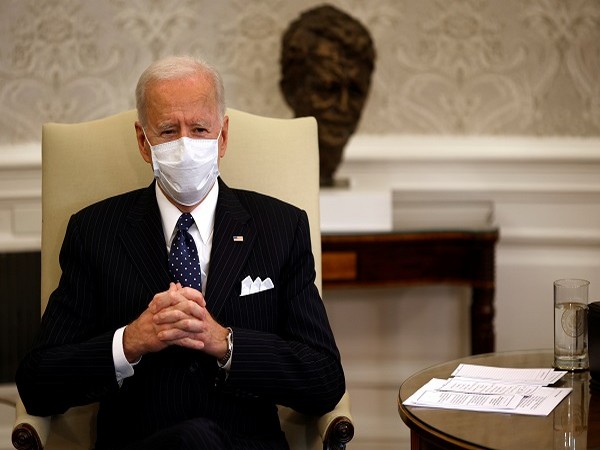
Nicosia [Cyprus], March 1 (ANI): US President Joe Biden has stressed many times that the US will return to the nuclear deal reached in 2015 with Iran -officially known as the Joint Comprehensive Plan of Action (JCPOA) - provided that Iran complies with the terms of the deal.
For his part, Iran's Supreme Leader, Ayatollah Ali Khamenei, said Tehran would only return to compliance if the US first lifted economic sanctions. However, time is running out and Biden has to act quickly, as there are various developments - such as new restrictions imposed by Iran on UN inspections- that make the reaching of an agreement on the subject very urgent.
This is a concern shared by the EU foreign policy Chief Josep Borel, as coordinator of the JCPOA, who stressed last Friday that "we do have a diplomatic window of opportunity to focus on solutions to bring back on track in order for everybody to fulfil their commitments."
The US and EU imposed sanctions on Iran in 2010, as there were fears that Iran's nuclear programme was used as a cover to build nuclear weapons. In 2015 Iran reached an agreement with the US, China, Russia, UK, France and Germany, imposing restrictions on uranium enrichment and the type of centrifuges used for enrichment, as well as allowing international inspections of its nuclear facilities, in exchange for the lifting of sanctions.
Ignoring the opposition of the international community, in May 2018 former US president Donald Trump withdrew from the agreement and imposed draconian sanctions on Iran which had a devastating effect on the country's economy. Responding, the Iranian regime, exceeded the limits set for uranium enrichment and on stockpiles and operated banned centrifuges.
Joe Biden in his presidential campaign clearly supported a return to diplomacy with Iran, but the big question now is who will make the first move. Iran insists that the US lift Trump's sanctions first and be compensated for the hardship it suffered as a result of the crippling sanctions, while the US clearly demands that Iran must return to compliance with JCPOA first.
Under a law passed by the Iranian Parliament last December, as from February 23, Tehran will stop allowing short notice "intrusive" inspections of sites by the International Atomic Energy Agency", unless there is an easing of US sanctions. It also said it would erase surveillance footage of its nuclear facilities. This, of course, makes the need to reach an agreement on reviving the JCPOA quite urgent.
An incident, which aggravated the existing difficulties for the resumption of negotiations was the recent rocket attack by Iran's proxies on US-led forces in northern Iraq, in which a civilian contractor was killed and a US soldier was injured. The US retaliated in a predawn attack on Friday when two US warplanes destroyed nine buildings and damaged two others at a camp used by Iranian-backed militants. Asked what message he was sending to Iran with the airstrike in Syria, Biden told reporters: "You can't act with impunity. Be careful."
Another factor that the Biden administration has to take into account is the fact that Iranian President Hassan Rouhani, who is considered a moderate, will not stand as a candidate in the elections scheduled for next June and he may be succeeded by a hardliner who much more hostile to the West.
It seems that the Biden Administration has decided to take a two-step process on the nuclear deal. First to stop Iran's acceleration of nuclear activities, by lifting some sanctions and convince Tehran to return to ICPOA and then reach a more comprehensive follow-up agreement, with the new Iranian government.
As Dr Ezgi Uzun, of Sabanci University, points out: "The follow-up agreement envisages the negotiation of the collective package of issues (including the Ballistic Missile Programme, Iran's Shia militia recruitment activities in the Middle East and relations with other countries in the region, all irreversibly brought to the world agenda by the Trump Administration, in addition to the nuclear program) on an international platform that will bring together the US, EU, Iran and several other countries in the region. The Biden administration is waiting for the elections in June for the follow-up agreement."
It should be stressed, however, that there are people who say that it is not a good idea to include other issues, such as ballistic missiles, Iran proxies etc, as this will harm the chances of reaching an agreement. Josep Borrell, the EU's High Representative for Foreign and Security Policy, told the Atlantic Council on February 23, that "maybe there are other issues that have to be taken into consideration, but don't put everything together at the same time. Then you are going to block the process... if you start talking about pending issues in the beginning, you will never restart."
Ali Reza Eshraghi, a visiting scholar at the UNC Center for the Middle East says: "It is highly unlikely that the US and Europe will be able to strike a broader agreement with Iran unless they first rejoin the original JCPOA - under either the current or next government in Tehran. The longer the US takes to rejoin the JCPOA, the greater the support in Tehran for accelerating the Iranian nuclear programme. In the coming weeks, European and US efforts should focus on a swift return to the JCPOA rather than holding out for the unlikely prospect of a new nuclear formula with Iran." (ANI)
Tags:
Get the App