2+2: 'India's Iranian oil imports, Russian defence purchases not primary focus'
Shannon [Ireland], Sept 5 (ANI): United States Secretary of State Mike Pompeo has said that issues like India buying Russian missile defence systems and Iranian oil exports to the country would be discussed in the upcoming 2+2 dialogue, but also added these issues will not be the primary focus.
ANI
Sep 05, 2018 10:41 IST


Shannon [Ireland], Sept 5 (ANI): United States Secretary of State Mike Pompeo has said that issues like India buying Russian missile defence systems and Iranian oil exports to the country would be discussed in the upcoming 2+2 dialogue, but also added these issues will not be the primary focus.
"They're part of the conversation. They're part of the relationship. They will certainly come up, but I don't think they'll be the primary focus of what we're trying to accomplish here. There are half a dozen things on the agenda that we're really intent on making progress on. Those decisions are important, they're important to the relationship for sure, but I don't see us resolving those or having the intention to resolve those during this set of meetings of the Strategic Dialogue. They're really about things that are big and strategic and will go on for 20, 40, 50 years. Those are the kinds of topics that Secretary Mattis and I are hoping to address - not that those aren't important, but they're not part of the structural relationship between the two countries," Pompeo told US traveling media en route to Shannon, Ireland.
The US Secretary of State underscored that he and US Defence Secretary James Mattis are looking forward to the 2+2 talks, which he called an "incredibly important meeting." The former termed India as the only designated defence partner and added that Washington and New Delhi share a "great relationship", which is crucial to the success of the US' Indo-Pacific strategy.
The 2+2 dialogue was deferred twice and Pompeo blamed himself for the cancellation of the talks for the second time. He said, "I regret it was my fault the second time. I had to travel to Pyongyang. But Secretary Mattis and I are both looking forward to this. We have a true strategic partner who is our only designated major defence partner, with whom we have a great relationship and who is very important to our success in our Indo-Pacific strategy. (It's an) enormous country with incredible opportunity and capacity for wealth creation. We hope we can find opportunities to continue to expand the relationship not only diplomatic and military-to-military but a good set of business relationships as well."
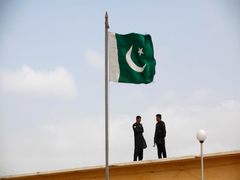
Pompeo, on being quizzed about his visit to Pakistan, said that he is making the trip in an effort to improve the bilateral relationship between Washington and Islamabad. He acknowledged that there are plenty of challenges to be tackled, but expressed hope that the new Pakistan government led by Imran Khan would resolve the irritants affecting the ties of both countries.
He elucidated: "I wanted to get out there at the beginning of his time in an effort to reset the relationship between the two countries. We have worked closely with the Pakistanis in my role as CIA director. Our teams have been working together for a long time. There are lots of challenges between our two nations for sure, but we're hopeful that with the new leadership that we can find a common ground and begin to work on some of our shared problems together. They have expressed good-faith intention to do so."
Pompeo, who is also being accompanied by General Joseph Dunford, chairman of the Joint Chiefs of Staff, said they would meet Pakistan Army Chief General Qamar Jawed Bajwa and Pakistan Foreign Minister Shah Mehmood Qureshi during their day-long visit to the country.
"Chairman Dunford and I are heading out there together to have those conversations. We'll also meet with General Bajwa, who I've met with a number of times, and my counterpart, Foreign Minister Qureshi. So we'll have three opportunities to walk through the complexity that is this relationship and hopefully begin to make some progress so that we can get back to a set of common understandings. So that's really the very straightforward objective. I think it's important to meet the new prime minister (Imran Khan) early on in his time in office," the US Secretary of State noted.
Pompeo and Mattis are slated to arrive in India later today, prior to which they will make a stopover at Pakistan for a brief period.
Commenting on the Syrian conflict, Pompeo said that Russia has made a commitment to not carry out attacks in the de-escalation zone.
With regards to US President Donald Trump's tweet on the expectations by Moscow and Damascus to resolve the crisis, Pompeo continued: "So I've had conversations with lots of the potential participants. I've spoken with Foreign Minister Lavrov about this. I spoke with my Turkish counterpart, (Mevlut) Cavusoglu, this morning about it. We have a shared goal there. The Turks have outposts in Idlib, continuing. We are hoping that this can be resolved diplomatically."
On Monday, Trump took to Twitter and gave a stern warning to Syrian president Bashar al-Assad not to "recklessly attack" Idlib province. He also cautioned Iran and Russia to not participate in a "potential human tragedy" for the fear of making a "grave humanitarian mistake." His response came after suspected Russian planes on Tuesday carried out airstrikes in the rebel-held targets in Idlib province.
Reacting on the same, Pompeo said: "I've seen the reports of the Russian bombing and the Syrian bombing that's taking place today, or took place - would have been last night their time. The Russians made a commitment that said this was a de-escalation zone and this would be resolved through the Geneva process. I think the President's tweet was an effort to remind them of the commitment that they made."
He underscored that both Russia and the US share their concerns about terror activities in the northern parts of the war-torn country.
"There's no place for these people to go, and the Russians have the narrative that there are terrorists in Idlib. That is a true statement. We share their concern about terrorism emanating from northern, northwest Syria. We absolutely agree with them there are terrorists in those locations and they need to be taken care of such that they don't export terror around the world," Pompeo added.
Expressing concerns on the alleged use of chemical weapons in Syria, the US Secretary of State further said: "It is not the way to do that to put the lives of all these innocent civilians at risk and create a humanitarian crisis, and I think that's what you saw the President say last night as we're happy to work on the terrorism issue in this place, you made an agreement to handle this in a way that is different from what it appears you're thinking, please take that seriously. Then of course, too, we're always concerned they may use chemical weapons in the process of trying to obtain their military objective, and I think the President could not have been more clear over the last year in both word and action about how he feels about the use of chemical weapons."(ANI)
Get the App