Xi warns China's tycoons of income gap, tells them to share wealth
Beijing [China], September 9 (ANI): China's President Xi Jinping has put China's tycoons on notice that it is time for them to share more wealth with the rest of the country.
ANI
Sep 09, 2021 11:22 IST

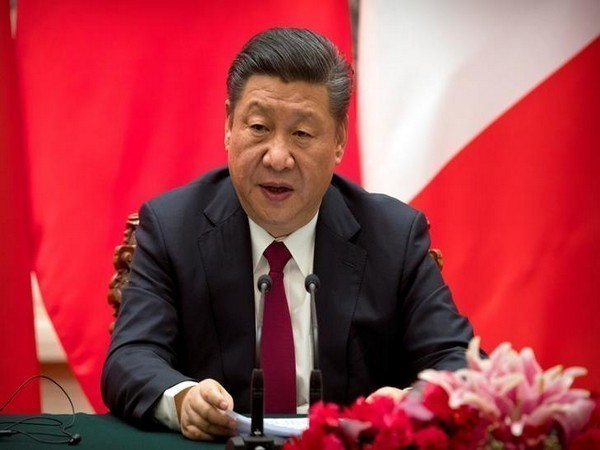
Beijing [China], September 9 (ANI): China's President Xi Jinping has put China's tycoons on notice that it is time for them to share more wealth with the rest of the country.
Chris Buckley, Alexandra Stevenson and Cao Li, writing in The New York Times (NYT) said that as Xi prepares for a likely third term, he is promising "common prosperity" to lift farmers and working families into the middle class.
Xi has said the Communist Party will pursue "common prosperity," pressing businesses and entrepreneurs to help narrow the stubborn wealth gap that could hold back the country's rise and erode public confidence in the leadership.
The "common prosperity" campaign has converged with a crackdown on the country's tech giants to curb their dominance. Facing scrutiny, some of China's biggest billionaires, like Jack Ma, have lined up to pledge billions of dollars to charity, said Buckley, Stevenson and Cao.
Chinese companies and entrepreneurs have scrambled to show they are on board. Ma, the co-founder of Alibaba and one of China's richest people, announced that it would plough USD 15.5 billion into "common prosperity" projects, including rural health care and insurance for delivery workers.
Tencent, the country's biggest internet company, also said it would set aside USD 15.5 billion for social aid programs. Wang Xing, the billionaire founder of Meituan, a food-delivery app that has been the subject of an antitrust investigation, transferred more than USD 2 billion of his shares to his philanthropic foundation, reported NYT.
Many of these companies have felt the sting of the government's antitrust crackdown. The government also banned nearly all private tutoring services, which Beijing has depicted as raising the cost of education, a move that erased tens of billions of dollars of value from the shares of tutoring companies.
The moves have unnerved some investors, who fear greater state intervention, said Buckley, Stevenson and Cao.
The pledges hold out the prospect, endorsed by Xi in a meeting last month that China is now affluent enough to shift closer to the Communist Party's longstanding ideal of wealth sharing. For Xi, the Communist Party's long-term authority is at stake.
Xi told officials in January. "We cannot let an unbridgeable gulf appear between the rich and the poor."
Now that economic growth is moderating, many young Chinese feel that upward mobility is diminishing. Well-paying white-collar jobs can be hard to find. Tech workers complain of punishingly long hours. Families feel they can't afford to have more children, adding to a looming demographic crisis. For now, Xi faces little opposition, but longer term that could turn if such grievances pile up, reported NYT.
Xi is laying the groundwork for a likely third term as the party's general secretary beginning next year. Xi wants to stave off any doubts about his claim to another term by arguing that the party can deliver social progress while rivals like the United States stagnate in inequality, said Christopher K Johnson, a former United States government analyst of Chinese politics .
"Xi sees doing something on income inequality and the wealth gap in China as vital in this struggle of global narratives with the US and the West in general," said Johnson.
To China's leaders, the new emphasis targets economic needs as well. The country's top 1 percent own nearly 31 per cent of the country's wealth, according to Credit Suisse Research Institute, up from 21 per cent in 2000.
The real test of how far Xi wants to reverse economic inequality would be if the government pushed through measures such as introducing property and inheritance taxes aimed at the rich.
Such moves could be challenging because many of the elite have links to the party, and anger could flare among many Chinese people who have bought up housing as their main investment, said Buckley, Stevenson and Cao.
"This transformation will wipe away all the dust, and capital markets will no longer be the heaven where capitalists can make a fortune overnight," said one online commentary that was shared by Xinhua, the main official news agency. "This is a political transformation." (ANI)
Get the App