 हिंदी खबर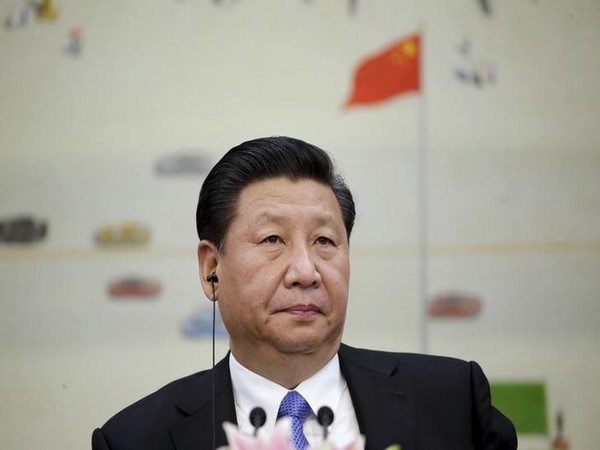

Hong Kong, September 7 (ANI): Predictably, China has reacted angrily to successful Indian military action along the Line of Actual Control (LAC), with the People's Liberation Army (PLA) caught napping when Indian troops moved to occupy hilltop features near Lake Spanguur on the night of August 29-30. This anger allegedly ascends all the way to the top of China's military hierarchy, Chairman Xi Jinping.
China has for a long time relied on India behaving reactively rather than preemptively, as it manufactured seizures of territory along the troublesome un-demarcated border. This time the PLA has been on the receiving end, and Chinese Communist Party (CCP) leadership is not happy.
Some media alleged that the CCP leadership was "enraged" that a PLA commander withdrew forces to avoid physical conflict at Spanguur, though evidence to substantiate this is yet to emerge. This latest embarrassment came on top of the bloody fracas in the Galwan Valley on 15 June, which occurred on none other than the auspicious occasion of Xi's 67th birthday. Losing casualties, with Chinese numbers still a state secret, represented a severe loss of face to Xi on his birthday.
Dissatisfied with their level of CCP and personal loyalty, it is also rumoured Xi is on the brink of a "brutal purge" of the PLA and regular law enforcement agencies. China's authoritarian leader has always sought to consolidate military power, something his immediate predecessors could not achieve, and he is becoming even more paranoid about political loyalty and social unrest within China.
This explains why, on August 26, the Chinese police apparatus (including the Ministries of Public Security and State Security) swore fealty to the CCP and was removed from the State Council's chain of command. A ceremony saw Xi pompously conferring a new flag on the police, one bearing the red colour of the party. Xi "ordered the police to be loyal to the party, serve the people and be impartial in law enforcement and strict in discipline".
Law enforcement forces have now followed suit as the People's Armed Police (PAP), which Xi placed under his immediate leadership in the Central Military Commission (CMC) in January 2018. In any popular uprising such as the one that happened in Tiananmen Square in 1989, the PAP would be called upon to put down any unrest.
Xi has repeatedly called for personal loyalty, and issued warnings about "two-faced" people, a phrase referring to someone who pledges obedience but actually secretly resists. Xi wants to get rid of all such people from positions of influence. Furthermore, a political study campaign is being prosecuted across political and legal forces to promote a "spirit of rectification", which harks back to Mao's destructive purges. Three deputy minister-level public security officials have already been detained in 2020, and Xi's paranoia seems to be rising to hysterical levels.
Xi has always been a hands-on leader, probably because he is distrustful of anyone outside his handpicked inner circle. It is believed he personally encouraged the launch of four ballistic missiles into the South China Sea on August 26, another provocative action sent as a warning to the USA.
A dramatic purge of the law enforcement system seems set to occur and, with Xi disappointed about how land grabs along the Himalaya border are going, further refinement of the PLA could occur. Of course, every time he implements such a purge, the PLA becomes a more politically astute organization and less military-focused as leaders seek to consolidate their own positions and think less of the overall benefit of the PLA.
With ongoing border tensions, the mood on Chinese social media platforms like Sina Weibo reflects concern, anger and deprecation of India as well. For example, one netizen quoted Chinese professor Zhang Weiwei as saying: "India's expert advice is for Modi not to provoke China. Otherwise, India will receive five times the humiliation it had in 1962."
An unusually muted post by Hu Xijing, editor-in-chief of the Global Times, received nearly 20,000 likes: "Both India and China are great powers and capable of mobilizing their national strength to solve a military border conflict. Yet, at this very moment, both sides have to calm down." Another poster put the tensions with India in perspective: "The Sino-Indian border conflict is a matter of time. In the coming winter, both sides have to withdraw their troops. Hence, whether China can get back Taiwan is the utmost important problem to China!"
However, hubris remains a common sentiment. One Chinese netizen, who is infamous for his bullheadedness, posted to popular acclaim, "Two months ago, India just suffered what it deserved. The Indian leader army officers ran away and abandoned their colleagues when the PLA struck them hard, leading to the death of 20 Indian soldiers and officers. How dare they come back now?"
There was pride in the PLA too among many citizens. "The Sino-India border is having conflicts once again. Soldiers of the PLA have left their suicide notes and loaded bullets into their [rifle] chambers." This harked back to an earlier post doing the rounds online, supposedly written by a PLA soldier to his wife, "If I can't come back, I will give you a pension; if I'm disabled, I'll give you a divorce certificate; if I come back, give yourself to me."
Interestingly, however, Weibo began censoring the hashtag #China-India border conflict in order to tamp down the issue. When this topic is searched, a message appears saying, "According to the relevant laws, regulations and policies, the page is not found."
A survey of 2,000 Chinese citizens by the Global Times and China Institutes of Contemporary International Relations concluded that 70 per cent believed India was too hostile towards China, and nearly 90 per cent supported strong government retaliation.
Referring to the aforementioned and latest confrontation, in late August India took pre-emptive action after Chinese tanks were reported near the PLA's Moldo Post on the night of August 29, presumably an attempt to strengthen its tactical posture south of Lake Pangong by encroaching into hitherto unoccupied territory.
Yet, elsewhere in the Ladakh sector, PLA forces remain inside India's perceived border in the Galwan Valley, Gogra and the north bank of Pangong Lake. The Chinese have encamped, with every indication they intend to winter over in these new positions. This Ladakh standoff has now lasted far longer than the one at Doklam in 2017, with no sign of the deadlock being broken.
It is interesting that official Chinese denunciations are similar no matter whether it is the PLA or Indian armed forces initiating the action. Counselor Ji Rong, the Chinese Embassy spokesperson in India, stated, "On August 31st, Indian troops violated the consensus reached in previous multi-level engagements and negotiations between China and India, illegally trespassed the Line of Actual Control again at the southern bank of the Pangong Tso Lake and near the Reqin Pass in the western sector of China-India border, and conducted flagrant provocations, which again stirred tension in the border areas."
"Illegally crossed" simply means what China considers to be the LAC in that particular area. Ji continued, "The Indian side's actions seriously violated China's territorial sovereignty, seriously violated the relevant agreements and important consensus of the two countries, and severely damaged the peace and tranquillity of the border area." Chinese troops have acted aggressively and amassed large numbers, making such flowery words meaningless.
This kind of language is identical to Beijing's official line throughout the whole standoff, as PLA troops unilaterally altered the status quo. China has shown minimal or no interest in resolving the situation on the ground or in high-level negotiations, so its words simply amplify Chinese hypocrisy. In the meantime, China regularly shows footage and images of Chinese troops as they "practice for war" on the Tibetan Plateau.
It is thus important that Delhi maintain a consistent position calling out China for its falsehoods. Indeed, this firm action by India was well overdue, and it will give the PLA and China's leadership much to think about as they consider their next move. Delhi is demonstrating it will stand up to bullying and that it will assertively counter Chinese moves.
At the same time, however, the risk of escalation increases, something that China will now have to input into its calculus of how hard it can push in the future.
A serious problem for Xi is that he has perpetrated a cycle of territorial provocations so that it is now difficult for him to pull back without appearing weak. Again, this indicates miscalculation on the part of the all-seeing and all-wise Xi, who controls every aspect of the Chinese party-state. He totally underestimated the incensed reaction of India to bloodshed along the border, and the resulting anti-China sentiment is affecting Chinese businesses, further compounding the nation's economic woes.
Yet such miscalculations and kneejerk retaliation has become a pattern of Chinese foreign relations. For instance, Foreign Minister Wang Yi's five-nation tour of Europe created as much tension as it did peacemaking. By going on the offensive so quickly, China is narrowing its options and making enemies.
China has long pursued a policy of slow and gradual encroachment of land and maritime territory, as has occurred in the South China Sea. Yet Xi appears to have overextended himself, as China's leaders battle numerous and serious issues simultaneously. As one example, Chinese troops mobilized in Inner Mongolia to suppress protests last week after Beijing enacted a policy that will sideline the local language and culture.
These actions near Lake Spanguur could reflect a more assertive Indian policy, which has often ceded territory after being taken by surprise by PLA incursions, and then been stymied by China's refusal to make any concessions during senior military-to-military negotiations.
China also holds the view that India is being used as a pawn to contain its own rise, primarily by the US. Yet Beijing seems not to realize that it is its own actions that are in fact pushing Delhi closer to Washington. India is becoming more pragmatic in aligning itself with other nations, something Beijing can take credit for. Indian officials will meet as part of the Quad grouping - comprising Australia, India, Japan and the US - later this month. One item on their agenda could be an intelligence-sharing arrangement.
Whatever happens next, the heady days of the "Wuhan spirit" have all but evaporated thanks to Xi's intransigence. (ANI)
Xi is reportedly angered by Indian defiance along border
ANI | Updated: Sep 07, 2020 13:23 IST




