WHO South-East Asia region road map to strengthen emergency preparedness, response
Paro [Bhutan], September 8 (ANI): In order to strengthen preparedness and response capacities for public health emergencies with multi-dimensional impact, a regional roadmap built on the lessons learnt from the ongoing COVID-19 pandemic is set to be rolled out in the WHO South-East Asia Region.
ANI
Sep 08, 2022 12:39 IST

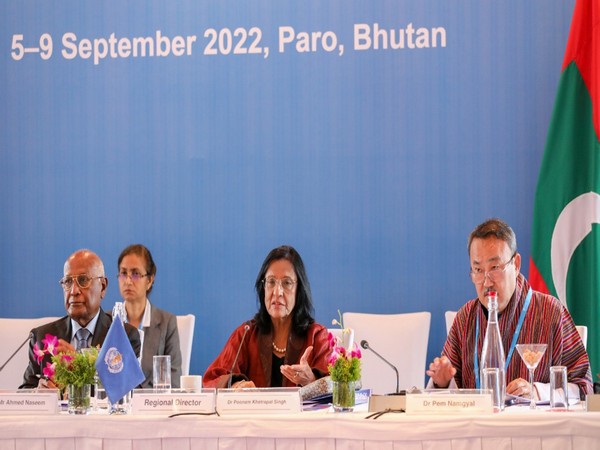
Paro [Bhutan], September 8 (ANI): In order to strengthen preparedness and response capacities for public health emergencies with multi-dimensional impact, a regional roadmap built on the lessons learnt from the ongoing COVID-19 pandemic is set to be rolled out in the WHO South-East Asia Region.
The COVID-19 pandemic has demonstrated that the impact of health emergencies is not just limited to health. Economies and social welfare have been majorly impacted. Globally, risks from natural and man-made hazards are also likely to result in major and frequent health emergencies given the weakened systems that the pandemic would leave, and the looming threats from climate change.
"The roadmap aims to protect the vulnerable and economies from the impact of public health emergencies by strengthening national and regional health security and health system resilience," said the regional director of South-East Asia for WHO, Dr Poonam Khetrapal Singh at the ongoing seventy-fifth regional committee session.
The Regional Strategy Roadmap on health security and health system resilience for emergencies 2023-2027 has been formulated after detailed consultations with member countries and experts and incorporates global and regional priorities and recommendations. It seeks to boost capacities to anticipate, prevent and manage health emergencies while maintaining essential health services through enhanced governance and collaboration within and across countries in the region.
Dr Khetrapal Singh highlighted that a Regional Health Emergency Council (RHEC) comprising of heads of member countries of the WHO South-East Asia Region, is being planned with WHO Director-General Dr Tedros' proposal of the Global Health Emergency Council. The council will ensure engagement and commitment of the highest-level political leadership for preparedness and response to health emergencies in the Region to save lives and livelihood and the detailed terms of reference and operational modalities of the RHEC will be worked out in consultation with the member states in due course.
The Region is also rolling out 'WHO South-East Asia Regional Roadmap for Diagnostic Preparedness, Integrated Laboratory Networking and Genomic Surveillance 2023-2027', developed to provide Member countries with a range of policy options to develop sustainable strategies to improve their national laboratories and prepare their laboratory systems to improve surveillance and respond more effectively to emerging and re-emerging diseases, and other potential public health emergencies.
These roadmaps would help Member countries develop or update their National Action Plans on Health Security and strengthen whole-of-government and whole-of-society approaches to enable more effective public health emergency preparedness, readiness, and response.
The Regional Strategy Roadmap on Health Security and Health System Resilience for Emergencies seeks to strengthen health security systems to reduce risks, detect early, prevent, and respond to public health emergencies as well as recover from their impact. It also seeks to strengthen governance, financing and enabling functions for emergency preparedness and surge response.
Furthermore, the roadmap is aimed at strengthening regional alert, preparedness, and response systems, through improved regional collaboration.
The roadmap is expected to assist countries to prevent or mitigate the multidimensional impact of emergencies on people and providers, and protect the vulnerable, while ensuring that resilient health systems are capable of rapid recovery not just to "normalcy" but to be "built back better" post-emergency.
"A robust health system with well-developed building blocks leading to service provision with universal coverage, is not only foundational for health security but also critical for fulfilling the surge in service demand, continuity of essential services during emergencies, and for the system to bounce back to normalcy rapidly following an emergency - the three key characteristics of a resilient health system," said Dr Khetrapal. (ANI)
Tags:
Get the App