WHO announces 16 Days of activism to end violence against women
"Given the upcoming 30th anniversary of the Beijing Declaration and Platform for Action on Women (BPOA) planned to be held at the Commission on the Status of Women (CSW) in March 2025, this year's 16 Days of Activism holds special significance. Signed by 189 Member States in 1995, BPOA is the most significant global policy framework for women's rights and gender equality," the statement said.
ANI
Nov 27, 2024 13:26 IST

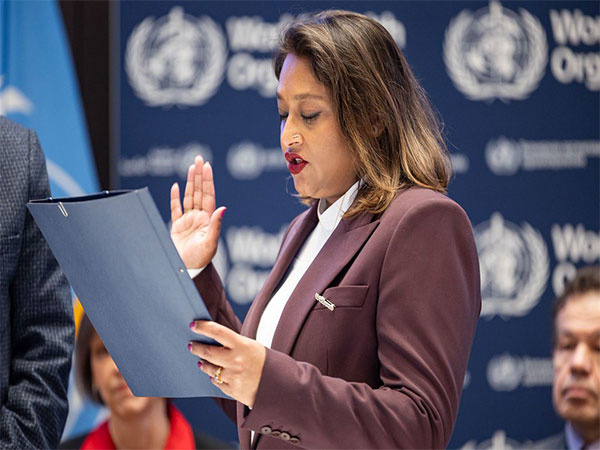
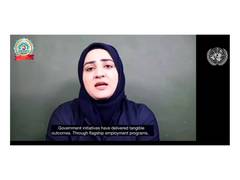
New Delhi [India], November 27 (ANI): Regional Director of World Health Organization South-East Asia, Saima Wazed in a statement said that November 25 is commemorated globally as the International Day for the Elimination of Violence against Women and marks the beginning of the 16 Days of Activism against Gender-Based Violence (GBV), concluding on December 10, the Intemational Human Rights Day.
"Given the upcoming 30th anniversary of the Beijing Declaration and Platform for Action on Women (BPOA) planned to be held at the Commission on the Status of Women (CSW) in March 2025, this year's 16 Days of Activism holds special significance. Signed by 189 Member States in 1995, BPOA is the most significant global policy framework for women's rights and gender equality," the statement said.
Today is the International Day for the Elimination of Violence Against Women. The day also marks the beginning of #16DaysofActivism!
— World Health Organization South-East Asia (@WHOSEARO) November 25, 2024
⚠️ NO #woman 👩🏾🧕🏾👵🏾should ever go through any form of #violence.
Reach out and seek help if you need to. pic.twitter.com/tZO2gi5Pye
Wazed said that ahead of the Beijing Declaration and Platform for Action on Women they will take note of the progress and hurdles of violence against women.
"As we prepare for the global review of BPOA and 10 years of the 2030 Agenda for Sustainable Development, we must take note of the progress made and reflect on the hurdles that continue to affect the realization of our vision to eliminate violence against women and girls in all their diversities and across the world. The 16 Days of Activism offer a unique opportunity to individuals and organizations to boost momentum to end all forms of gender-based violence in private, public, work, and online spaces. Noting the many serious and protracted conflicts happening around the world, this year WHO's campaign also focuses on particular needs and risks for women and girls living in humanitarian emergencies," the statement said.
The statement said that gender-based violence can occur in several forms.
"GBV manifests in various forms like intimate partner violence, early marriage and childbearing, workplace harassment, as well as digital violence. These incidences rise significantly during armed conflicts, disease outbreaks or natural hazards that lead to large scale displacement, people living in camps, and with limited mobility for women and girls," the statement said.
Experiences of violence lead to profound and long-lasting physical and mental health impacts on the survivors, including injury, unintended pregnancy and pregnancy related complications, sexually transmitted infections (STIs), HIV, depression, and post- traumatic stress. Lack of health care exacerbates the cycle of disempowerment, hindering women's overall socio-economic development, thereby limiting their crucial participation in our society, the statement said.
As per the statement, "encouraging strides have been made on addressing GBV in the region including laws, policies, essential services for survivors and data tracking. For instance, countries have provisioned to address domestic violence including intimate partner violence in various national laws like the Protection of Women from Domestic Violence Act, 2005 in India, Domestic Violence Victim Protection Act, 2007 in Thailand and the criminalization of violence in the 2009 Penal Code of Timor-Leste. A breakthrough Sexual Violence Crime Law was passed in the parliament of Indonesia in 2022. Efforts have also been made to provide support services for survivors of GBV through the setting up of One Stop Centres and Helplines such as in Bangladesh, Bhutan, India, Nepal, Maldives, Sri Lanka, and Thailand," the statement said.
Wazed in her statement noted that a lot of work is still to be done.
"But there is still work to be done. Violence against women (VAW) persists as a global, national, and local challenge, with an estimated 736 million women-nearly one in three-experiencing physical and/or sexual intimate partner violence at least once in their lives. The WHO South-East Asia Region is prone to natural hazards that results in exacerbated vulnerability to violence. All countries in the region rank high (between 74 and 126) on the global Gender Inequality Index. Related health issues like maternal mortality ratios, and adolescent birth rate also persist. Women's representation in parliament remains below 50 per cent across the region, limiting progress on women's agendas. These gaps not only hinder progress toward SDG 3 and SDG 5, but also have cascading impacts on other SDGs," the statement said.
Wazed proposed a 4P approach to tackle the challenge of violence against women.
"To tackle this challenge, WHO South-East Asia Regional Roadmap for Results and Resilience focuses on boosting investment in women, girls, adolescents, and vulnerable populations as a key pathway. In doing so, WHO reaffirms and calls upon all stakeholders to utilize the 4P approach to structure effort- Promote by advocating for investment in women and girls in sectors like access to care and health outcomes, education, and water and sanitation, provide by addressing physical, social, transportation, language, and cultural barriers to improve access, protect by strengthening disease surveillance among high risk and marginalized populations and perform by ensuring availability of disaggregated data as the foundation of a fair health system."
"In addition, WHO's technical tools and frameworks, such as the RESPECT framework for GBV and INNOV8 for health equity, serve as critical enablers to mitigate the risks, restore women's health, and ensure that we seize the window of opportunity to create lasting change. WHO is also collaborating with multiple partners in the region to centerstage ending VAW through various initiatives like Spotlight 2.0," the statement said.
"As we lead up to the Beijing +30 Global Review, closing the gap needs an all-hands-on-deck approach with targeted efforts for conflict and hazard prone settings. To this end, WHO SEARO is committed to facilitate regional cooperation by bringing together Member States, international organizations, civil society, and communities to take action. Let us together accelerate our work on GBV as healthy, safe, and empowered girls and women are the pillars of resilient societies of today and the future," the statement added. (ANI)
Tags:
Get the App