While Pakistan economy faces bankruptcy, politicians engaged in grabbing power
Pakistan citizens are left to bear the brunt of rulers' failed policies that resulted in historic inflation, jacked up petroleum prices, and devalued rupee, as well as warnings of impending bankruptcy among other things, reported The Express Tribune.
ANI
Jan 01, 2023 23:42 IST

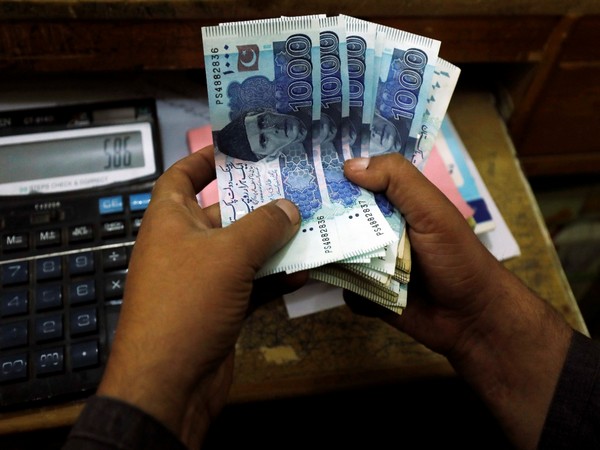
Islamabad [Pakistan], January 1 (ANI): Pakistan citizens are left to bear the brunt of rulers' failed policies that resulted in historic inflation, jacked up petroleum prices, and devalued rupee, as well as warnings of impending bankruptcy among other things, reported The Express Tribune.
In what appears to be the country's closest brush with nightmarish default, the ruling parties found themselves bankrupt, both financially and intellectually amid Pakistan's economy facing a collapse.
Since the change of government in April, the parliament remained dysfunctional, assemblies were on the verge of being dissolved, terrorism reared its ugly head yet again, and political turmoil kept intensifying with each passing day, hurting the economy, reported The Express Tribune.
Amid all of this, it was the year of the rise of the populist narrative and the PML-N-led ruling alliance tried its best to avoid snap polls; even local bodies elections after seeing PTI's winning streak in by-elections and got itself labelled as the one running away from polls.
Throughout the year, the political elite failed to agree to play by any rules of the game amid the falling economic health of the country, reported The Express Tribune.
The assassination attempt on PTI chief Imran Khan was another dark chapter of the previous year, which ratcheted up the debate about powerful people's roles and brought back attention to the core question: who really rules the country?
From a 'hybrid system' falling under its own weight to a parliamentary revolt that continued to hobble the incumbent dispensation, to a new government coming to power only to increase the popularity of the previous one and an outgoing military chief confessing about military's involvement in politics for over seven decades, reported The Express Tribune.
For the first time in the history of Pakistan, the nation witnessed an unprecedented press conference by the spy chief, lambasting the PTI chairman and party leadership over their dual standards, saying that Khan called the then military chief a traitor "during the day but meets him in the dark of night behind closed doors" to express his constitutional and unconstitutional wishes.
He shocked the nation by revealing that the army chief had received an offer in March for an "indefinite extension" in service when Khan was still in government and wanted to avert a no-confidence move.
Almost half of the year was wasted by the political rivals wrangling on who should be the next army chief.
Moreover, the blame game dominated the political landscape. Though the government lacked a clear plan to tackle economic woes, rallies, long marches and ultimatums after ultimatums by PTI in an attempt to force elections on the federal government didn't provide much space for stabilisation in almost all spheres, reported The Express Tribune.
Like previous years, chiding the opponents remained the favourite sporting activity of the politicians and the notion of sitting across the table for the greater good of the country remained a distant dream for yet another year.
Hardly anyone cared about roughly 33 million flood-affected people across the country as the focus was largely on optics rather than actually providing relief to the people, who are now going through a harsh winter.
"The year's biggest development was the change of the government and ousting of a prime minister through a vote of no-confidence for the first time in the history of Pakistan but an even bigger development behind this event was the end of the hybrid system; that was the real event," said renowned political analyst Zaigham Khan.
Zaigham, who is an anthropologist and development professional too, said that the experiment of a new kind of hybrid system, which started somewhere around 2012 and through which a populist authoritarian regime where a populist political party supported by the establishment, was shaped up and in this system there was extremely limited space for the opposition, human rights and civil society, reported The Express Tribune.
Eminent scholar Professor Dr Hassan Askari listed the change of the government, increased but unnecessary political confrontation, faltering economy and rising terrorism as some of the key developments of the previous year, saying the country managed to avoid default because of the external support as it is "surviving on charity" last year.
Among other things, the professor emeritus pointed out that the decision-making of the new government was slow, especially regarding the army chief's appointment, and that hurt the economy and the country, reported The Express Tribune.
Throughout the year, political decisions and indecisions hurt the country both ways; the IMF program got suspended in the last few months of the PTI government because the then finance minister Shaukat Tarin and Imran Khan on a populist basis went to an expansionary economy, which ballooned the current account deficit to an unsustainable level of 18 billion dollars. (ANI)
Tags:
Get the App