 हिंदी खबर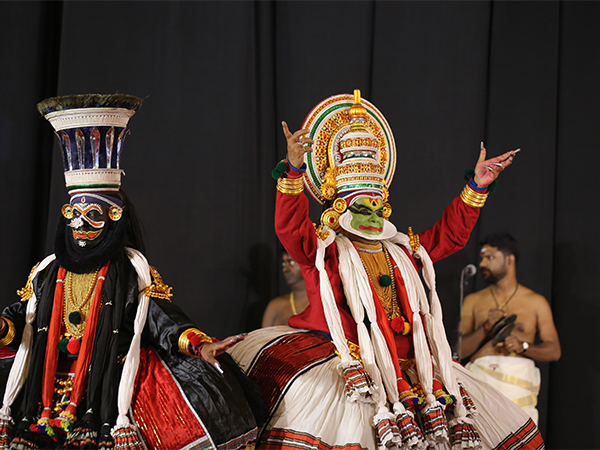

Lalitpur [Nepal], August 15 (ANI): Celebrating the 79th Independence Day of India, a dance troupe from ICCR (Indian Council for Cultural Relations) performed the Kathakali dance in the courtyard of Patan Durbar Square. 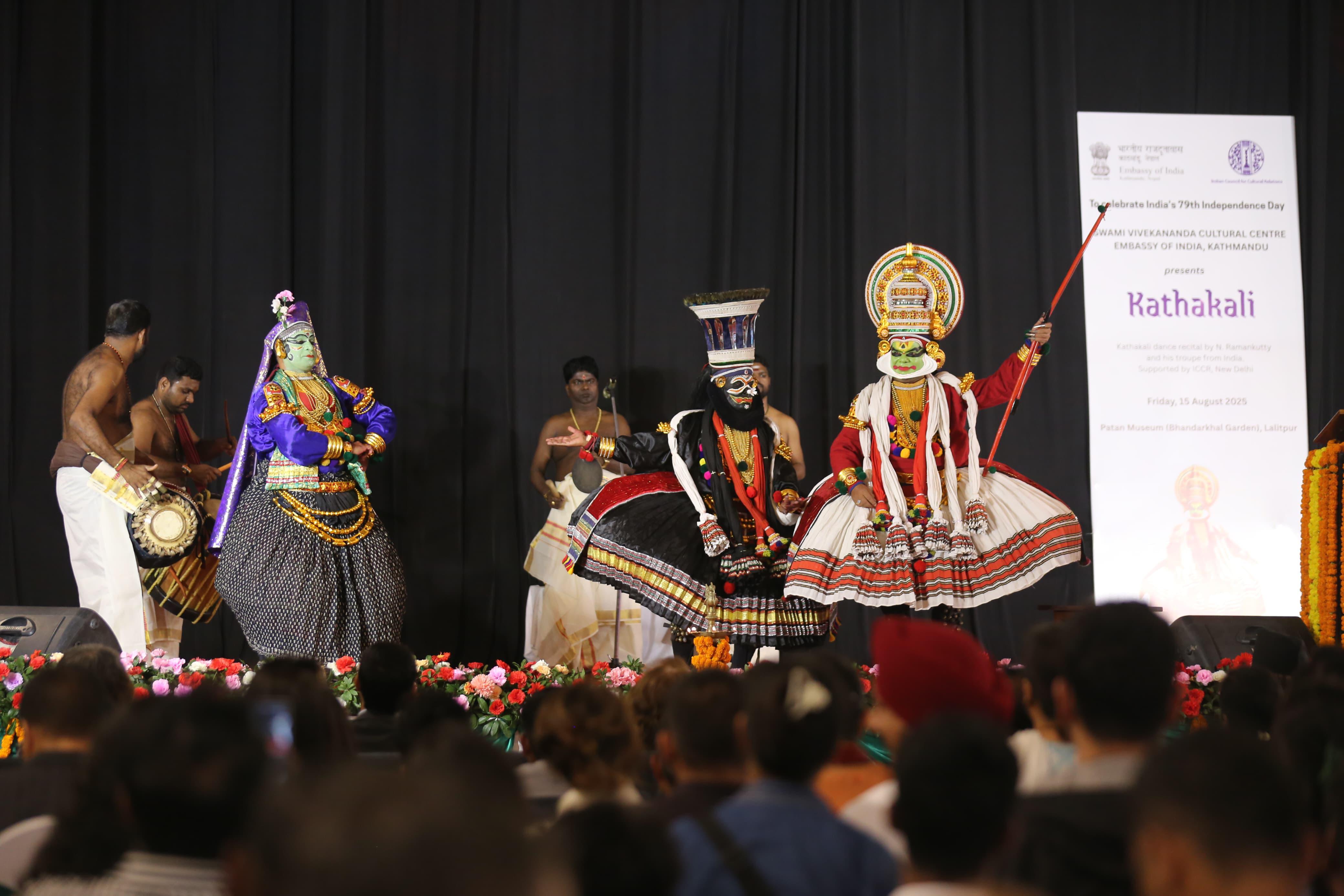
Organised by the Swami Vivekananda Cultural Centre (SVCC) and the Embassy of India in Nepal, nine performers presented a dance recited by N Ramankutty, who had arrived in the Himalayan Nation for the special show. Kathakali, a very popular Indian dance, is based on the story of the Mahabharat.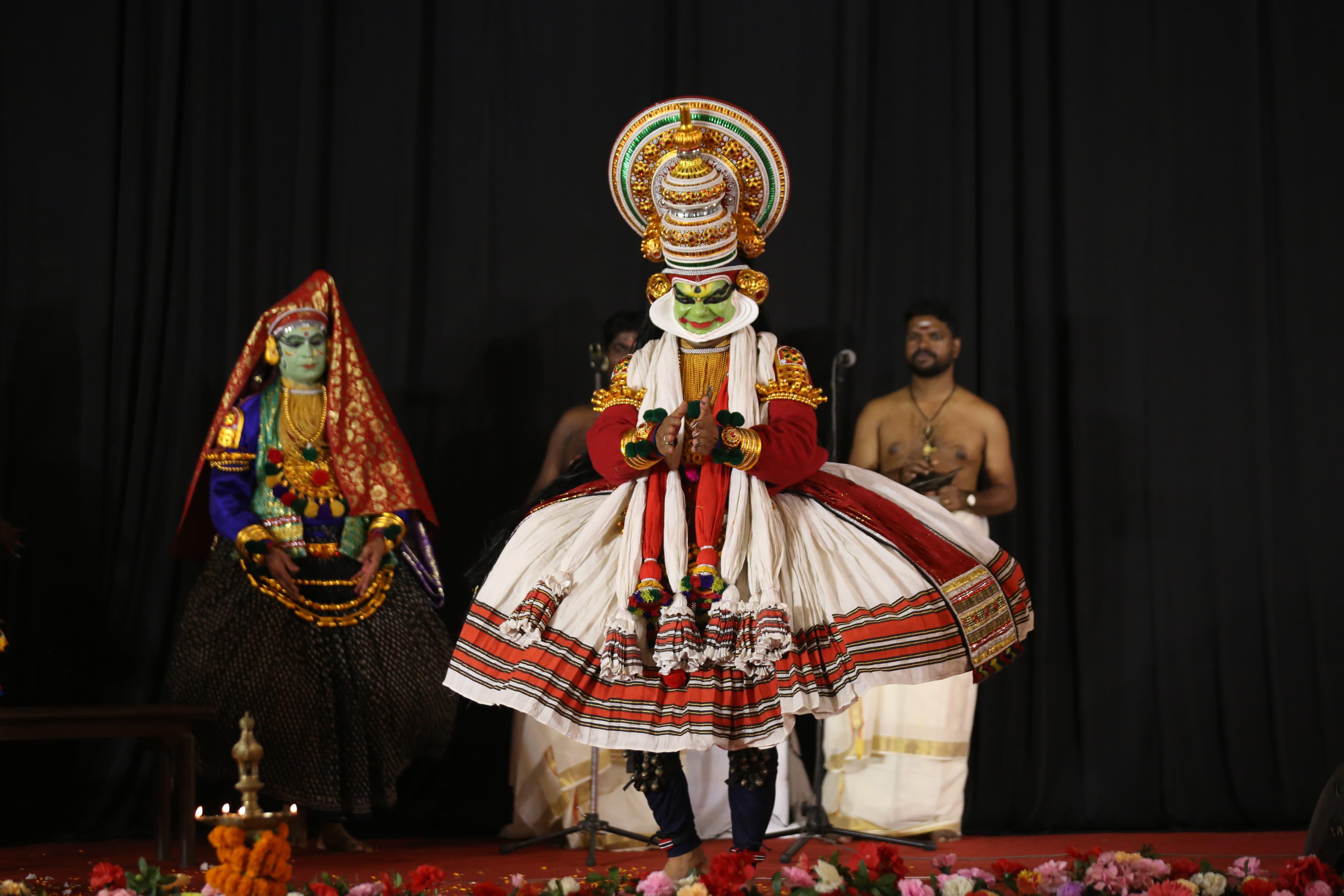
The event was attended by Deputy Prime Minister and Minister for Urban Development, Prakash Man Singh; Foreign Minister Arzu Rana Deuba and Minister of Energy, Water Resources and Irrigation Deepak Khadka.
"Nepal and India are not just neighbours but are bound by the sacred Himalayas, the flow of our rivers, and the wisdom of our ancient civilisations. Our ties are woven through threads of history, philosophy and spirituality, the teachings of Lord Buddha, the exchanges of scholars, saints and artists across centuries. The vibrant festivals, language and traditions we share are a testament to this unbreakable connection. I am glad to know, today we shall witness mesmerising Kathakali dance, a classical art form from the Indian state of Kerala that embodies the rich storytelling traditions of our cultures; dance forms that break the mystery of our Sanskrit poems and make them accessible to the wider community," Foreign Minister Deuba said.
Kathakali, as a dance form popular today, has evolved from many social and religious theatrical forms which existed in the southern region of India in ancient times. Chakiarkoothu, Koodiyattam, Krishnattam and Ramanattam are some of the ritual performing arts of Kerala which have had a direct influence on Kathakali in its form and technique. 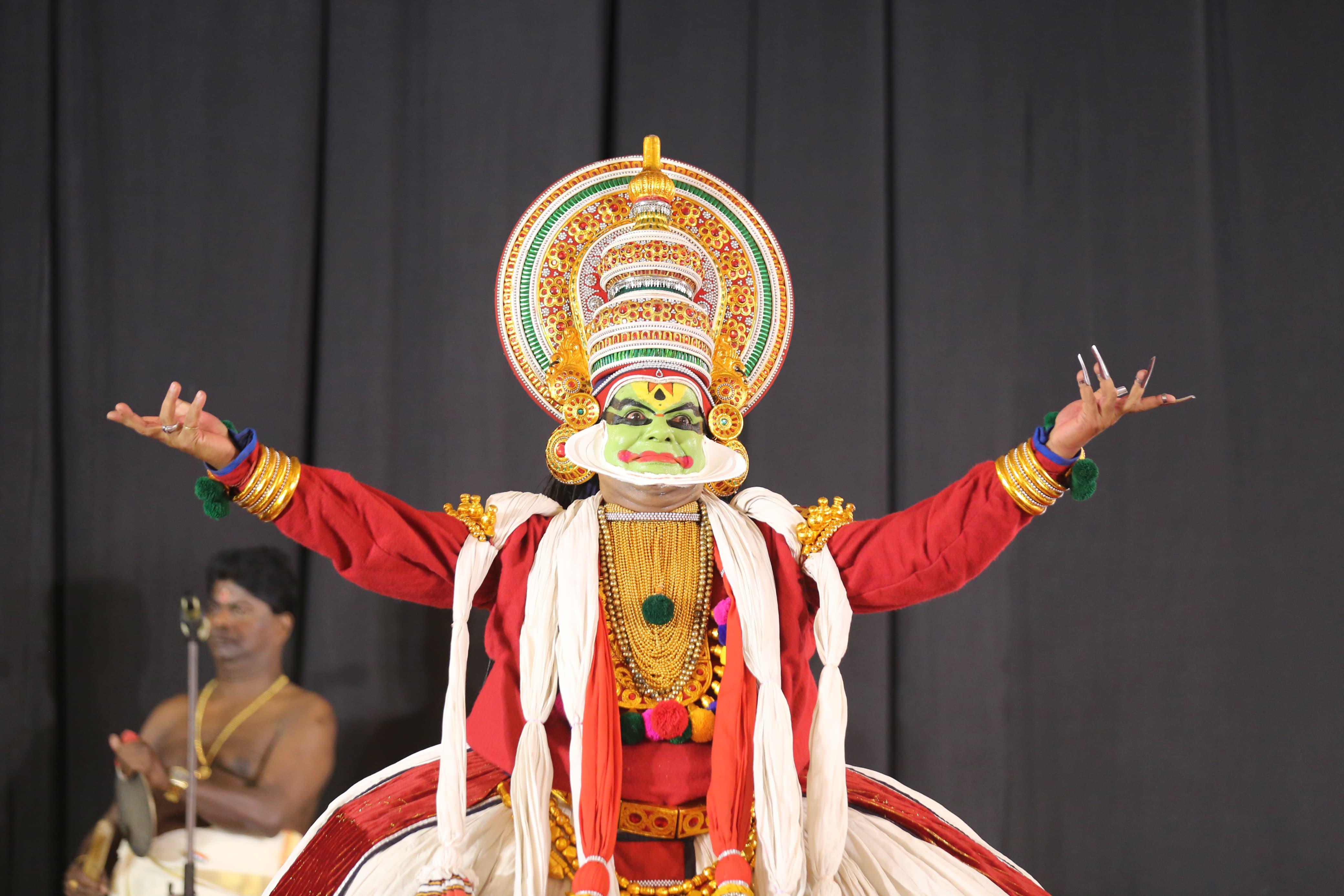
Legend has it that the refusal of the Zamorin of Calicut to send his Krishnattam troupe to Travancore enraged the Raja of Kottarakkara, who was inspired to compose the Ramanattam.
Kathakali is a blend of dance, music, and acting, dramatising stories mostly adapted from the Indian epics. It is a stylised art form, the four aspects of abhinaya - angika, aharya,vachika, satvika and the nritta, nritya and natya aspects are combined perfectly.
The dancer expresses themselves through codified hasta-mudras and facial expressions, closely following the verses that are sung. Kathakali derives its textual sanction from Balarama Bharatam and Hastalakshana Deepika.
"One of the traditional dance forms of India from the state of Kerala- Kathakali, where a very elegant dance is used to convey a story with elaborate facial expressions," Naveen Srivastava, Indian Ambassador to Nepal, said.
Kathakali is a visual art where aharya, costume and make-up are suited to the characters, as per the tenets laid down in the Natya Shastra. The characters are grouped under certain clearly defined types like the pacha, kathi, thadi, kari or minukku.
The face of the artist is painted over to appear as though a mask is worn. The lips, the eyelashes and the eyebrows are made to look prominent. A mixture of rice paste and lime is applied to create the chutti on the face, which enhances the facial makeup.
Kathakali dance is chiefly interpretative. The characters in a Kathakali performance are broadly divided into satvika, rajasika and tamasika types. Satvika characters are noble, heroic, generous and refined.
In Pacha, green colour dominates, and kirita (headgear) is worn by all. Krishna and Rama wear special crowns decorated with peacock feathers. The noble characters, such as Indra, Arjun, and the Devas, are some of the pacha characters.
The Kathi type depicts anti-heroes. Though they are of the rajasika category, one of the three Gunas (qualities or tendencies) that characterise nature and human behaviour, alongside Sattvic and Tamasic. Rajasika represents passion, activity, and ambition, and is associated with a mind-body constitution driven by desires and egoism
The moustache and the small knob called chuttippu fixed on "the tip of the nose and another in the centre of the forehead, are peculiar to the kathi character, representing a powerful, often arrogant, and sometimes evil figure.
The term "Kathi" literally means "knife," and it refers to a specific makeup style used for these roles. Characters like Ravana, Duryodhana, and Keechaka are examples of Kathi characters.
The characters of the thadi (beard) category are the chuvanna thadi (red beard), vellathadi (white beard) and the karutha thadi (black beard). Vellathadi, or the white bearded character, is generally that of Hanuman; the dancer also wears the costume of a monkey.
Kari are characters whose make-up has a black base, they wear a black costume depicting a hunter or forest dweller. Apart from these, there are minor characters like Minukku, who are women and sages.
Kathakali costumes and make-up are elaborate and designed to give a superhuman effect. The make-up of Kathakali can be classified into the teppu, chuttikuthu and uduthukettu. The teppud is done by the actor himself. Each character has a distinct teppu. The second stage is done by experts who specialise in make-up. The wearing of huge, billowing skirts is called uduthukettu. (ANI)


