Tonnes of used face masks to be turned into energy
Moscow [Russia], January 27 (ANI): Researchers from the National University of Science and Technology "MISIS" (NUST "MISiS") - along with colleagues from the US and Mexico - have developed a new technology for producing cost-effective batteries from medical waste.
ANI
Jan 27, 2022 20:53 IST

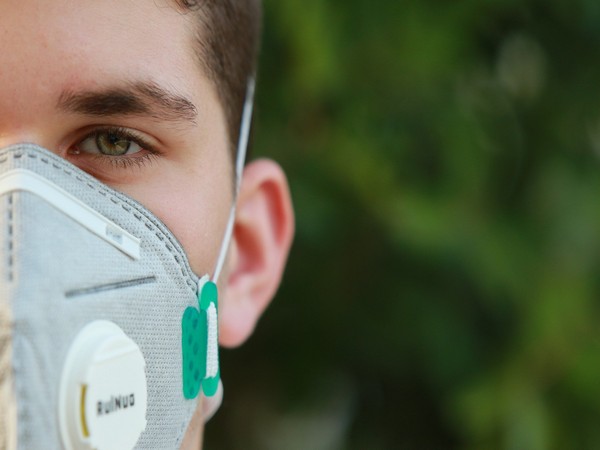
Moscow [Russia], January 27 (ANI): Researchers from the National University of Science and Technology "MISIS" (NUST "MISiS") - along with colleagues from the US and Mexico - have developed a new technology for producing cost-effective batteries from medical waste.
The authors of the research claim that their technology could turn waste that is difficult to recycle into raw materials, according to a study published in the Journal of Energy Storage, reported Sputnik.
Researchers say that during the coronavirus pandemic, people on the planet started using more than 130 billion masks every month, which in turn yielded hundreds of tonnes of polymer waste. When burned it emits toxic gases, so the task of recycling this waste is particularly urgent.
Scientists at NUST MISIS, together with their foreign colleagues, have developed a new technology for producing cost-effective batteries from used masks, where waste drug blister packs are also used as a shell. Aside from the recycled waste, all that needs to be procured is graphene.
The new technology enables the production of thin, flexible batteries that are also disposable, due to their low cost. They are superior in several ways to heavier, metal-coated conventional batteries, which are more expensive to manufacture. The new batteries can be used in household appliances from clocks to lamps, reported Sputnik.
"To create a battery of the supercapacitor type, the following algorithm is used: first the masks are disinfected with ultrasound, then dipped in 'ink' made of graphene, which saturates the mask. Then the material is pressed under pressure and heated to 140°C (conventional supercapacitor batteries require very high temperatures for pyrolysis-carbonization, up to 1000-1300°C, while the new technology reduces energy consumption by a factor of 10). A separator (also made of mask material) with insulating properties is then placed between the two electrodes made of the new material. It is saturated with a special electrolyte, and then a protective shell is created from the material of medical blister packs (such as paracetamol)", Professor Anvar Zakhidov, scientific leader of the infrastructure project "High-Performance, Flexible, Photovoltaic Devices Based in Hybrid Perovskites" at NUST MISiS, said.
Compared to traditional accumulators, the new batteries have a high density of stored energy and electrical capacity. Previously, pellet batteries created using a similar technology had a capacity of 10 watt-hours per 1 kg, but scientists at NUST MISIS and their foreign colleagues have managed to achieve 98 watt-hours/kg.
When scientists decided to add nanoparticles of an inorganic perovskite of CaCoO oxide type to the electrodes obtained from the masks, the energy capacity of the batteries further increased (208 watt-hours/kg). They have achieved a high electrical capacity of 1706 farads per gram, significantly higher compared to the capacity of the best-carbonised electrodes without the addition of graphene ( ~ 1000 farads per gram), reported the news agency.
Scientists have tried before to use various porous natural materials and waste products to make electrodes for supercapacitors. These have included coconut shells, rice husks, and recently even newspaper waste, car tire waste, and others. However, working with these materials always required high-temperature annealing (carbonisation) in special furnaces. Masks turned out to be an easier and cheaper material to process since graphene saturation is sufficient to give them unique properties.
In the future, the scientific team plans to apply the new technology for the production of batteries for electric cars, solar power stations and other applications. (ANI)
Get the App